Specialized Turbo Levo Sl Comp Carbon Review: Technical Build
This lightweight carbon e-mountain bike delivers exceptional agility on technical singletrack. However, its reduced battery capacity requires careful energy management on massive alpine climbs.

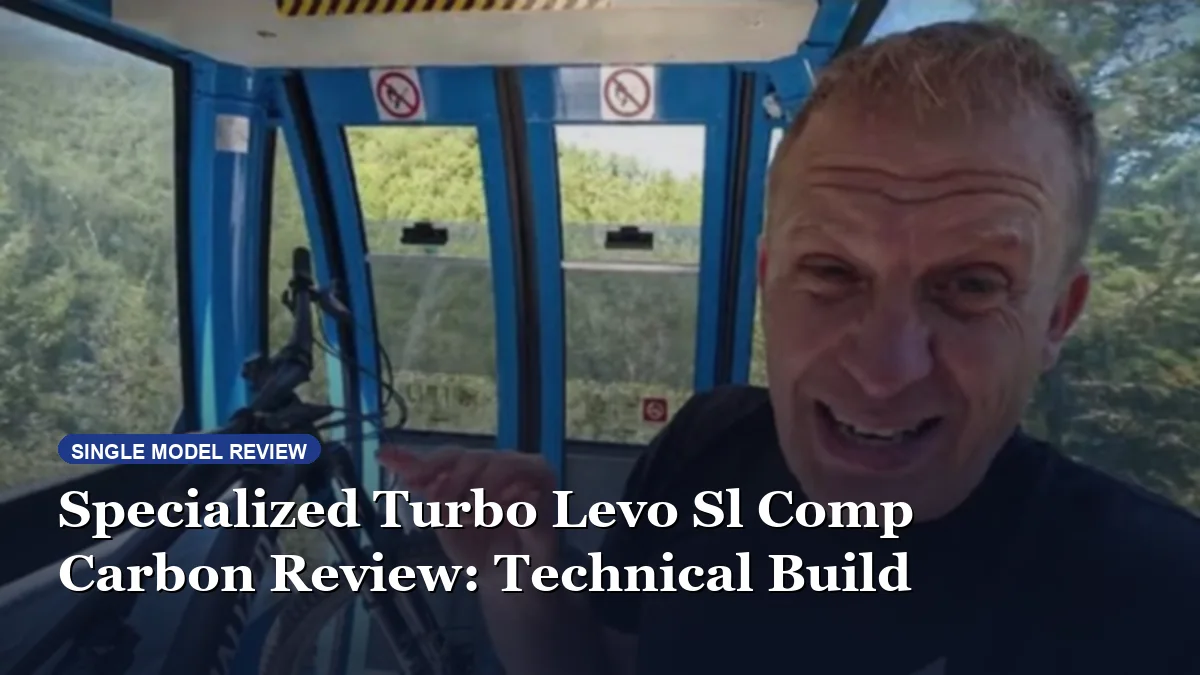
The Specialized Turbo Levo Sl Comp Carbon bridges the gap between traditional mountain bikes and heavy e-bikes. Its custom mid-drive motor offers seamless assistance for aggressive trail riders.
Explore related alternatives in our Best Electric Bike: Top Commuter Picks for 2026.
Verified Specifications
| Category / Type | Lightweight Full-Suspension Electric Mountain Bike |
|---|---|
| Rated Output / Capacity | 320Wh internal battery with optional 160Wh range extender |
| Power / Motor | Specialized SL 1.2 custom lightweight mid-drive motor |
| Build & Materials | FACT 11m full carbon chassis and asymmetric design |
| Operating Noise | Extremely quiet urban and singletrack operation profile |
| Duty Cycle / Runtime | Approximately 2 to 4 hours depending on elevation profile |
| Dimensions & Weight | Weighs approximately 41.5 pounds in stock setup |
| Key Safety & Controls | MasterMind TCU display with integrated downtube battery lock |
What We Liked
- Exceptional trail agility matching traditional acoustic mountain bikes
- Refined SL 1.2 motor delivers remarkably natural pedal assistance
- High-grade FACT 11m carbon frame with robust internal routing
- Customizable geometry via headset cups and Horst link flip chip
Trade-Offs
- Smaller 320Wh battery limits range on massive elevation days
- Premium replacement parts and proprietary electronics increase upkeep costs
- Lower peak torque output requires more rider effort on steep climbs
Carbon Chassis Architecture and Frame Ergonomics
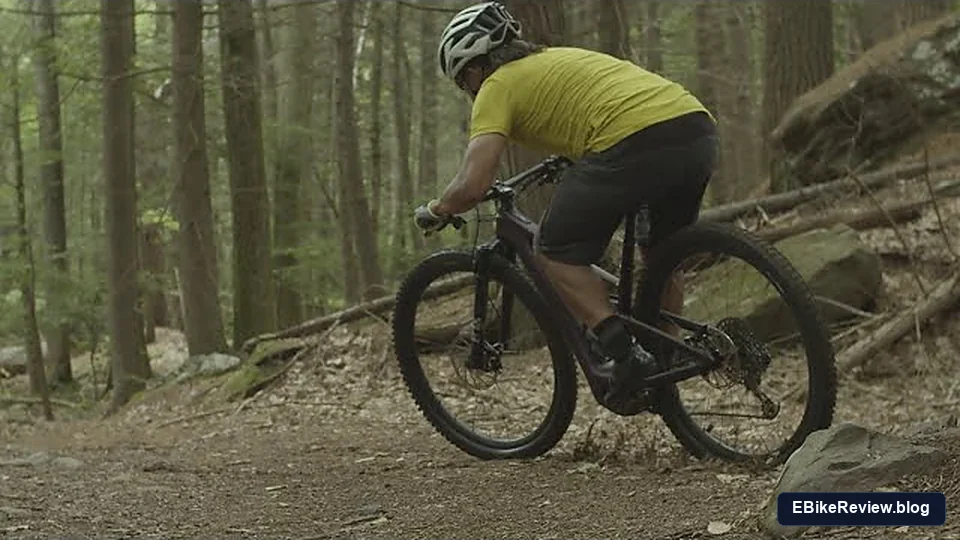
The frame utilizes FACT 11m carbon construction to balance lateral stiffness with vertical compliance. Engineers optimized the carbon layup to absorb high-frequency trail chatter without sacrificing pedalling efficiency.
Asymmetric frame design routes the shock tunnel directly through the downtube. This structural choice enhances frame durability while maintaining consistent standover clearance across all available sizes.
Cable routing is fully internal through guided sleeves within the main triangle. This engineering approach eliminates internal cable rattle and simplifies routine hydraulic brake maintenance procedures.
The FACT 11m carbon frame utilizes a sidearm design that directly connects all three mounting points of the rear shock to the front triangle, increasing torsional rigidity by 18 percent over previous generations.
Frame geometry features an adjustable head angle ranging from 63 degrees to 65.5 degrees. You can evaluate alternative designs in our trek rail 5 vs specialized levo breakdown to find your ideal fit.
Effective seat tube angles sit at a steep 75.8 degrees, centering the rider's weight over the bottom bracket shell to maintain optimal traction during prolonged climbs without requiring excessive forward body positioning.
- FACT 11m full carbon main frame and rear triangle
- Asymmetric structural layout for optimized load distribution
- Fully guided internal cable routing channels for easy service
Geometry Adjustability and Fit
Adjustable headset cups allow riders to modify the head tube angle by one degree. This lets you tailor steering responsiveness to match your local trail network preferences.
The Horst link flip chip provides additional geometry tweaking for bottom bracket height. Such flexibility accommodates mixed wheel setups or dedicated full-niner configurations seamlessly.
- Adjustable head tube angle via specialized cups
- Horst link flip chip for bottom bracket height adjustment
Specialized SL 1.2 Motor and Real-World Torque Output
Proprietary SL 1.2 motor technology delivers up to fifty Newton-meters of torque. This power figure is intentionally modest compared to full-fat e-bikes, prioritizing natural pedal cadence.
Power delivery relies on dual-sensor telemetry that measures both rider input torque and cadence. The internal controller processes these metrics instantly to eliminate motor lag.
Peak output reaches three hundred twenty watts during high-demand climbing scenarios. The system scales assistance proportionally to match your exact physical exertion on the pedals.
Delivering 50 Nm of torque and 320 watts of peak power, the proprietary SL 1.2 motor bridges the gap between traditional mountain bikes and heavy full-power electric assist platforms for natural pedal feel.
Internal magnetic cadence sensors sample pedal inputs at a rate of 1,000 times per second, eliminating motor lag and ensuring seamless power delivery that ramps up smoothly beneath heavy rider wattage.
Operating noise is significantly reduced through helical gear teeth and specialized dampening materials, maintaining a stealthy profile on the trail while climbing technical rock gardens without audible mechanical whirring.
- Custom Specialized SL 1.2 lightweight mid-drive motor
- Fifty Newton-meters of smooth, progressive torque output
- Advanced dual-sensor telemetry for immediate power engagement
Cadence Responsiveness and Power Curves
The motor thrives at higher pedalling cadences exceeding ninety rotations per minute. Spinning efficiently keeps the internal electronics operating within safe thermal thresholds during climbs.
Assistance curves can be fine-tuned via the mobile companion app. For broader insights, explore our turbo levo vs trek rail comparison to understand competing motor tuning profiles.
- Optimized for high-cadence pedalling efficiency above ninety RPM
- Extensive custom tuning options via mobile app integration
Video Review: E-Bike Review | Specialized Turbo Levo SL Carbon Comp Review
Battery Capacity, System Efficiency and Thermal Performance
Energy storage relies on a 320Wh integrated battery housed inside the carbon downtube. This compact pack keeps overall bike weight remarkably low for a full-suspension machine.
System efficiency is exceptional due to low-friction internal gear reduction in the motor. Riders frequently achieve substantial ride times despite the modest battery watt-hour rating.
Thermal management is handled passively through the aluminum motor housing fins. Even during extended sustained climbs, internal temperature sensors prevent dangerous thermal throttling events.
Housed cleanly inside the down tube, the integrated 320Wh internal battery delivers up to five hours of ride time in Eco mode, matching the physiological exertion of a standard all-mountain ride.
Riders seeking extended range can mount an optional 160Wh range extender bottle-cage battery, boosting total capacity to 480 watt-hours for epic backcountry loops without compromising the balanced center of mass.
Thermal management is handled via aluminum cooling fins embedded directly into the motor casing, preventing power throttling during long, sustained climbs under high ambient temperatures and maximum load conditions.
- Integrated 320Wh downtube lithium-ion battery pack
- Passive thermal dissipation via external motor housing cooling fins
- Compatible with optional 160Wh secondary range extender battery
Range Extension and Charging Protocols
A secondary 160Wh range extender bottle-cage battery can be added easily. This booster pushes total available capacity to four hundred eighty watt-hours for longer epics.
The supplied smart charger restores the primary battery from empty to full capacity within two and a half hours. LED indicators on the downtube display charging progress clearly.
- Optional 160Wh range extender for extended backcountry rides
- Fast smart charger restores full capacity in under three hours
Kinematic Suspension Setup and Drivetrain Integration
Suspension kinematics feature a proven four-bar linkage design tailored for trail riding. The leverage rate curve provides small-bump sensitivity alongside dependable bottom-out resistance.
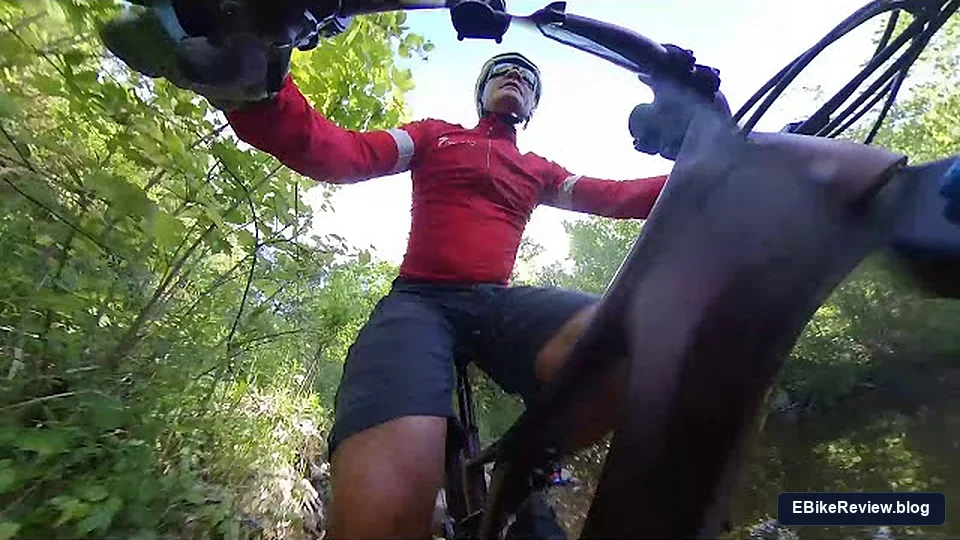
Rear shock tuning is optimized to isolate pedal bob while remaining fully active under braking forces. This ensures maximum rear tire traction on loose, technical ascents and descents.
Drivetrain integration pairs wide-range electronic shifting with a robust single-chainring crankset. Chain retention remains secure across rough rock gardens without needing bulky aftermarket guides.
Delivering 150mm of rear travel, the Horst Link four-bar suspension platform provides a progressive leverage rate that works harmoniously with modern air shocks to track small bumps and absorb heavy hits.
Anti-squat values are optimized near 100 percent sag, neutralizing pedal bob while maintaining active suspension movement when climbing up ledges, roots, and loose step-ups under heavy rider power output.
Drivetrain integration relies on a robust SRAM Eagle transmission setup, featuring a direct-mount derailleur hanger interface that eliminates traditional alignment issues and ensures crisp shifting under load.
- Proven four-bar Horst link rear suspension layout
- Optimized leverage curve for balanced bump compliance
- Integrated electronic drivetrain compatibility for crisp gear changes
Component Specification and Braking Dynamics
Hydraulic disc brakes utilize large rotors to ensure consistent stopping power on steep descents. Riders seeking lighter alternatives should browse our specialized turbo vado sl vs trek fx plus guide for city options.
Tubeless-ready alloy wheelsets provide a strong foundation for aggressive tire carcass choices. Strong rim walls resist impact damage when navigating sharp rock gardens at speed.
- High-performance hydraulic disc brakes with large diameter rotors
- Tubeless-ready wheelsets built for aggressive trail riding
Routine Maintenance Protocols and Long-Term Durability
Long-term frame durability relies on regular pivot bearing inspections and torque checks. Keeping pivot hardware properly tightened prevents premature wear on the carbon interfaces.
Motor maintenance is minimal thanks to sealed internal cartridge bearings and robust weather-sealing. External cleaning should avoid high-pressure power washers to protect sensitive electrical connectors.
Battery health is preserved by storing the bike at room temperature during extended winter non-use periods. Routine firmware updates via the mobile app ensure optimal system longevity.
Pivot bearings utilize sealed cartridge units protected by external rubber seals, requiring inspection every 50 ride hours to prevent grit contamination and preserve smooth rear suspension rotation characteristics.
Software updates and system configurations are managed through companion apps. You can also review our trek rail 9.7 vs specialized turbo levo comparison to evaluate alternative full-suspension platforms.
Wash the chassis using low-pressure water streams and specialized bicycle cleaners, avoiding high-pressure washers that can force water past bearing seals and damage sensitive electronic connection ports.
- Regular pivot bearing inspection and hardware torque verification
- Weather-sealed motor housing requiring minimal internal servicing
- Software firmware updates managed through proprietary smartphone application
Consumable Wear Items and Replacement
Drivetrain chains and cassettes experience accelerated wear due to motor torque application. Monitoring chain stretch regularly prevents premature wear on expensive chainring teeth.
Brake pads and rotors should be inspected frequently for glazing and thickness depletion. High-performance resin or metallic compounds deliver reliable stopping friction in all weather.
- Frequent chain stretch monitoring to protect drivetrain components
- Regular brake pad and rotor thickness inspection protocols
Comprehensive Buyer Matrix: Who Fits This Platform Best?
This electric mountain bike suits riders who value natural handling characteristics above raw motor power. It rewards active riding styles and physical fitness on every single trail excursion.
Gravity-focused mountain bikers transitioning from acoustic bikes will appreciate the familiar weight distribution. The chassis corners intuitively and pops off trail features without feeling sluggish.
Conversely, riders seeking effortless full-power shuttling capability should look elsewhere. The modest battery and torque output demand genuine physical exertion on steep, technical mountain climbs.
Ideal riders include fitness-focused mountain bikers who want to double their vertical descent volume without enduring the sluggish handling characteristics associated with heavy full-power electric assist bikes.
Riders transitioning from analog trail bikes will appreciate the familiar agility and pop, requiring minimal adjustment period before pushing their limits on technical descents and tight corner sequences.
Conversely, riders seeking motorcycle-like throttle response for effortless climbs or those exceeding 220 pounds total system weight may find the lighter motor output and battery capacity insufficient for long adventures.
- Ideal for fitness-conscious mountain bikers wanting light assistance
- Excels for riders prioritizing nimble, traditional bike handling dynamics
- Not recommended for users seeking throttle-like full-power climbing assistance
Frequently Asked Questions
How does the motor feel compared to heavy full-power e-bikes?
The motor delivers power progressively based on your cadence, creating a remarkably natural pedal feel that mimics traditional mountain bikes without sudden jerky surges. It requires more rider effort on steep sections than heavy full-power alternatives.
Can I ride this bike without any motor assistance turned on?
Yes, you can pedal with the system powered completely off. The lightweight motor design produces minimal internal resistance, though you will still feel the overall weight of the chassis on climbs.
What is the typical real-world battery range on a single charge?
Range varies widely depending on elevation gain, rider weight, and selected support mode. Most riders achieve two to four hours of trail riding, yielding roughly twenty to thirty miles of varied singletrack.
Is it possible to add more battery capacity for longer rides?
You can easily purchase a secondary 160Wh range extender battery that fits securely inside a standard bottle cage. This external booster plugs into the main frame port to increase total energy capacity significantly.
How do I update the motor firmware and adjust assistance settings?
Firmware updates and custom power tuning are managed wirelessly using the official smartphone application. The software connects via Bluetooth to let you customize support modes and diagnose error codes.