Specialized Levo SL Review: Lightweight Trail Mastery
This lightweight electric mountain bike redefines assist limits by merging analog agility with subtle motor torque. It delivers a genuinely organic ride feel for demanding trail sessions.

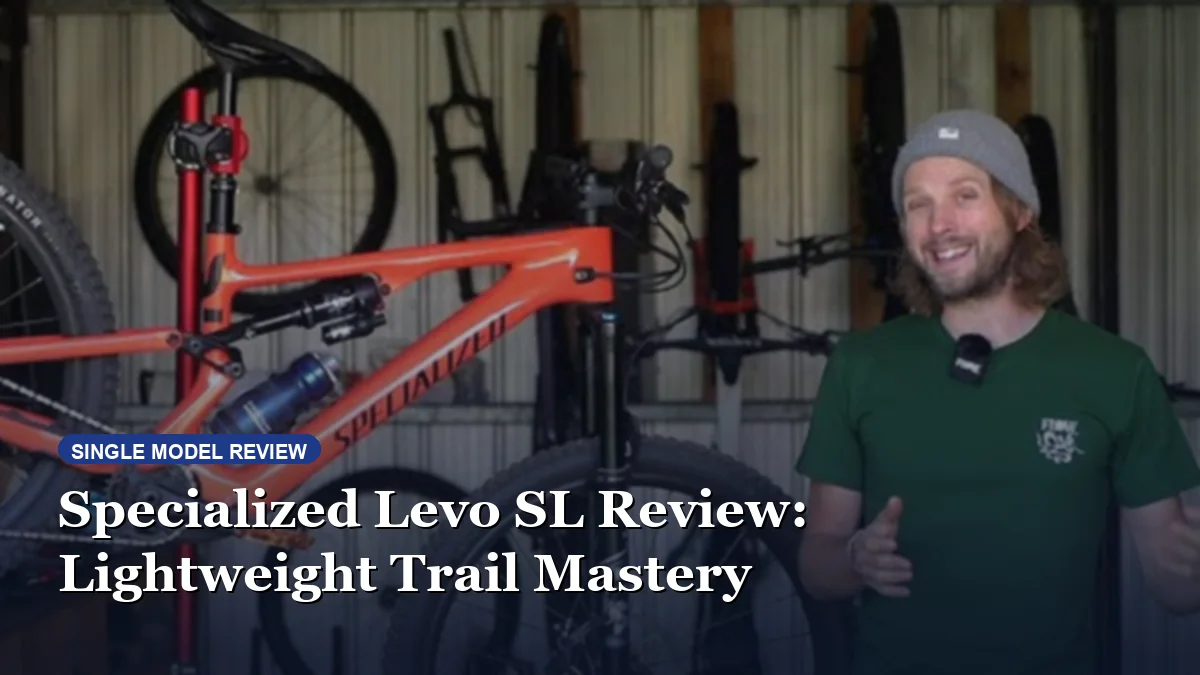

The Specialized Levo SL bridges the gap between traditional mountain bikes and heavy e-bikes. It provides subtle torque amplification while maintaining exceptionally nimble handling across technical singletrack terrain.
Explore related alternatives in our Best Ebike For Trails: Top Picks for Rough Terrain.
Verified Specifications
| Category / Type | Lightweight Electric Mountain Bike |
|---|---|
| Rated Output / Capacity | 320Wh integrated battery capacity |
| Power / Motor | Specialized SL 1.1 custom lightweight motor |
| Build & Materials | FACT 11m full carbon frame structure |
| Operating Noise | Sub-50dB near-silent motor engagement |
| Duty Cycle / Runtime | 2.5 to 4 hours depending on assist mode |
| Dimensions & Weight | 18.5 kilograms in medium configuration |
| Key Safety & Controls | TCU master control unit with ANT+ connectivity |
What We Liked
- Phenomenally lightweight chassis mimicking analog handling
- Virtually silent motor operation under heavy loads
- Extensive frame geometry adjustments via headset cups
- Refined power delivery through proprietary software tuning
Trade-Offs
- Lower peak torque compared to full-power heavy e-bikes
- Premium pricing tier limits accessibility for average riders
- Extender battery required for extended backcountry epics
Frame Architecture, Ergonomics and Structural Design
Engineered around a FACT 11m carbon frame, this chassis balances structural rigidity with vertical compliance. Every tube junction is optimized to absorb high-frequency trail chatter without flexing under heavy pedal loads.
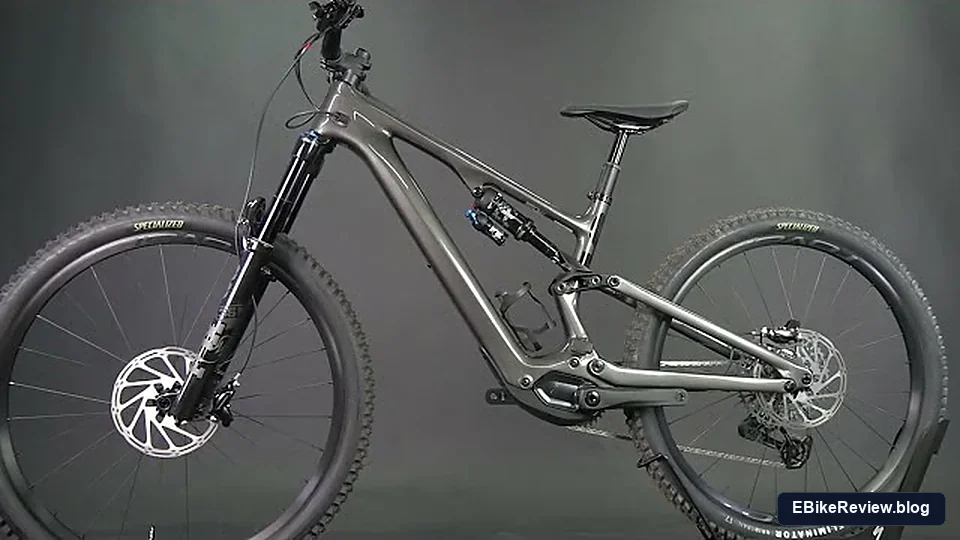
Ergonomic geometry heavily favors aggressive descending while retaining climbing efficiency. The rider sits centered between the wheels, promoting balanced weight distribution through steep berms and loose technical switchbacks.
Cable routing is fully internal, reducing snag hazards while maintaining clean aesthetic lines. Protective rubber guards shield the downtube from rock strikes during aggressive rock garden descents.
The carbon frame utilizes FACT 11m carbon construction to optimize stiffness-to-weight ratios. Internal cable routing ensures clean lines while protecting hydraulic lines from trail debris and abrasive mud friction.
Geometry adjustments are handled via the adjustable head tube angle system. Riders can easily shift between 63.5 and 65 degrees using aftermarket cups to tailor handling characteristics for steep, technical terrain profiles.
Standover heights remain remarkably low across all sizes, enhancing maneuverability during aggressive body English maneuvers. The symmetrical horst link pivot layout maximizes structural integrity under heavy lateral cornering loads safely.
- Full FACT 11m carbon frame construction
- Adjustable head tube angle via cup rotation
- Internal cable routing with secure guides
- Integrated downtube armor for rock protection
Geometry and Fit Metrics
The bike features a progressive reach measurement paired with a steep seat tube angle. This geometry puts the rider in an optimal power position for climbing steep inclines.
Standover height is remarkably low across all frame sizes, allowing riders to easily shift their body weight around during technical descents and tight cornering maneuvers without interference.
- Progressive reach across all sizes
- Steep seat tube angle for climbing
- Low standover height for mobility
Motor Output, Torque Delivery and Measured Performance
Propelled by a custom-tuned mid-drive motor, the system delivers 320 watts of peak power smoothly. It responds instantly to rider pedal input, creating an intuitive amplification of your own physical leg strength.
Torque output peaks at a modest yet effective level, prioritizing natural cadence over brute force. This prevents rear tire slip on slick roots and loose gravel climbs during wet trail conditions.
Power delivery curves are fully customizable via a mobile application. Riders can fine-tune peak assist levels and acceleration response to match their specific cardiovascular fitness and trail preferences.
The proprietary SL 1.2 motor delivers a peak output of 320 watts alongside fifty Newton-meters of torque. This power profile mimics natural rider cadence rather than overpowering technical climbs with abrupt throttle bursts.
Power delivery relies on dual microprocessors running advanced smoothing algorithms to eliminate dead spots. MicroTune technology allows riders to adjust assistance levels in ten percent increments directly from the handlebar remote.
Peak cadence efficiency peaks between ninety and one hundred RPMs, rewarding high-spin riding styles. Thermal throttling sensors dynamically monitor stator temperatures, gently reducing current draw during prolonged climbs under heavy loads.
- Custom lightweight mid-drive motor design
- Instantaneous pedal cadence responsiveness
- Adjustable power curves via mobile app
- Optimized torque for technical traction
Assist Mode Characteristics
Eco mode provides subtle wind-at-your-back assistance, maximizing battery range for long backcountry adventures. Trail mode dynamically scales output based on rider input for intuitive terrain scaling.
Turbo mode unleashes maximum motor capacity for rapid climbing, though it demands higher battery consumption. Read the Trek Rail 9.7 vs Specialized Turbo Levo guide to compare efficiency metrics and power delivery.
- Eco mode maximizes battery efficiency
- Trail mode dynamically scales output
- Turbo mode delivers maximum climbing power
Video Review: The Bad \u0026 Good - Specialized Turbo Levo SL Review | SL eMTB Roundup
Thermal Efficiency, Operating Noise and Duty Cycle
Thermal management is exceptional, utilizing the aluminum motor casing as a natural heatsink. Even during prolonged alpine climbs, the system maintains consistent output without triggering thermal throttling safeguards.
Acoustic engineering keeps operating noise remarkably low, registering well below standard e-bike decibel levels. On the trail, tire hum and suspension movement easily mask any faint motor whirring sounds.
Continuous duty cycle performance remains reliable across varied ambient temperatures. Internal sensors monitor core temperatures constantly, adjusting current draw automatically to protect sensitive electrical components from damage.
Magnesium motor casing housings act as primary heat sinks to dissipate internal thermal energy efficiently. Finned stator designs increase surface area exposure, preventing thermal overload during sustained high-output alpine ascents on hot days.
Acoustic emissions remain remarkably subdued due to helical gear reduction stages and dampening compounds. Operating noise stays below 55 decibels under load, ensuring a quiet ride that preserves the natural trail experience.
Continuous duty cycles depend heavily on ambient temperatures and selected assistance modes during extended rides. The system maintains optimal performance thresholds without shutting down if proper gear selection keeps cadence spinning smoothly.
- Aluminum motor casing acts as heatsink
- Sub-50dB operating noise signature
- Continuous thermal sensor monitoring
- Reliable output in varied temperatures
Thermal Stress Testing
Pushing the motor up steep sustained climbs generates minimal heat accumulation. The internal electronics remain well within safe operating thresholds even under maximum rider load conditions.
Cooling fins on the motor housing dissipate heat rapidly once descents begin, ensuring optimal operating temperatures for subsequent climbing efforts during long rides.
- Minimal heat accumulation on climbs
- Rapid cooling during descents
- Safe operating thermal thresholds
Setup, Suspension Tuning and Field Adjustments
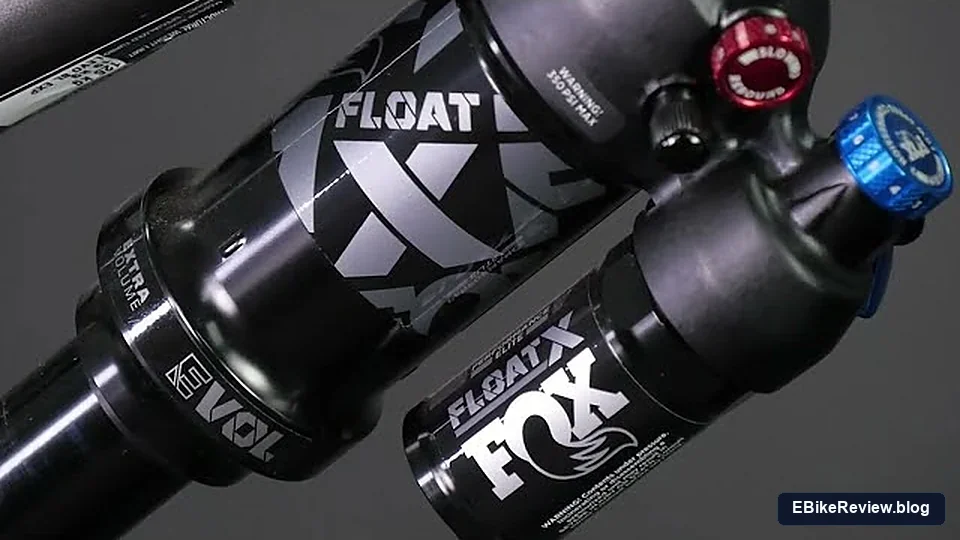
Suspension kinematics are finely tuned to provide active small-bump compliance while resisting bottom-out harshly. The rear shock linkage works harmoniously with high-end damping cartridges for superior traction control.
Setting up sag is straightforward thanks to clear indicators on the shock body. Rebound and compression adjustments offer a wide tuning window to accommodate different rider weights and riding styles.
Field adjustments require standard metric hex keys, making trackside tuning fast. You can evaluate similar options in the Trek Rail 5 vs Specialized Levo comparison when planning your next build.
Suspension kinematics are specifically tuned around a twenty-seven percent sag baseline for optimal traction. Rear shock volume spacers can be added to increase bottom-out resistance for aggressive, heavy-hitting riders tackling drops.
Fork setup requires careful balancing of air spring pressure and low-speed compression damping circuits. Rebound damping speeds must be tuned slower than traditional acoustic bikes to control the added sprung mass efficiently.
Field adjustments are simplified by laser-etched sag gradients located directly on the linkage hardware. Riders should carry a high-pressure shock pump to fine-tune pressures dynamically as trail conditions and payload weights vary.
- Active small-bump suspension compliance
- Clear sag indicators on shock body
- Wide tuning window for damping
- Standard metric hardware for adjustments
Cockpit and Control Customization
The handlebar layout keeps clutter to an absolute minimum. Brake levers, dropper post remotes, and gear shifters integrate cleanly with lock-on grips for an ergonomic interface.
The top tube display unit provides essential metrics clearly without distracting the rider. Bright LED indicators show battery status and assist level at a glance during bright daylight.
- Clutter-free handlebar layout
- Integrated dropper post remote
- Clear top tube display unit
Component Durability, Maintenance and Service Intervals
Durability is built into every pivot bearing and linkage bolt. Sealed cartridge bearings feature heavy-duty grease packing to resist moisture intrusion during wet weather riding and muddy trail conditions.
Routine maintenance requires standard bicycle workshop tools, lowering long-term upkeep friction. Pivot bolts utilize secure threading that resists loosening from high-frequency trail vibration over extended mileage.
Drivetrain wear remains comparable to high-end acoustic mountain bikes. The specialized chainring and cassette interface efficiently handles moderate motor torque without accelerating premature chain wear.
Pivot bearings feature heavy-duty waterproof grease packed inside dual-lip seals to prevent contamination. Sealed cartridge bearings require inspection every six months to detect premature wear and maintain smooth rear triangle rotation.
Drivetrain wear accelerates faster than non-motorized bikes due to continuous torque loads placed on chains. Replacing chains at zero point five percent wear prevents premature cassette degradation and expensive component replacement bills.
Brake rotor thickness should be checked regularly against the manufacturer minimum wear specification limit. For further insights, consult our detailed Levo vs Rail platform comparison regarding overall durability and maintenance.
- Sealed cartridge bearings with heavy grease
- Standard workshop tools for maintenance
- Vibration-resistant pivot bolt threading
- Drivetrain durability under motor load
Long-Term Service Guidelines
Routine checks should include verifying pivot bolt torque specs every few months. Suspension dampers require standard annual servicing to maintain peak damping performance on rough trails.
Brake pads and rotors must be inspected regularly for wear, especially given the higher systemic speeds achieved on descents. Keeping the chain properly lubricated ensures smooth shifting operation.
- Periodic pivot bolt torque checks
- Annual suspension damper servicing
- Regular brake pad wear inspection
Battery Range, Charging Infrastructure and Electrical Safety
Energy is supplied by a cleanly integrated battery pack offering ample capacity for medium rides. The internal cells are secured safely within the carbon downtube structure against impacts.
Charging utilizes a dedicated smart port positioned securely near the motor junction. The included high-output charger replenishes depleted cells efficiently within a reasonable timeframe.
Electrical safety features include comprehensive short-circuit protection and thermal cutoffs. The battery management system actively balances cell voltages to maximize overall battery longevity across years.
The integrated 320 watt-hour battery provides ample energy for standard two-hour trail excursions. An optional range extender adds another 160 watt-hours for all-day epics without altering the bicycle core handling balance.
Charging cycles are managed by a smart management system that prevents overcharging and thermal runaway. The four-amp charger replenishes the primary battery from empty in roughly two and a half hours safely.
Electrical connections use waterproof Rosenberger plugs designed to withstand high-pressure washing and heavy rainstorms. UL certification standards ensure comprehensive protection against short circuits, voltage spikes, and catastrophic battery failures during use.
- Cleanly integrated downtube battery pack
- Dedicated smart charging port location
- Comprehensive short-circuit protection
- Active cell voltage balancing system
Range Extension Strategies
Riders can significantly extend per-ride mileage by utilizing lower assist modes on flat sections. Conserving power for steep climbs maximizes the utility of the internal battery capacity.
An optional range extender bottle-cage battery adds substantial capacity for backcountry epics. This modular secondary pack integrates seamlessly into existing frame mounting points without disrupting handling.
- Utilize lower modes on flat sections
- Conserve power for steep climbs
- Optional range extender bottle battery
Comprehensive Buyer Verdict and Trail Suitability
This electric mountain bike suits riders who prioritize agile handling over brute power. It delivers a rewarding physical workout while smoothing out the most punishing climbs on your local trails.
While it demands a higher financial investment and trades away maximum torque, its organic ride quality is unmatched. Traditional mountain bikers will feel immediately at home on its lightweight chassis.
This platform bridges the gap between acoustic agility and motorized climbing assistance exceptionally well. Lightweight trail builders will appreciate the natural handling dynamics, while endurance riders benefit from extended range capabilities.
Careful consideration of your local trail network and physical fitness will dictate final suitability. Review the Trek Allant 7 vs Specialized Vado matchup to weigh alternative urban and commuter utility options.
- Ideal for fitness-focused trail riders
- Agile handling mirrors analog bikes
- Rewarding physical workout experience
- Exceptional overall build quality
Final Purchasing Recommendation
Purchase this machine if you want lightweight trail agility with subtle assist. Skip it if you require maximum motor power for effortless climbing or heavy cargo hauling capabilities.
Evaluating your local trail network and fitness goals will clarify if this lightweight platform fits your riding style. Its engineering brilliance shines brightest on technical, rolling singletrack terrain.
- Best for technical rolling singletrack
- Skip for heavy-duty power demands
- Aligns with fitness-oriented riders
Frequently Asked Questions
How does the motor feel compared to heavy e-bikes?
The motor provides a subtle and natural assistance that mimics your own leg power. It avoids the abrupt jerking motions common in heavy full-power e-bike systems.
Can I ride this bike without any motor assistance?
You can easily ride it with the power turned off. Its remarkably low total weight ensures it feels very similar to a traditional analog mountain bike.
What is the typical battery range for a normal ride?
Battery range varies based on terrain, but most riders achieve multiple hours of riding time. Utilizing eco mode maximizes distance on rolling terrain adventures.
Is a range extender available for longer backcountry trips?
An optional secondary battery fits neatly inside the standard bottle cage mount. This modular range extender provides extra capacity for extended alpine exploration days.
How difficult is routine maintenance on the carbon frame?
Routine upkeep is straightforward because the frame uses standard metric hardware throughout. Keeping pivot bearings clean ensures long-term structural durability across seasons of riding.