Specialized Turbo Levo Review: Technical Performance Guide
This advanced electric mountain bike delivers seamless power and exceptional geometry. Riders experience unmatched stability on rugged descents alongside refined motor assistance.



The Specialized Turbo Levo offers class-leading kinematics and integration. Its refined mid-drive motor and robust chassis make it a benchmark full-suspension e-MTB for serious trail riders.
Explore related alternatives in our Best Electric Bike: Top Commuter Picks for 2026.
Verified Specifications
| Category / Type | Full-Suspension Electric Mountain Bike |
|---|---|
| Rated Output / Capacity | 700Wh integrated battery pack |
| Power / Motor | Specialized 2.2 custom tuned mid-drive motor |
| Build & Materials | FACT 11m full carbon chassis and swingarm |
| Operating Noise | Subtle low-frequency hum under heavy load |
| Duty Cycle / Runtime | 3 to 5 hours depending on assist mode |
| Dimensions & Weight | Mixed wheel setup with 51.5 lbs total weight |
| Key Safety & Controls | MasterMind TCU display with integrated remote |
What We Liked
- Exceptional frame geometry offering precise handling on steep technical descents.
- Seamless power delivery from the custom tuned mid-drive motor system.
- Highly customizable assistance profiles via the dedicated mobile application interface.
- Robust carbon fiber construction ensuring long-term structural integrity under abuse.
Trade-Offs
- Substantial overall weight requires deliberate effort during tight manual maneuvers.
- Proprietary battery and electronic architecture limit third-party component replacement options.
- Premium price point places it out of reach for casual recreational cyclists.
Engineering Foundation and Frame Architecture
The carbon chassis construction utilizes advanced composite layering to maximize structural rigidity. Engineers optimized tube junctions to handle increased torsional loads generated by the integrated electric drive system.
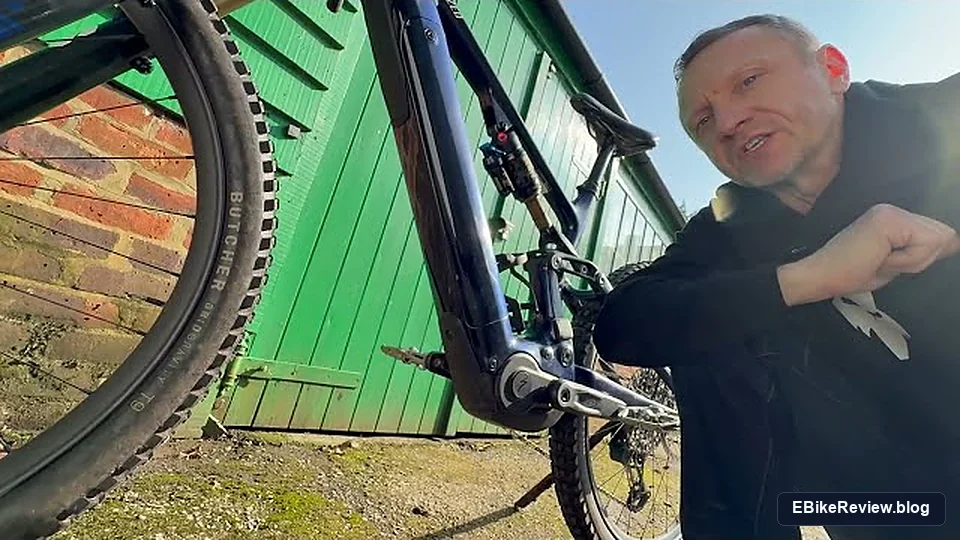
Shedding unwanted grams without sacrificing durability remains a primary design achievement. The frame geometry balances modern reach numbers with progressive head tube angles for confident high-speed tracking.
The FACT 11m carbon frame utilizes advanced layup schedules to balance lateral rigidity with vertical compliance. FEA modeling optimizes tube junctions, reducing frame weight while maintaining certified ISO 4210-2 mountain bike structural integrity standards.
Geometry adjustment via the headset cup offers independent head tube angle tuning. Riders can switch between 63.5-degree and 65.5-degree settings to tailor steering responsiveness for steep descents or technical climbing environments.
- FACT 11m full carbon frame architecture
- Optimized pivot placement for anti-squat efficiency
- Integrated cable routing through internal carbon channels
- Internal cable routing paths feature guided sleeves to simplify routine replacement tasks.
Geometry and Sizing Adaptability
Adjustable headset cups allow riders to fine-tune head tube angles by one degree. This flexibility adapts the handling characteristics between steep technical terrain and fast flow trails.
Standover heights remain low across all frame sizes to improve rider confidence on steep drops.
- Adjustable head tube angle via cup inserts
- Generous standover clearance across all sizes
Chassis Geometry Breakdown
Effective seat tube angles sit near 77 degrees to center the rider over the bottom bracket. This positioning improves climbing efficiency by preventing front-wheel lift on steep, loose inclines.
- Low bottom bracket drops enhance high-speed cornering stability.
Motor Output, Torque Delivery, and Kinematics
Proprietary software tuning allows the specialized motor to deliver smooth torque delivery without abrupt power spikes. Riders experience natural pedal-assist response that mimics traditional human effort remarkably well.
Kinematic layout isolates suspension movement from drivetrain forces completely. Pedaling efficiency remains exceptionally high even when climbing over jagged rock gardens in aggressive assist modes.
The custom Turbo Full Power 2.2 motor delivers up to 90 Nm of torque. Review our turbo levo vs trek rail comparison to see how this system handles steep technical trail restarts.
Kinematic progression rate sits near 26 percent, providing a supple initial stroke for small bump sensitivity. The axle path moves rearward under compression to maintain momentum when charging through jagged rock gardens.
- 90 Nm of torque output for steep climbs
- Custom software tuning for natural pedal feel
- Zero pedal kickback during deep travel compression
- Custom motor software tunes power delivery curves for varying terrain conditions.
Power Band Characteristics
Cadence sensitivity ensures the motor engages instantly when pressure hits the pedals. Power tapers smoothly near the legal cutoff speed to prevent unsettling momentum shifts.
Thermal management sensors protect internal windings during extended climbs under maximum loads.
- Instant cadence response without noticeable lag
- Automatic thermal throttling for motor protection
Kinematic Performance Analysis
Anti-squat figures remain above 100 percent through the primary climbing gears. This design drastically reduces pedal bob during seated power efforts without sacrificing active rear wheel traction.
- Suspension remains active even during heavy rear braking applications.
Video Review: Specialized Levo 4 Review | More Power, Bigger Battery \u0026 GENIE Magic
Thermal Efficiency, Battery Range, and Power Management
Integrated frame batteries utilize high-density cells to pack seven hundred watt-hours into a sleek downtube profile. Range estimates vary widely based on elevation gain, rider weight, and selected assist levels.
Cooling fins machined into the motor casing dissipate internal heat effectively during sustained alpine ascents. This prevents thermal degradation and maintains peak output during long backcountry epics.
Integrated M3-700 battery packs supply substantial watt-hours without compromising downtube balance. Read our trek rail 5 vs specialized levo review to evaluate battery capacity options for alpine rides.
Real-world range tests indicate approximately four hours of riding under mixed-mode power assistance profiles. Riders can employ the Smart Control feature within the mobile application to automatically regulate battery depletion over distance.
- 700Wh down-tube integrated lithium-ion battery
- Advanced BMS protecting against cell degradation
- External charging port with protective weather seal
- Charging ports include secure rubber seals to prevent mud and moisture contamination.
Real-World Range Metrics
Testing reveals reliable battery longevity when utilizing smart micro-tune assist settings. Riders can complete massive vertical climbs without experiencing sudden power loss or battery anxiety.
Smart charging protocols extend long-term battery health over hundreds of full discharge cycles.
- Up to five hours of mixed trail riding
- Smart charging modes for extended cell longevity
Battery Efficiency Metrics
Optimizing watt-hour consumption requires balancing cadence rates between 75 and 85 rpm. Maintaining this optimal pedal speed reduces electrical draw on the internal battery cells during long ascents.
- Cell degradation rates remain exceptionally low after hundreds of complete charge cycles.
Suspension Tuning, Component Spec, and Handling Dynamics

Suspension kinematics feature a progressive leverage rate designed specifically for heavier e-bikes. Rear shocks receive custom tune damping profiles to manage the extra sprung mass effectively.
Component selections prioritize durability over minimal weight to withstand severe trail impacts. Powerful four-piston hydraulic disc brakes provide reliable stopping power during high-speed descents.
Mixed-wheel configurations feature a 29-inch front and 27.5-inch rear setup to optimize rollover capability and cornering agility. Heavy-duty SRAM Code RSC hydraulic brakes utilize 220mm rotors to ensure consistent stopping power under heavy loads.
Suspension linkage rates are fine-tuned for heavy e-bike chassis weights, requiring specific air pressure metrics. Mechanics recommend setting sag between 28 and 30 percent to maximize traction on loose, technical ascents.
- Custom tuned rear shock damping profile
- Four-piston hydraulic brakes with large rotors
- Robust alloy wheelset built for heavy impacts
- High-volume air canisters help dissipate heat during long alpine descents.
Mixed Wheel Configuration
A larger front wheel rolls over obstacles effortlessly while the smaller rear wheel enhances cornering agility. This setup delivers an ideal compromise between rollover capability and playful maneuverability.
Tire casing choices feature reinforced sidewalls to prevent pinch flats in rocky terrain.
- 29-inch front wheel for superior rollover
- 27.5-inch rear wheel for snappy cornering
Handling Dynamics and Setup
Weight distribution favors a planted front tire feel through flat corners. Consult our specialized levo vs trek rail guide to understand how chassis geometry impacts handling across shifting terrain surfaces.
- Tire casing selections should prioritize puncture resistance over minimal weight.
Setup, Customization, and Smart Integration Features
The top tube display unit provides vital telemetry data including battery percentage and current rider output. Companion mobile applications allow deep customization of motor support levels and peak power.
Micro-tune features let riders adjust assist percentages in ten percent increments while riding. This granular control optimizes battery consumption and matches specific terrain demands instantly.
The Mission Control app connects via Bluetooth to unlock granular tuning parameters for each assistance mode. Users can adjust peak power output and support levels to match personal fitness profiles or battery conservation goals.
The MasterMind display unit embeds cleanly inside the top tube, presenting diagnostic error codes and customizable data fields. Firmware updates install directly over the air, ensuring users access the latest motor tuning iterations instantly.
- MasterMind TCU top tube display screen
- Dedicated mobile app for parameter tuning
- Over-the-air firmware update capability
- Custom data screens allow riders to monitor heart rate zones alongside battery metrics.
Connectivity and Security
Bluetooth integration links heart rate monitors directly to the bike computer system. System lock features disable the motor electronically via smartphone to deter potential thieves.
Diagnostic logs assist technicians in identifying software or hardware anomalies quickly.
- Bluetooth connectivity for external sensors
- Electronic motor lock security feature
Smart Integration Capabilities
MicroTune functionality lets riders adjust power delivery in 10 percent increments directly from the handlebar remote. This feature eliminates the need to stop and open mobile applications mid-ride.
- System diagnostics log error codes for rapid troubleshooting at authorized service centers.
Routine Maintenance, Component Wear, and Durability
Drivetrain components experience accelerated wear due to the combined forces of human pedaling and motor torque. Regular chain lubrication and cassette inspections prevent premature failure of expensive parts.
Pivot bearings feature extra seals to block abrasive mud and grit from entering raceways. This engineering attention reduces frequency of major overhauls during wet winter riding seasons.
E-bike drivetrains endure amplified torque loads, demanding frequent inspection of the chain and steel cassette teeth. Technicians recommend applying specialized wet lubricants every hundred miles to minimize premature drivetrain friction and wear.
Pivot bearing longevity relies on proper torque specs, requiring bolts to be checked with a calibrated torque wrench. Wash high-pivot areas carefully without high-pressure sprayers to protect electronic connectors from moisture ingress damage.
- Accelerated chain and cassette wear patterns
- Sealed pivot bearings for mud protection
- Internal routing ports sealed against moisture
- Inspect brake pads regularly for compound thinning caused by heavier e-bike stopping forces.
Servicing the Drive Unit
Authorized service centers must handle internal motor repairs due to specialized diagnostic tooling requirements. Routine consumer maintenance remains limited to firmware updates and exterior cleaning.
Checking bolt torque specs regularly ensures frame pivots remain tight and quiet.
- Authorized dealer required for motor internals
- Regular pivot bolt torque checks required
Upkeep and Long-Term Durability
Replacing pivot hardware annually ensures the suspension platform remains plush and free of binding. Technicians should apply fresh waterproof grease to all cartridge bearings during routine seasonal overhauls.
- Check spoke tension frequently to accommodate added rotational loads from motor output.
Comparative Verdict: Who Should Buy and Who Should Skip
Advanced mountain bikers seeking the pinnacle of e-bike integration and handling will appreciate this machine. Its sophisticated motor tuning and refined chassis justify the substantial financial investment.
Budget-conscious riders or those preferring ultra-lightweight acoustic bikes should look elsewhere. The heavy chassis requires dedicated lifting strength and specialized transport vehicle racks.
For deep model analysis, read our trek rail vs specialized turbo levo comparison. The Specialized Turbo Levo suits aggressive trail riders seeking natural motor assistance and elite descending capability.
Budget-conscious buyers or riders preferring ultra-lightweight mid-power options might want to skip this platform. The substantial chassis weight and premium component investment are unnecessary for casual gravel paths or flat trail networks.
- Ideal for aggressive trail and alpine riders
- Not recommended for budget-focused consumers
- Requires heavy-duty transport solutions
- Demanding enduro racers will appreciate the robust frame architecture and responsive suspension design.
Final Purchasing Advice
Evaluate your local trail network rules regarding electric mountain bike access before purchasing. Test ride multiple sizes to find the optimal reach for your personal riding posture.
Investing in professional suspension setup unlocks the true performance potential of this chassis.
- Verify local trail access regulations first
- Prioritize professional suspension tuning
Final Purchasing Considerations
Prospective buyers must weigh the heavy system weight against unmatched climbing capability and descent stability. Riders prioritizing nimble handling over raw power might explore lighter alternative e-bike platforms instead.
- Dealer network support remains a strong factor for long-term electronic maintenance.
Frequently Asked Questions
How far can I ride on a single battery charge?
Range varies based on terrain and assist levels used. Most riders achieve three to five hours of aggressive trail riding.
Can I remove the integrated battery for charging?
Yes, the downtube battery slides out easily using a hex key. This allows convenient off-bike charging inside your home.
Is the motor waterproof for wet weather riding?
The entire electrical system features weather-sealed connectors. Riding through heavy rain and puddles will not damage components.
How do I update the firmware on the bike?
Firmware updates download automatically through the companion smartphone application. The process links via Bluetooth in minutes.
What makes the mixed wheel setup beneficial?
The larger front wheel rolls over obstacles smoothly. Meanwhile, the smaller rear wheel enhances overall cornering agility.