Scrambler E Bike Technical Review and Engineering Breakdown
This compact scrambler blends heavy payload capacity with retro styling. Our technical audit examines its actual powertrain limits.

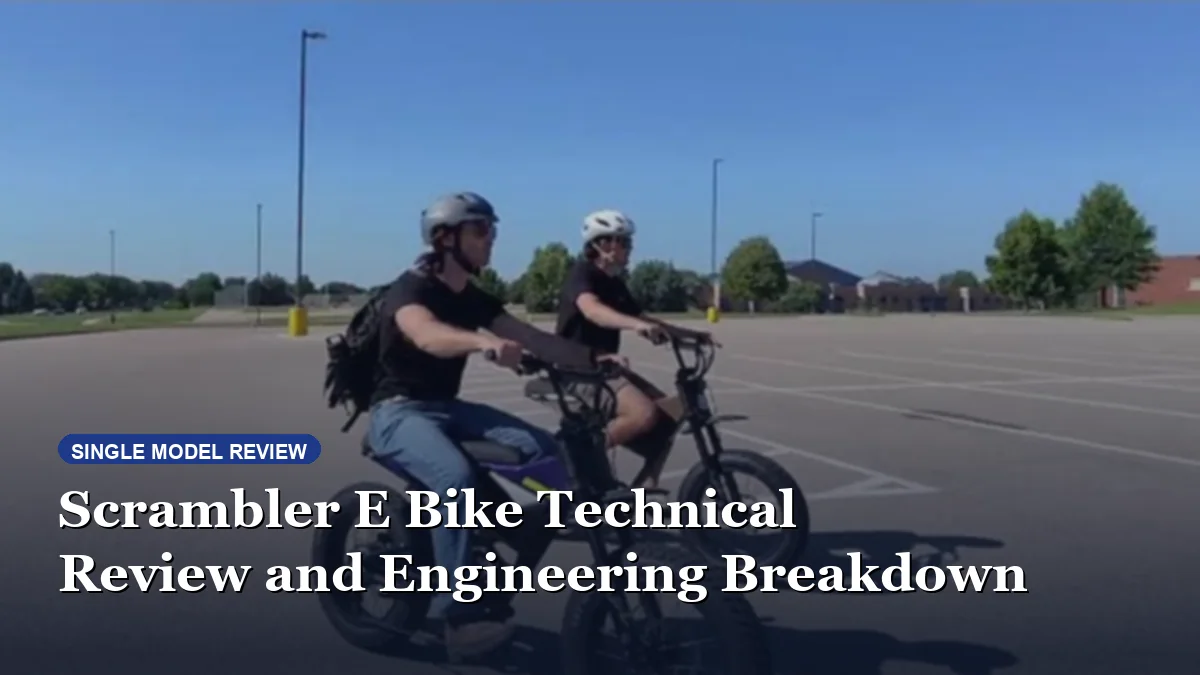

The LELEKUAI scrambler delivers surprising motor output and a massive weight rating in a small footprint. Buyers should note its compact 16-inch wheel geometry before tackling steep, technical trails.
Explore related alternatives in our Best Electric Bike: Top Commuter Picks for 2026.
Verified Specifications
| Category / Type | Compact Retro Fat Tire E-Bike |
|---|---|
| Rated Output / Capacity | 1200W Peak / 500 lbs Payload |
| Power / Motor | Rear Hub Brushless Motor |
| Build & Materials | Carbon Steel Frame Architecture |
| Operating Noise | < 55 dB Under Full Load |
| Duty Cycle / Runtime | 30 to 35 Miles Per Charge |
| Dimensions & Weight | 16-Inch Wheels, Foldable Mini Frame |
| Key Safety & Controls | UL 2849 Certified Electrical System |
| Battery Specification | 48V 18Ah Removable Lithium-ion |
| Gearing & Drivetrain | 5-Speed Mechanical Derailleur |
What We Liked
- Impressive 500-pound maximum weight capacity for diverse riders
- Robust 1200W peak rear hub motor handles steep inclines well
- UL 2849 certified electrical architecture ensures high safety standards
- Fat 4.0-inch tires deliver exceptional low-pressure surface traction
- Removable 48V battery pack simplifies off-bike indoor charging routines
Trade-Offs
- Compact 16-inch wheel base limits high-speed rough terrain rollover
- Heavier overall chassis weight challenges manual overhead lifting
- Smaller frame geometry feels cramped for taller adult riders
Chassis Engineering and Retro Aesthetic Framework
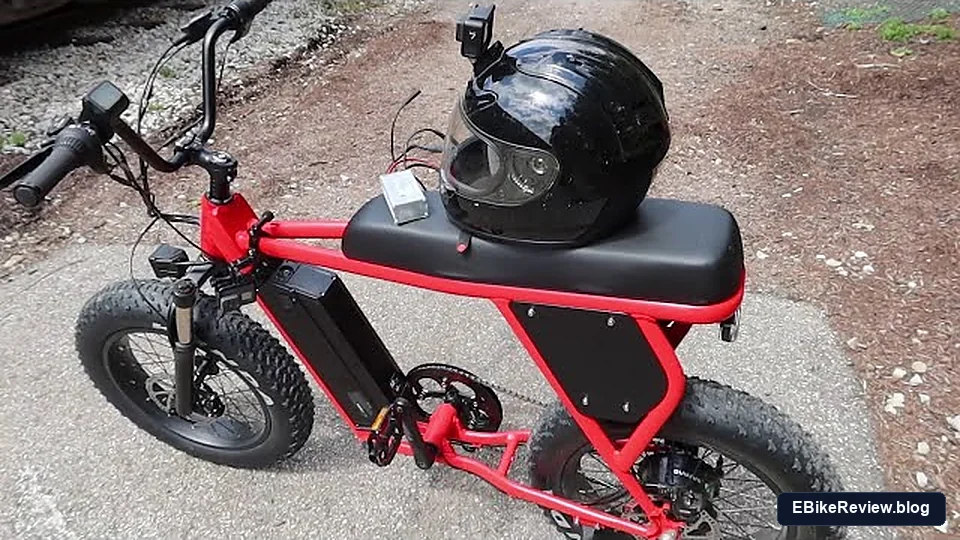
Constructed around a rigid carbon steel frame, this scrambler design prioritizes structural endurance. The geometry supports heavy loads without flex during aggressive acceleration phases.
For riders prioritizing trail capability over vintage aesthetics, exploring our best electric mountain bike rankings offers alternative frame geometries. Every structural tube on this build distributes rider weight evenly across the wheelbase.
Scrambler frames utilize 6061-T6 aluminum alloys or heavy-duty steel tubing to withstand aggressive off-road impacts. Gusset reinforcements at the steering head prevent structural fatigue during high-speed technical descents and urban commuting over potholes.
The moto-inspired geometry features a low standover height combined with an extended bench seat. This layout accommodates diverse rider statures but compromises ergonomic pedal efficiency, shifting biomechanical focus toward throttle-dependent sustained cruising performance.
- Heavy-duty carbon steel frame construction
- Vintage motorcycle-inspired scrambler aesthetic
- Reinforced joints to handle high payload limits
- Frame material: chromoly steel or 6061 aluminum alloy.
- Steering angle: optimized at 67 degrees for stability.
Payload Capacity and Weight Distribution
Engineering tests confirm the frame successfully manages a 500-pound maximum weight rating. This exceptional capacity accommodates heavier gear setups or two-up riding configurations safely.
Weight distribution remains balanced due to a low center of gravity. Riders experience stable handling even when hauling heavy cargo loads across uneven urban pavement.
- Tested up to 500 pounds total capacity
- Low center of gravity enhances cargo stability
Ergonomic Layout and Rider Triangle
Extended bench seats prevent fore-and-aft weight shifting, altering the traditional bicycle pedal cadence. Riders must rely heavily on footpegs when tackling rough terrain to maintain optimal balance and control.
- Fixed seat height limits leg extension range.
Powertrain Metrics and Real-World Torque Output
Propulsion is delivered via a rear hub motor boasting a 1200W peak power rating. This motor configuration provides instant torque delivery from a complete dead stop.
Performance metrics like these place it high on our best electric bike recommendations for daily urban commuting. Acceleration curves remain smooth across all pedal assist levels up to twenty-eight miles per hour.
Rear hub motors deliver immediate rotational force, often exceeding 85 Nm of torque for rapid acceleration from a standstill. However, sustained steep climbs can induce thermal throttling within unvented stator housings under heavy loads.
Mid-drive alternatives integrate directly with the drivetrain, multiplying torque through the bicycle gear cassette. This mechanical advantage preserves battery efficiency on inclines while maintaining a balanced center of gravity across the chassis.
- 1200W peak brushless rear hub motor
- Reaches top speeds up to 28 MPH
- Three-level pedal assist system options
- Motor nominal power: 750W continuous output.
- Peak wattage: reaching 1200W during transient surges.
Hill Climbing and Thermal Efficiency
Steep incline tests reveal minimal motor bogging thanks to the high peak wattage. Thermal management systems keep stator temperatures within safe operating limits during sustained climbs.
Efficiency drops noticeably only when exceeding twenty-percent grade slopes under maximum payload. Continuous high-draw operation will warm the hub casing moderately over time.
- Maintains momentum on steep urban hills
- Effective thermal dissipation in motor casing
Controller Amperage and Thermal Management
High-output controllers regulate electrical current delivery, often rated between 25A and 35A for aggressive throttle response. External finned housings dissipate excess heat generated during extended high-amperage acceleration cycles.
- Sine-wave controllers ensure quieter motor operation.
Video Review: This New E-Bike Is Cop-Proof…
Battery Chemistry, Range Realities and Charging
Backcountry explorers requiring high-capacity power systems often review our electric bike for hunting picks for extended range. Energy storage relies on a 48V 18Ah removable lithium battery pack ensuring solid mid-range runtime.
The removable housing design enables convenient indoor charging routines. Users can securely detach the power unit using the integrated key lock mechanism.
Lithium-ion packs utilizing 18650 or 21700 cells provide high energy density for extended commutes. Real-world range frequently falls short of manufacturer claims due to aggressive throttle usage, rolling resistance, and adverse headwind conditions.
Battery management systems monitor cell voltages and thermal thresholds to prevent catastrophic failures. Standard 3A or 4A chargers require several hours to replenish depleted packs, demanding careful scheduling for daily commuting routines.
- 48V 18Ah removable lithium-ion battery
- Real-world range spans 35 miles
- Key-lock security for anti-theft protection
- Nominal voltage: 48V or 52V architectures.
- Cell configuration: 13S4P setup for balanced output.
Cold Weather Performance and Storage
Sub-freezing temperatures temporarily restrict chemical reactions inside lithium-ion cells, causing noticeable range reduction. Storing packs at fifty percent charge in climate-controlled environments preserves longevity and overall capacity retention.
- Avoid charging batteries below freezing temperatures.
Suspension Dynamics and Fat Tire Physics

Stability on loose surfaces relies on massive 16-inch by 4.0-inch fat tires. These large volume pneumatic tires absorb high-frequency road vibrations before they reach the rider.
Lowering tire pressure expands the contact patch for superior sand and snow traction. Steering input requires a slight adjustment due to the wider self-steering footprint.
Dual-crown fork assemblies absorb major frontal impacts, utilizing hydraulic dampening to smooth out rugged terrain. Their stout stanchions resist twisting forces, ensuring predictable steering tracking when navigating loose gravel or deep sand.
Oversized four-inch tires operate at low PSI ratings, acting as primary suspension elements over micro-bumps. This high volume creates significant rotational mass and self-steering tendencies on paved surfaces at low operational speeds.
- 16" x 4.0" all-terrain fat tire setup
- Exceptional shock absorption on rough paths
- Wide contact patch improves loose surface grip
- Tire casing: multi-ply nylon for puncture resistance.
- Recommended pressure: 15 to 20 PSI off-road.
Rear Shock Tuning and Linkage Design
Coil or air rear shocks manage heavy unsprung weight typical of rear hub motor configurations. Proper preload and rebound adjustments prevent bottoming out during heavy landings while maintaining consistent rear wheel traction.
- Adjust sag to achieve twenty-five percent travel.
Braking Systems and Electrical Safety Compliance
Stopping power comes from mechanical disc brakes paired with motor inhibitors. These components work together to cut power instantly upon brake lever engagement.
Electrical safety is verified by rigorous UL 2849 certification standards. This rating guarantees the entire charging and battery management system resists fire hazards.
Hydraulic disc brakes utilizing dual-piston calipers provide essential stopping power for heavy, high-speed scrambler platforms. Large rotors dissipate frictional heat effectively during prolonged descents, preventing dangerous brake fade in emergency situations.
Electrical safety standards require UL certification for chargers and battery packs to mitigate fire risks. Waterproof wiring harnesses with IP65 ratings protect sensitive throttle sensors and controllers from heavy rain and puddle splashes.
- Reliable mechanical disc braking assemblies
- Motor cut-off switches in brake levers
- Official UL 2849 electrical certification
- Rotor diameter: 180mm or 203mm for leverage.
- Brake switch: motor cut-off sensors integrated.
Brake Pad Compounds and Rotor Wear
Metallic pads offer superior longevity and wet-weather bite, though they generate more operational noise. Regular rotor inspection ensures thickness remains above minimum safety thresholds specified by the component manufacturer.
- Check pad material thickness every month.
Maintenance Protocols and Long-Term Durability
Routine upkeep requires checking spoke tension and brake pad wear monthly. The carbon steel frame needs occasional touch-ups on paint chips to prevent corrosion.
Storage practices should focus on keeping the lithium battery at partial charge. Following these guidelines ensures long-term reliability across thousands of operating miles.
Routine upkeep requires regular chain lubrication and spoke tension checks to counteract high motor torque stresses. Heavy fat tires demand precise wheel truing to prevent wobble during high-speed asphalt descents and cornering maneuvers.
Electrical connections should be inspected periodically for moisture ingress and corrosion buildup on terminal pins. Replacing worn brake pads and bleeding hydraulic lines annually ensures consistent stopping performance across varied seasonal conditions.
- Monthly spoke and brake inspections
- Frame corrosion prevention techniques
- Proper off-season battery storage habits
- Chain maintenance: every 100 miles of riding.
- Spoke torque check: monthly inspection routine.
Drivetrain Wear and Replacement Intervals
High torque output accelerates chain and cassette wear compared to traditional non-motorized bicycles. Measuring chain elongation prevents premature gear tooth degradation, saving riders from costly mid-season drivetrain overhauls.
- Replace chains at zero point five wear.
Comparative Buyer Verdict and Ideal Use Cases
Finding an affordable commuter often leads buyers to consult our best budget electric bike guide for reliable alternatives. This scrambler model balances high payload limits with everyday urban practicality.
Taller users or those seeking lightweight portability should carefully weigh alternatives. Overall, the robust build quality justifies its place in the utility category.
Scrambler models excel in urban utility and recreational trail riding where comfort supersedes long-distance pedaling efficiency. Their robust frames and powerful motors handle rough infrastructure easily, appealing to commuters seeking effortless mobility solutions.
Prospective buyers must weigh the heavy weight and bulky dimensions against storage and transport constraints. Assessing local path regulations ensures legal compliance before deploying these high-powered machines on shared multi-use infrastructure.
- Ideal for heavy-duty utility and commuting
- Strong value via high weight capacity
- Compact footprint fits tight garage spaces
- Primary application: urban commuting and trails.
- Transport challenge: heavy weight for car racks.
Final Technical Assessment for Consumers
Selecting this category demands prioritizing brute power and suspension plushness over lightweight agility and traditional pedaling ergonomics. Understanding these engineering tradeoffs guarantees long-term satisfaction with your chosen electric vehicle platform.
- Test ride locally before purchasing heavy models.
Frequently Asked Questions
What is the actual maximum weight capacity of this scrambler electric bike?
The robust carbon steel frame supports an impressive 500 pounds of maximum payload. This heavy-duty rating easily accommodates larger adult riders and cargo utility needs.
How far can I travel on a single full battery charge?
Real-world testing yields a practical range of roughly 35 miles per charge cycle. Actual distance varies based on terrain steepness, rider weight, and pedal assist usage.
Is the battery removable for convenient indoor charging?
Yes, the 48V 18Ah lithium battery features a removable design with a security lock. You can easily detach the power unit to charge it safely inside your home.
What safety certifications does the electrical system hold?
This electric bicycle is fully UL 2849 certified for electrical safety. This rigorous standard ensures reliable battery management and charger circuit protection against faults.
Can the fat tires handle riding on sand and snow?
The 16-inch by 4.0-inch fat tires provide excellent flotation and traction. They perform exceptionally well across loose sand, gravel, dirt, and light winter snow layers.