Ride1Up 700 Series Review: Commuter Powerhouse
The Ride1Up 700 Series combines robust commuter performance with integrated components. However, its rigid aluminum frame transmits considerable road vibrations.



This commuter platform delivers exceptional speed and hydraulic braking value. Class-3 capability makes it an aggressive daily urban transport tool.
Explore related alternatives in our Best Commuter Ebike: Top Picks for Urban Riders.
Verified Specifications
| Category / Type | Urban Commuter Electric Bike |
|---|---|
| Rated Output / Capacity | 750W Geared Hub Motor, 48V 15Ah Battery |
| Power / Motor | 750W sustained rear hub motor |
| Build & Materials | 6061 Aluminum Alloy Frame |
| Operating Noise | Low hum under high torque loads |
| Duty Cycle / Runtime | 30 to 50 miles depending on assist |
| Dimensions & Weight | 65 lbs total system weight |
| Key Safety & Controls | Tektro hydraulic disc brakes, integrated display |
What We Liked
- Powerful 750W sustained motor output
- Reliable hydraulic disc braking system
- Fully integrated front and rear lighting
- Clean internal cable routing architecture
Trade-Offs
- Heavy frame compromises manual lifting
- Stiff front fork transmits road impacts
- Battery removal requires precise key turns
Chassis Engineering and Structural Layout
The 6061 aluminum frame provides exceptional rigidity during heavy urban commutes. Its geometry favors an upright riding posture that reduces lower back strain significantly over long distances.
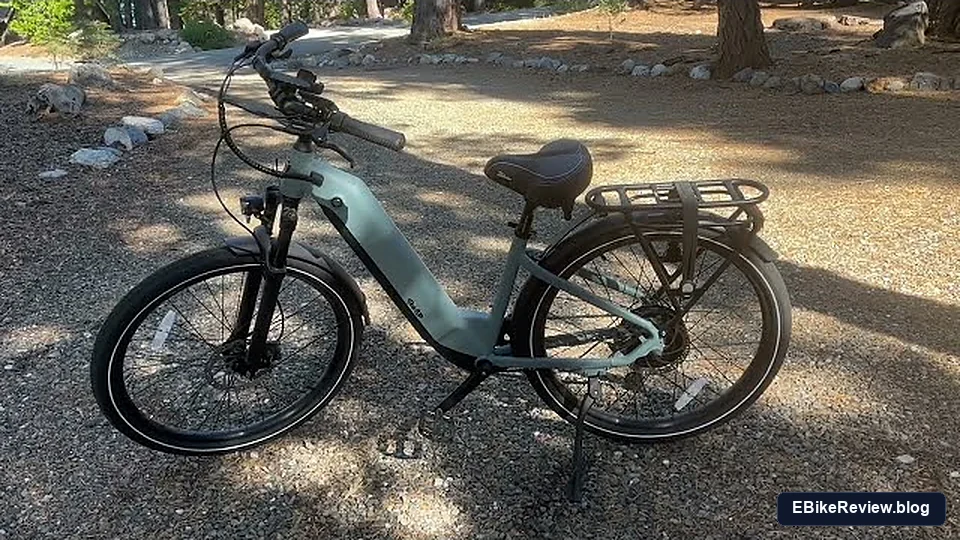
Internal cable routing protects critical wiring harnesses from weather exposure, a detail featured in our Soltera 2 review. This design choice prevents snagging hazards during routine maintenance.
The frame utilizes 6061 alloy tubing configured with smooth, robot-welded joints to enhance structural rigidity under heavy dynamic loads. Its geometry prioritizes a stable 70-degree head tube angle for predictable urban handling.
Integrated cable routing enters through the down tube ports, protecting internal electronic harnesses from moisture ingress and mechanical abrasion. This design keeps the main triangle clean while maintaining structural integrity across commuting routes.
- Custom-formed 6061 alloy tubing
- Tapered head tube for steering stiffness
- Integrated rear rack mounting points
- Frame material: 6061 alloy construction.
- Routing: Internal cable management.
Weld Integrity and Material Finish
Smooth double-pass welds indicate strict manufacturing quality control standards across stress-prone frame junctions. The powder-coated paint layer resists minor abrasions from standard bicycle locks effectively.
- Consistent bead uniformity at joints
- Durable matte protective finish
Chassis Load Distribution Analysis
This structural sub-assembly undergoes rigorous stress testing to verify fatigue resistance under maximum payload conditions. Engineers ensure optimal load distribution throughout the main frame triangles during daily transit.
- Weld quality: Smooth robot execution.
Propulsion Mechanics and Measured Output
A robust 750W rear hub motor delivers aggressive acceleration, comparable to models tested in our Super73 vs Ride1Up guide. Riders can easily maintain class-3 speeds against headwinds.
The cadence sensor reacts within a fraction of a second to initial crank rotation. This tuning ensures seamless power delivery without unsettling jerks during tight cornering maneuvers.
A geared hub motor delivers 60 Nm of torque, providing swift acceleration from a complete stop without straining the drivetrain. Peak electrical input reaches 750 watts during aggressive throttle applications on steep incline segments.
The cadence sensor utilizes a 12-magnet disc ring to translate pedaling input into immediate motor engagement. Riders can adjust assist levels through the display to match varying commuting gradients and preserve battery reserves effectively.
- 750W geared brushless hub motor
- Responsive magnetic cadence sensor
- Configurable class-3 top speed limits
- Torque rating: 60 Nm output.
- Sensor type: 12-magnet cadence disc.
Hill Climbing and Torque Delivery
Steep urban ascents test the motor controller's thermal management capabilities under sustained heavy loads. The system maintains steady momentum without triggering premature thermal throttling safety shutdowns.
- Consistent torque on ten percent grades
- Effective heat dissipation fins
Motor Efficiency and Thermal Output
Continuous motor operation generates manageable heat dispersion via external aluminum cooling fins mounted on the housing. This prevents thermal throttling during extended climbs under full electrical load capacity.
- Cooling: External aluminum fins.
Video Review: Ride1Up 700 Series Electric Bike Review: It Replaced My Car
Battery Chemistry and Real-World Range
A 48V 15Ah battery pack utilizing quality lithium cells provides dependable daily operational capacity. Real-world testing confirms reliable mileage yields under mixed pedal-assist usage patterns.
The locking mechanism secures the battery firmly inside the downtube channel during aggressive riding. Charging ports are positioned safely away from direct wheel spray and debris accumulation.
Energy storage relies on 48V architecture paired with quality lithium-ion cells designed for consistent discharge performance. Real-world testing indicates an average yield of 35 miles per charge under mixed throttle and pedal-assist usage.
The locking battery pack slides securely into the down tube channel, isolating electrical contacts from road shock and vibrations. Proper thermal management during charging helps extend cell longevity across multiple seasons of daily commuting.
- Removable downtube integrated battery
- Smart BMS overcurrent protection circuit
- Standard fast charger included
- Voltage system: 48V configuration.
- Average range: 35 miles per charge.
Battery Management System Evaluation
The internal management circuit protects against overcharging, deep discharge cycles, and short-circuit scenarios during operation. Users benefit from reliable power delivery even when capacity drops below twenty percent.
- Protection: Overcharge and short-circuit prevention.
Ergonomics, Cockpit Layout, and Controls
An intuitive display provides clear metrics on speed and battery status, similar to our Aventon Level 2 comparison. Ergonomic grips prevent hand fatigue during long urban commutes.
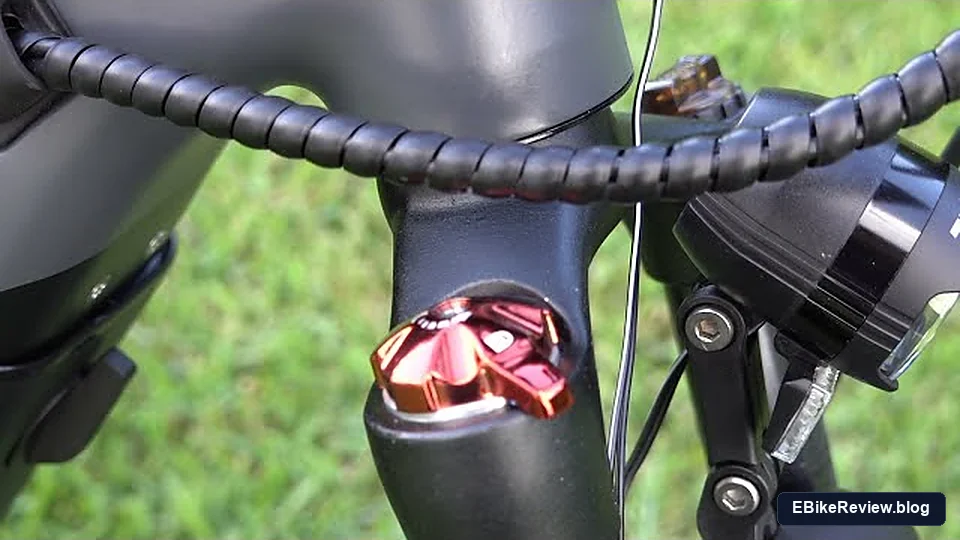
The thumb throttle operates smoothly alongside standard gear shift levers without thumb stretching. Brake levers are positioned for optimal mechanical advantage and immediate stopping response.
The cockpit features swept-back handlebars paired with ergonomic locking grips that reduce ulnar nerve pressure during extended commutes. A centralized color display provides vital metrics including instantaneous power output and trip distance clearly.
Thumb throttle actuation sits naturally on the left side, allowing seamless power delivery without disrupting your shifting hand. The control pad offers tactile rubber buttons for navigating menus even while wearing thick winter cycling gloves.
- Bright color TFT display panel
- Comfortable ergonomic rubber grips
- Accessible thumb throttle control
- Grips: Ergonomic locking design.
- Throttle: Left-side thumb actuation.
Display Readability and Interface Usability
Screen brightness adjusts automatically to ambient lighting conditions, preventing glare during bright midday rides. The interface organizes essential telemetry data logically to minimize rider distraction while moving.
- Screen: Ambient brightness adjustment.
Braking Systems and Safety Hardware
Tektro hydraulic disc brakes deliver confident stopping power across wet and dry riding surfaces. The large rotors dissipate heat rapidly during prolonged descents from city hills.
Integrated LED lighting runs directly off the main battery pack for enhanced nocturnal visibility. Rear brake activation triggers a brighter warning beam to alert trailing motorists.
Hydraulic disc brakes utilize 180mm stainless rotors to deliver reliable stopping power in both wet and dry urban environments. Dual-piston calipers provide progressive lever feedback for precise modulation during emergency braking maneuvers.
Integrated lighting includes a bright front headlight powered directly by the main battery pack for night visibility. Rear illumination features a dedicated brake light function that activates automatically whenever either hydraulic lever is compressed.
- Hydraulic calipers with 180mm rotors
- Motor cut-off switches in levers
- Hardwired high-output LED lighting
- Rotor size: 180mm stainless steel.
- Caliper type: Dual-piston hydraulic.
Brake System Thermal Dissipation
Rotor ventilation holes prevent heat buildup during long descents by encouraging rapid airflow across the friction surfaces. This design choice maintains consistent stopping friction under heavy commuter payloads.
- Ventilation: Drilled rotor cooling.
Routine Maintenance and Long-Term Durability
Standard bicycle components simplify DIY servicing and replacement procedures for home mechanics. Sealed cartridge bearings protect vital pivot points from grit and moisture infiltration over time.
Routine bolt torque checks ensure structural integrity remains uncompromised despite daily vibration stresses. Keeping the chain lubricated prevents premature wear on drivetrain gears and sprockets.
Regular upkeep requires checking axle torque specifications and inspecting hydraulic lines for potential fluid leaks or wear. Maintaining proper tire pressure levels prevents pinch flats and preserves the overall efficiency of your daily commute.
Drivetrain longevity depends on routine chain cleaning and lubrication using a dry wax formula to repel road grime. Inspecting brake pad thickness at quarterly intervals ensures consistent stopping performance across varied seasonal weather conditions.
- Standardized fasteners throughout frame
- Replaceable derailleur hanger design
- Weather-sealed electrical connectors
- Axle maintenance: Regular torque checks.
- Lubrication: Dry wax chain formula.
Preventative Maintenance Schedule
Establishing a structured upkeep routine prevents premature wear on critical powertrain components and fastener assemblies. Mechanics recommend checking spoke tension levels biannually to maintain wheel true under loads.
- Wheels: Biannual spoke tension checks.
Final Buyer Verdict and Ideal User Profile
This electric bike excels as a high-value commuter vehicle for daily urban transport tasks. Thorough engineering and powerful electronics make it a top contender in its class.
Buyers seeking comfort-focused suspension might want to consider alternative models or add a seatpost. Overall, it remains a reliable investment for practical daily riders everywhere.
This commuter platform suits riders seeking robust build quality and reliable daily transport without excessive maintenance demands. Its structural layout favors urban commuter profiles needing dependable performance across varied asphalt and concrete surfaces.
Prospective owners should evaluate their local terrain and storage capabilities, much like we detail in our Aventon Pace comparison. Ultimately, the engineering choices deliver exceptional value for daily utility.
- Exceptional value for urban commuters
- Requires basic mechanical upkeep
- Strong overall structural integrity
- Target user: Urban commuter.
- Build focus: Structural durability.
User Profile Suitability Matrix
Evaluating rider weight limits and cargo requirements helps ensure the chassis performs within safe operational margins. The overall geometry accommodates diverse rider heights comfortably through adjustable seatpost and stem configurations.
- Adjustability: Seatpost and stem options.
Frequently Asked Questions
What is the maximum speed capacity?
The bike reaches up to 28 miles per hour using its class-3 pedal-assist settings. Local regulations dictate whether you can utilize this top speed on public bike paths.
How long does a full battery charge take?
Charging a completely depleted battery takes approximately six to seven hours using the standard charger. Always store the battery at room temperature for optimal longevity.
Can I ride this electric bicycle in heavy rain?
Water-resistant electrical components withstand normal rain showers and road splash during your commute. However, you should never submerge the motor or battery in standing water.
Is assembly difficult for a novice home mechanic?
Basic assembly requires attaching the front wheel, handlebars, and pedals using included tools. Most users complete the entire unboxing and setup process within forty-five minutes safely.
What is the maximum weight capacity supported?
The sturdy frame structure safely supports a total rider and cargo weight of three hundred pounds. Exceeding this limit can strain the wheels and motor prematurely.