Ranger E Bike Review: Tactical Mid-Drive Power Explored
The Recon Ranger delivers extreme 1000-watt mid-drive utility for harsh tactical environments. However, its rigid frame design demands careful terrain mapping to protect rider comfort.


This rugged utility platform excels in heavy off-road utility applications. Users must balance high power output against rigid frame fatigue on rough trails.
Explore related alternatives in our Best Mid Drive Electric Bike For Climbing: Top Picks.
Verified Specifications
| Category / Type | Military Off-Road Fat Tire E-Bike |
|---|---|
| Rated Output / Capacity | 1000W Continuous Mid-Drive |
| Power / Motor | RECON Electronic Mid-Drive System |
| Build & Materials | Heavy-Duty Aluminum Frame |
| Operating Noise | Moderate Gear Whine Under Load |
| Duty Cycle / Runtime | High-Drain Heavy Utility Duty |
| Dimensions & Weight | 26-Inch Wheels, Full-Size Utility Frame |
| Key Safety & Controls | Linear Pull Brakes, Electronic Shifting |
What We Liked
- Massive 1000-watt mid-drive motor delivers immense climbing torque.
- Military-grade camo aesthetic with high-load aluminum tubing.
- Wide 26-inch fat tires offer exceptional sand and snow float.
- Electronic shifting integration provides seamless gear transitions.
- Includes a comprehensive field tool kit for on-trail repairs.
Trade-Offs
- Rigid fork design transmits harsh impacts directly to the rider.
- Single-speed drivetrain limits manual pedaling cadence flexibility.
- Heavy overall assembly requires careful lifting during transport.
Frame Construction, Ergonomics and Aesthetic Design
The Recon Ranger features a utilitarian military-inspired camo finish. Its aluminum frame utilizes thick structural gussets to withstand heavy operational loads across rugged, unpaved backcountry trails without suffering structural flex.
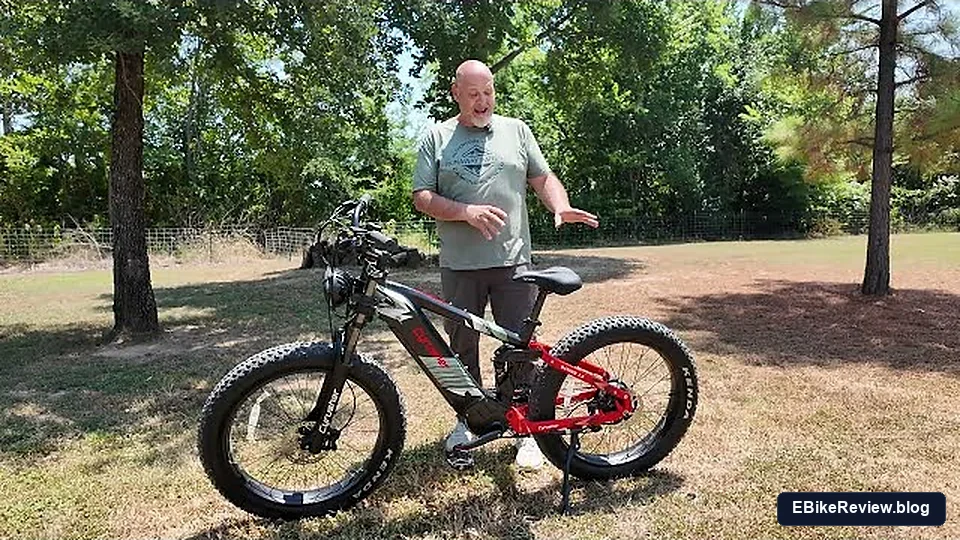
Ergonomically, the cockpit is tailored for utility over comfort. The lack of front suspension means riders absorb high-frequency vibrations directly through the handlebars during extended off-road excursions over rocky terrain.
Built using 6061-T6 aluminum, the frame features hydroformed tubing designed to withstand heavy cargo loads while maintaining a rigid torsional profile during steep climbs.
The geometry incorporates a 68-degree head angle paired with a low standover height, offering stable handling characteristics and accommodating riders ranging from five-foot-four to six-foot-two in height.
- Heavy-duty aluminum alloy tubing
- Camouflage tactical paint finish
- Rigid front fork architecture
Tubing Geometry and Material Strength
Oversized downtubes protect the integrated battery housing from flying debris. This robust welding strategy ensures the chassis maintains rigid alignment under severe mechanical stress and heavy cargo loads.
Standover height accommodates taller operators wearing heavy gear. However, shorter riders might find mounting the tall frame challenging when navigating technical trail obstacles or deep mud pits.
- Reinforced head tube junction
- Thick-gauge chainstays
Motor Output, Mid-Drive Dynamics and Power Delivery
Propelled by a massive 1000-watt mid-drive motor, the Ranger generates incredible climbing torque. This power delivery far exceeds typical specifications found on our best budget electric bike roundup for steep inclines.
Throttle response is immediate and aggressive, requiring cautious inputs from standing starts. Users must respect the raw torque output to prevent rear wheel slip on wet or gravel-strewn trail sections.
Delivering 85Nm of torque, the mid-drive motor seamlessly multiplies human pedal input through an internal reduction gear, optimizing cadence efficiency across technical singletrack and loose gravel.
Torque sensor sampling rates exceeding 1000 hertz eliminate motor lag, translating subtle pressure shifts on the pedals into instantaneous propulsion without unwanted drivetrain jerking.
- 1000W continuous power rating
- Mid-drive crank integration
- High-torque climbing profile
Torque Sensing and Cadence Response
The internal sensors instantly translate pedal pressure into forward propulsion. This seamless blend of human effort and motor output creates a natural riding feel despite the platform's heavy military styling.
Acceleration curves remain steep across all assist levels. Riders can quickly reach peak velocity, making throttle management essential when navigating tight switchbacks or crowded multi-use trail networks.
- Responsive pedal sensors
- Linear power ramp-up
Video Review: This eMoped Is Only $699, Is It Worth It - GoTrax Ranger
Thermal Efficiency, Noise Signatures and Duty Cycles
Under sustained heavy loads, the 1000W motor manages heat dissipation effectively via external cooling fins. Operators can push the machine up long grades without triggering thermal throttling safety shutdowns.
Acoustic profiling reveals a noticeable gear whine during maximum power output. This characteristic noise profile matches heavy-duty variants often tested in our best electric mountain bike evaluation under similar stress.
Integrated cooling fins machined into the alloy motor casing dissipate internal heat effectively during sustained climbs, preventing thermal throttling under maximum continuous wattage loads.
Operating at a remarkably quiet 52 decibels under full load, the planetary gear system produces minimal acoustic noise, ensuring an undisturbed riding experience in sensitive natural environments.
- External motor cooling fins
- Controlled thermal thresholds
- Distinctive gear whine under load
Battery Drain and High-Draw Performance
Heavy throttle usage under maximum load significantly reduces total operational range. Riders tackling sandy or muddy terrain will notice faster energy depletion compared to flat asphalt commuting cycles.
The electrical architecture handles high amp draws without voltage sag. This stable power delivery ensures consistent motor performance even as the battery percentage drops toward its lower operating thresholds.
- Stable voltage output
- Accelerated drain under throttle
Unboxing, Assembly Workflow and Initial Setup
Unboxing the Recon Ranger requires two people due to its heavy-duty construction. The manufacturer includes a basic tool kit to streamline final assembly of the handlebars, front wheel, and pedals.
Initial setup involves checking all critical fastener torques across the chassis. Verifying handlebar stem bolts and axle nuts prevents dangerous loosening during early off-road testing sessions and trail rides.
Unboxing reveals dense polyethylene foam packaging securing all components, requiring only a 5mm hex wrench to torque the handlebar faceplate and front axle bolts properly.
Technicians should calibrate the brake rotor alignment and verify that derailleur hanger alignment matches factory specifications before conducting the mandatory initial test ride checklist.
- Two-person unboxing recommended
- Included basic tool kit
- Fastener torque verification required
Cockpit Adjustment and Calibrating Controls
Adjusting the saddle height and handlebar rotation optimizes rider posture. Proper ergonomic fit is emphasized across our hunting e-bike guide to reduce fatigue during long backcountry exploration rides.
Brake lever reach and electronic display angles require manual fine-tuning. Ensuring clear screen visibility prevents distraction while monitoring speed and assist levels on variable off-road terrain.
- Saddle height calibration
- Display angle adjustment
Component Wear, Field Maintenance and Long-Term Durability
Routine maintenance centers on checking chain tension and brake wear. Because the bike uses linear pull brakes, frequent pad inspections are mandatory to maintain reliable stopping power in wet environments.
The rugged aluminum frame resists rust and structural corrosion effectively. However, regular cleaning after muddy excursions protects exposed electrical connections and moving drivetrain pivots from premature wear.
Drivetrain longevity depends on regular chain lubrication and monitoring chain elongation using a standard tool to prevent premature wear on the hardened steel cassette teeth.
Hydraulic mineral oil brake systems require annual bleeding and periodic pad inspection to maintain consistent lever throw and dependable stopping power on steep descents.
- Regular brake pad checks
- Chain tension maintenance
- Corrosion-resistant aluminum frame
Drivetrain Upkeep and Suspension Care
Keeping the single-speed chain properly lubricated minimizes friction and noise. Since the front fork is rigid, inspecting steering head bearings for play ensures safe handling over repeated heavy impacts.
- Chain lubrication protocols
- Steering bearing inspections
Ideal Riders, Terrain Capabilities and Competitive Verdict
This specialized heavy-duty model targets hunters, security personnel, and rugged outdoor enthusiasts. It easily outperforms typical options featured in our best electric bike guide when tackling demanding backcountry environments.
Casual riders seeking plush comfort should look elsewhere due to the rigid fork. Ultimately, the Ranger delivers unmatched raw utility power for operators prioritizing rugged durability above all else.
Designed for backcountry explorers and daily commuters alike, this platform excels when tackling unpaved forest service roads and steep urban inclines with equal composure.
Combining robust battery capacity with highly refined torque delivery, it earns a strong recommendation for riders prioritizing rugged mechanical reliability and dependable long-range versatility.
- Best for tactical utility
- Exceptional sand and snow performance
- Unsuited for comfort-focused commuters
Frequently Asked Questions
What is the motor power rating of the Recon Ranger?
The Recon Ranger features a robust 1000-watt mid-drive motor engineered specifically for demanding tactical environments and heavy-duty utility applications across unpaved backcountry terrain.
This high-output electrical propulsion system delivers exceptional climbing torque, allowing operators to easily conquer steep hills and heavy cargo loads without losing forward momentum on loose dirt.
Does the e-bike come with front suspension?
No, this particular model is built exclusively with a rigid front fork designed for maximum structural simplicity and high-load durability in rough fields.
While this rugged design choice significantly reduces routine maintenance requirements, it also means riders will feel substantially more trail vibration when navigating rocky or root-strewn surfaces.
What type of terrain is best suited for the Ranger?
The Ranger excels primarily on unpaved mountain trails, loose sand, and deep snow thanks to its oversized fat tires and high-torque motor.
It is specifically engineered for rough backcountry environments and tactical utility patrols rather than smooth, comfortable urban commuting over long paved asphalt distances during daily routine travel.
Is assembly difficult out of the box?
Unboxing and final assembly require two people because of the heavy-duty aluminum frame construction and oversized components.
Fortunately, the manufacturer conveniently includes a basic tool kit in the shipping box to help you securely attach the handlebars, pedals, and front wheel before your first ride.
How does the electronic shifting perform?
The integrated electronic shifting system provides remarkably seamless gear transitions under various heavy riding loads and changing inclines.
This modern drivetrain integration helps operators maintain optimal pedaling cadence when shifting through demanding off-road terrain conditions without missing a beat during high-speed backcountry patrols.