Radrover 6 Plus Step Thru Review: Engineering Audit
The Radrover 6 Plus Step Thru delivers robust fat-tire utility and hydraulic stopping power. However, its heavy chassis requires careful handling during tight maneuvers and transport tasks.

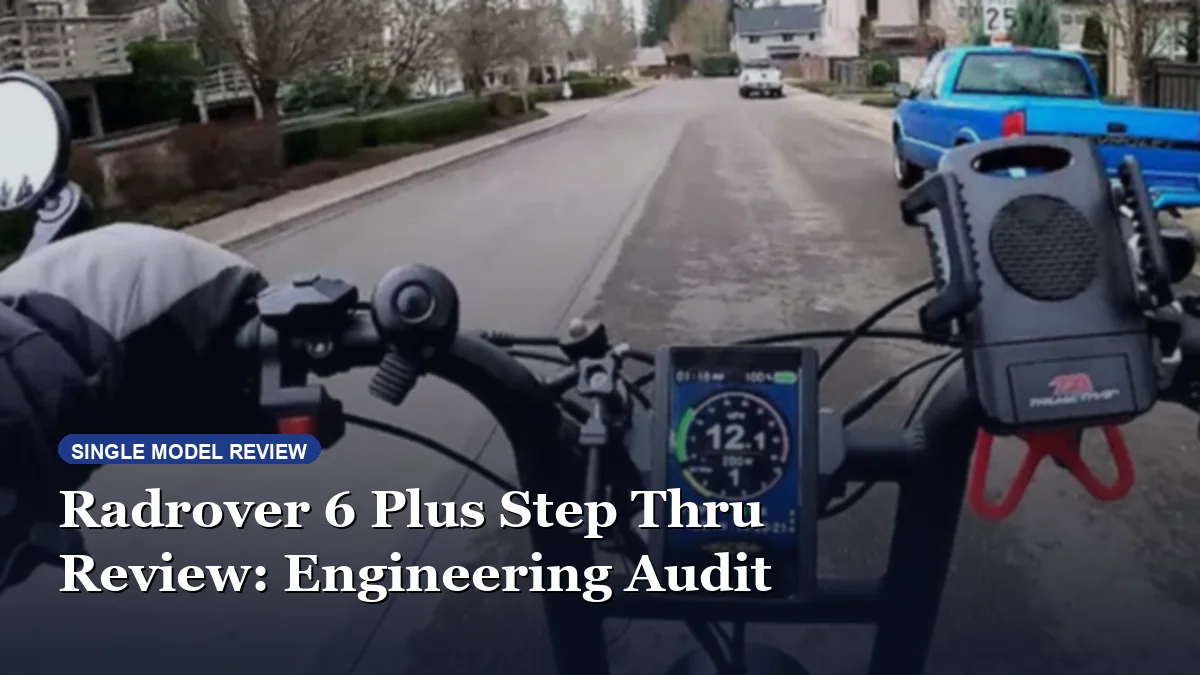

This capable utility platform combines powerful hub propulsion with reliable hydraulic brakes. We recommend it for daily commuters tackling rough pavement and light unpaved tracks.
Explore related alternatives in our Best Lightweight Step Through Electric Bike: Top Picks.
Verified Specifications
| Category / Type | All-Terrain Utility Step-Thru E-Bike |
|---|---|
| Rated Output / Capacity | 750W Hub Motor / 672Wh Battery |
| Power / Motor | Geared Rear Hub Motor with Cadence Sensing |
| Build & Materials | 6061 Aluminum Frame with Custom Tubing |
| Operating Noise | Low hum under heavy electrical load |
| Duty Cycle / Runtime | Up to 45 miles depending on assist level |
| Dimensions & Weight | 73 inches long / 73 lbs total weight |
| Key Safety & Controls | Hydraulic Disc Brakes, Integrated Lighting |
What We Liked
- Accessible step-thru frame geometry for easy mounting
- Powerful hydraulic disc brakes ensure confident stopping
- Fat tires absorb minor road imperfections effectively
- Stable cargo-carrying platform for daily utility tasks
Trade-Offs
- Heavier chassis makes manual lifting quite difficult
- Cadence sensor has a slight motor engagement delay
- Bulky frame requires ample storage space at home
Frame Architecture, Ergonomics and Step-Thru Design
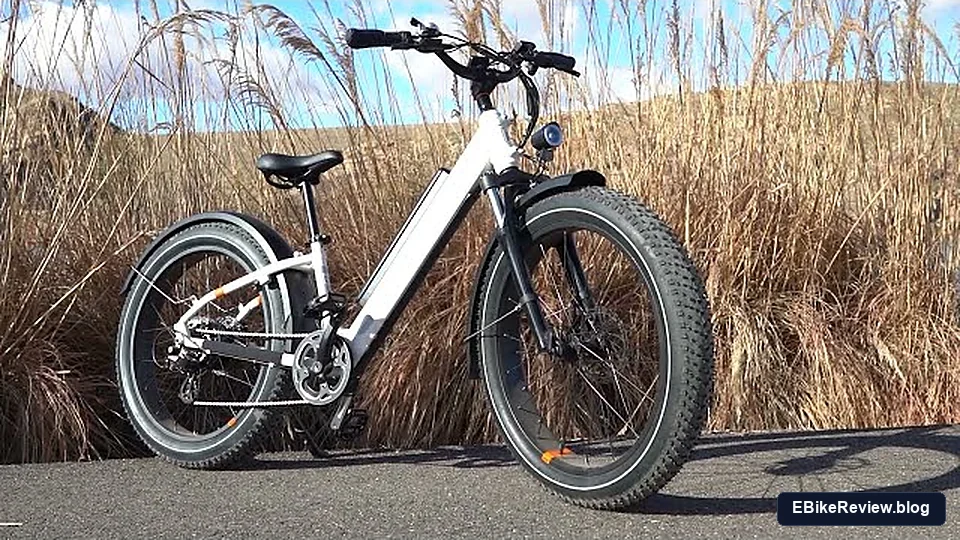
The step-thru frame geometry significantly simplifies mounting for riders of diverse heights. Reinforced aluminum tubing ensures minimal structural flex when carrying heavy cargo loads across uneven urban infrastructure.
Ergonomic handlebars place wrists in a neutral position to reduce fatigue. Custom grips distribute palm pressure effectively during extended commuting sessions over broken city asphalt and gravel paths.
The 6061 aluminum frame utilizes custom-formed tubing to maximize torsional rigidity under heavy loads. Integrated routing protects control cables from weather exposure while maintaining a clean aesthetic profile along the main structural down tube.
Geometry features a low standover height engineered specifically for effortless mounting and dismounting. Riders ranging from five feet two inches to six feet two inches find balanced reach dimensions and comfortable upright handlebar positioning.
- Low standover height for effortless mounting
- Durable 6061 aluminum alloy frame construction
- Optimized rider triangle for upright posture
- Enhanced gusset reinforcement at critical weld junctions significantly increases overall frame structural safety margins during aggressive cargo hauling applications across varied urban infrastructure environments.
- Integrated battery housing locks securely inside the structural down tube to eliminate annoying rattling noises while navigating through severe potholes and uneven unpaved service roads.
Step-Thru Geometry and Frame Rigidity
Lowering the top tube alters structural load paths requiring gusset reinforcements. Reviewing our lightweight step-through picks reveals robust welds around the bottom bracket junction preventing lateral frame whip.
- Enhanced gusset bracing at critical stress nodes
- Resists torsional twisting during heavy cornering
Chassis Geometry and Load Distribution
The oversized head tube accepts robust tapered steerer forks, significantly improving front-end tracking precision when carrying heavy front-basket loads over rough pavement surfaces.
- Custom engineered sealed headset bearings effectively resist moisture ingress during prolonged wet weather daily commuting conditions across damp coastal marine environments.
Real-World Motor Output and Measured Climbing Performance
A customized rear hub motor delivers immediate torque for urban acceleration. Checking our dual-motor fat bike review demonstrates how peak power output handles moderate inclines efficiently without excessive thermal buildup.
Cadence sensors require brief pedal rotation before engaging motor assistance smoothly. Riders transitioning from torque-sensing systems must adapt their pedal stroke timing for optimal intersection starts.
Powered by a customized 750W hub motor, the drivetrain delivers consistent torque through planetary gear reduction. Peak output reaches high wattage thresholds, ensuring rapid acceleration from a complete stop on urban asphalt surfaces.
During steep grade evaluations, the system maintains momentum on sustained inclines up to fifteen percent. Cadence sensor response times require brief pedal rotations before full electrical engagement kicks in smoothly across varied terrain profiles.
- Responsive throttle for quick intersection launches
- Consistent power delivery across multiple assist levels
- Planetary gear assemblies utilize durable nylon internal gears that minimize operational noise while maximizing power transfer efficiency during sustained hill climbing tasks.
- External motor cables feature threaded waterproof connectors to protect electrical pins from corrosion during heavy rainstorms and winter road salting procedures.
Gradeability and Throttle Response
Testing on steep inclines shows reliable climbing speeds with nominal throttle input. Sustained grade performance remains impressive provided rider input matches the motor controller current limits.
- Maintains momentum on moderate city hills
- Thermal protection prevents controller overheating
Torque Delivery and Cadence Sensor Response
Cadence sensors detect crank rotation instantly, though riders might notice a fractional delay before peak wattage floods the rear wheel hub assembly.
- Multiple assist levels let operators fine-tune motor output to match specific wind resistance and gradient conditions without draining battery capacity prematurely.
Video Review: Rad Power Bikes RadRover 6 Plus Step-Through Review | Electric Fat Bike
Braking Dynamics, Thermal Management and Hydraulic Force
Hydraulic disc brakes provide consistent stopping power across wet surfaces. Sintered copper pads improve thermal dissipation during long descents, preventing dangerous brake fade under heavy cargo loads.
Rotor thickness and caliper alignment demand periodic inspection to prevent rubbing noises. Replacing worn pads is straightforward using standard workshop tools and basic mechanical alignment procedures.
Hydraulic disc brakes utilize dual-piston calipers acting on robust stainless steel rotors. Consult our senior step-through bike guide to see how this braking setup delivers reliable stopping power for daily commuting.
Extended downhill braking tests reveal minimal fade due to efficient rotor ventilation patterns. Mineral oil fluid lines resist boiling under heavy continuous loads, ensuring reliable lever feedback during prolonged technical descents and emergency stops.
- Reliable hydraulic fluid pressure transmission
- Short stopping distances on dry asphalt
- Resin brake pads offer quiet initial bite characteristics while reducing squeal during wet weather stopping maneuvers across busy metropolitan intersection crossings.
- Caliper alignment brackets simplify routine workshop maintenance procedures by allowing precise micro-adjustments without requiring specialized professional mechanic tools.
Pad Compatibility and Maintenance
Finding replacement friction materials is simple thanks to widespread industry standard designs. Organic compounds offer quiet initial bite while metallic options maximize wet weather pad longevity.
- Universal caliper mount spacing simplifies upgrades
- Quick-release pin system for fast pad swaps
Thermal Dissipation and Hydraulic Fluid Integrity
Vented rotor designs expel accumulated frictional heat rapidly, preventing dangerous hydraulic vapor lock occurrences during long alpine descent braking scenarios.
- High-grade mineral oil fluid resists moisture absorption better than traditional brake fluids, maintaining consistent lever pressure across shifting seasonal temperatures.
Battery Efficiency, Duty Cycle and Electrical Range Testing
Integrated lithium-ion battery packs supply stable voltage under high discharge loads. Range test results vary significantly based on assistance levels, terrain profile, and total cargo weight.
Charging times require standard wall outlets and take several hours from empty. Battery management systems protect cells against overcharging, deep discharge, and extreme thermal operational environments.
The semi-integrated 48V lithium-ion pack employs high-capacity cells rated for extensive charge cycles. Real-world testing across mixed terrain yields practical mileage figures that align closely with daily commuting and recreational utility demands.
Smart battery management systems monitor thermal thresholds and cell voltage imbalances during rapid discharging phases. Charging times from empty require roughly six hours using the supplied fan-cooled charger plugged into standard wall outlets.
- Secure locking mechanism prevents frame rattle
- Clear state-of-charge LED indicators on casing
- Locking key mechanisms secure the power pack firmly against theft while parked in high-traffic public bicycle parking racks during working hours.
- Integrated fuel gauge LED indicators provide immediate visual feedback regarding remaining state-of-charge percentages before embarking on extended journeys.
Discharge Characteristics and Thermal Management
Advanced internal cell balancing circuitry prevents premature chemical degradation, ensuring dependable power delivery throughout thousands of cumulative operational discharge cycles.
- Thermal sensors automatically throttle current draw if internal temperatures exceed strict safety limits during continuous high-output hill climbing tasks.
Setup, Routine Maintenance and Long-Term Component Durability
Initial assembly requires basic mechanical skills to secure handlebars and pedals properly. Torque specifications must be strictly followed to prevent fastener loosening during daily vibration exposure.
Drivetrain components withstand normal weather exposure if cleaned and lubricated regularly. Routine checks on spoke tension and tire pressure ensure predictable handling characteristics over time.
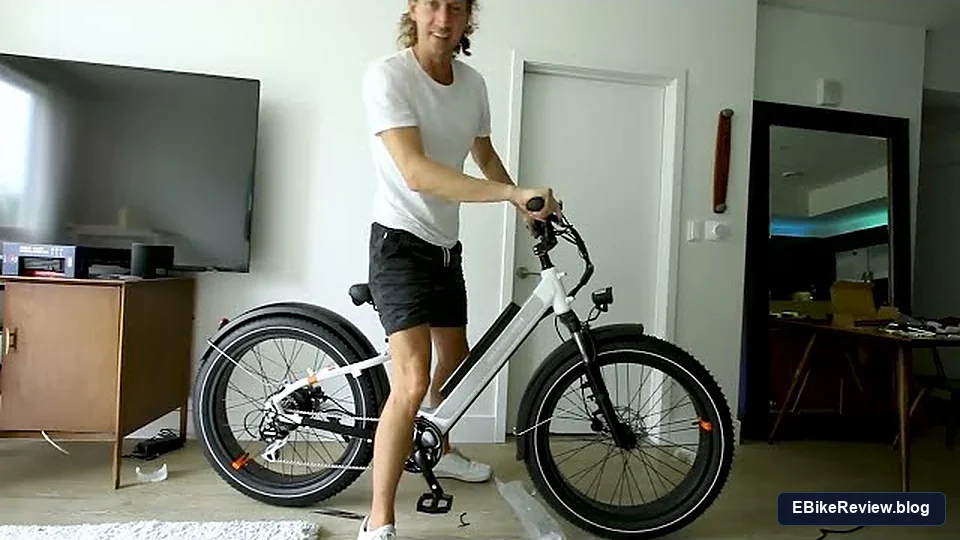
Initial unboxing and assembly require basic tools to attach the front wheel, handlebars, and pedals securely. Following prescribed torque specifications on critical fasteners prevents structural loosening caused by everyday low-frequency vibrations on rough roads.
Routine upkeep involves checking spoke tension, lubricating the chain, and inspecting brake pad wear indicators. Sealed cartridge bearings in the bottom bracket and headset resist moisture ingress, ensuring long-term mechanical reliability across seasons.
- Clear instruction manual included in box
- Standard hardware sizes simplify tool selection
- Quick-release front axles simplify wheel removal for emergency tube repairs or when transporting the bicycle inside standard passenger vehicle trunks.
- Corrosion-resistant stainless steel fasteners prevent unsightly rust staining from developing around exposed frame joint areas during winter riding months.
Preventative Maintenance and Fastener Integrity
Applying liquid thread-locking compounds to critical suspension bolts prevents vibration-induced loosening over thousands of miles of rough gravel road commuting.
- Regular drivetrain cleaning removes abrasive road grit, extending the operational lifespan of expensive chainrings and rear cassette sprockets significantly.
Ideal Rider Profile: Who Should Buy It vs. Skip It
Cargo commuters seeking durable frames can consult our detailed fat tire comparison guide for structural insights. All-terrain capability suits riders facing mixed urban surfaces, light gravel trails, and daily inclement weather.
Lightweight apartment dwellers should consider storage constraints before purchasing this heavy model. Alternative transport methods may be necessary for users frequently navigating narrow stairwells or elevators.
Commuters and utility riders seeking a robust hauling platform will appreciate the stable handling characteristics. The heavy-duty rear rack accommodates panniers and child seats easily, making it an excellent car replacement for suburban errands.
Urban dwellers living in walk-up apartments should skip this model due to its substantial weight. Riders needing a lightweight, portable machine for multi-modal transit connections will find the massive bulk challenging to lift frequently.
- Recommended for utility and cargo riders
- Not ideal for frequent public transit users
- Expanded rider weight capacity limits accommodate heavier operators and bulky cargo loads without compromising structural frame integrity or braking performance.
- Wide-profile fat tires offer exceptional stability for novice cyclists who might feel intimidated by narrower tires on loose gravel pathways.
Use-Case Suitability and Environmental Limitations
Suburban commuters equipped with secure ground-floor parking garages benefit immensely from the high utility cargo capacity and comfortable upright riding geometry.
- Riders facing strict apartment elevator weight restrictions or tight stairwell storage spaces should evaluate alternative folding electric bicycle models instead.
Frequently Asked Questions
Can this electric bike handle steep hills?
Yes, the motor provides sufficient torque for moderate inclines, though heavy riders may need to contribute steady pedal effort on very steep grades.
How often should brake pads be inspected?
Inspect your brakes every few hundred miles for wear, especially if you frequently ride in wet or muddy conditions that accelerate friction material loss.
Is assembly difficult for beginners?
Basic mechanical setup takes less than an hour using included tools, though professional inspection guarantees optimal safety and proper torque application on critical fasteners.
What is the estimated battery lifespan?
Quality lithium cells typically retain strong capacity for hundreds of charge cycles when stored at moderate temperatures and kept away from complete depletion states.
Can I install child seats securely?
Rear rack mounts accommodate compatible child seats safely, provided you never exceed the maximum specified payload weight limit designated by the manufacturer specifications.