Radrover 6 Plus Technical Review
The Radrover 6 Plus delivers heavy-duty utility and hydraulic braking. However, its high total weight requires deliberate handling during technical maneuvers.

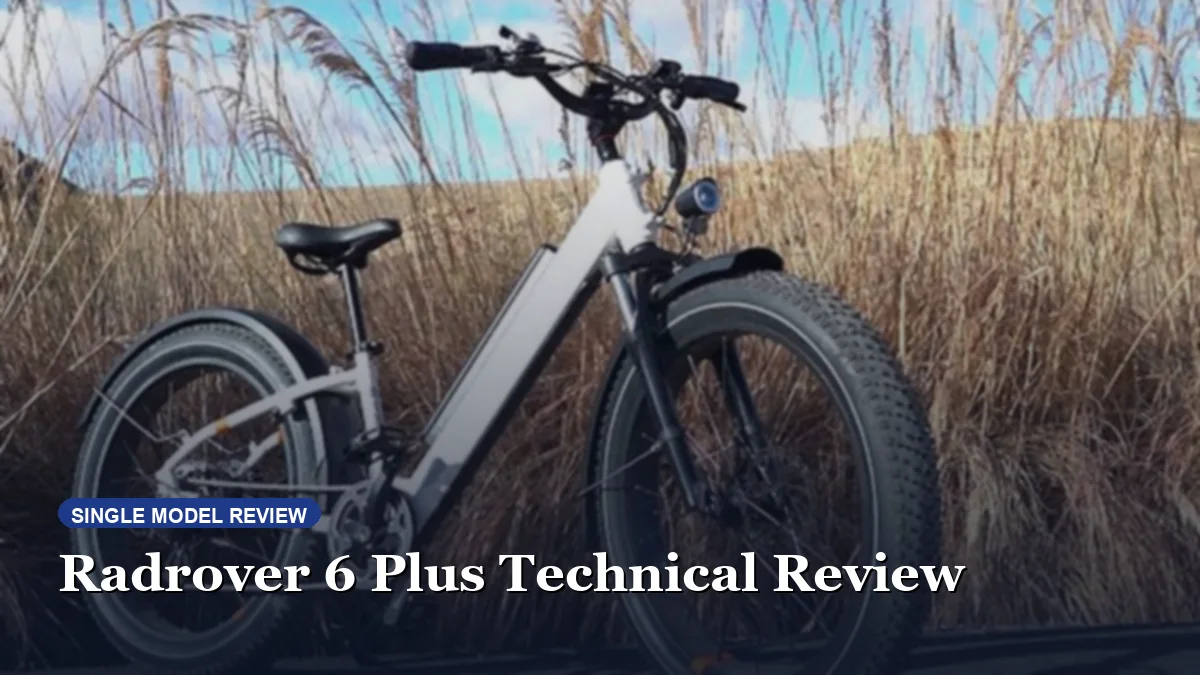

This robust fat-tire platform provides exceptional stability and reliable stopping power, driven by upgraded hydraulic disc brakes and a heavy-duty frame.
Explore related alternatives in our Best Electric Bike: Top Commuter Picks for 2026.
Verified Specifications
| Category / Type | All-Terrain Fat Tire E-Bike |
|---|---|
| Rated Output / Capacity | 750W Hub Motor / 672Wh Battery |
| Power / Motor | Geared Hub Motor with Torque Sensor Assist |
| Build & Materials | 6061 Aluminum Frame with Integrated Battery |
| Operating Noise | Low mechanical hum under heavy load |
| Duty Cycle / Runtime | 25 to 45 miles depending on terrain |
| Dimensions & Weight | 73 inches long, 73.4 pounds total |
| Key Safety & Controls | Hydraulic Disc Brakes, Custom Display |
What We Liked
- Stable geometry for loose surfaces
- Reliable hydraulic braking system
- Integrated frame battery design
- Comfortable upright ergonomic posture
- Clear, center-mounted LCD display
Trade-Offs
- Heavy chassis limits portability
- Bulky frame requires large storage
- Stock brake pads wear quickly
- Limited agility in tight spaces
Engineering Frame Architecture and Design Build
The 6061 aluminum frame provides exceptional structural rigidity for heavy utility tasks. Thick tube junctions absorb severe vertical impacts while maintaining alignment across rough trails.
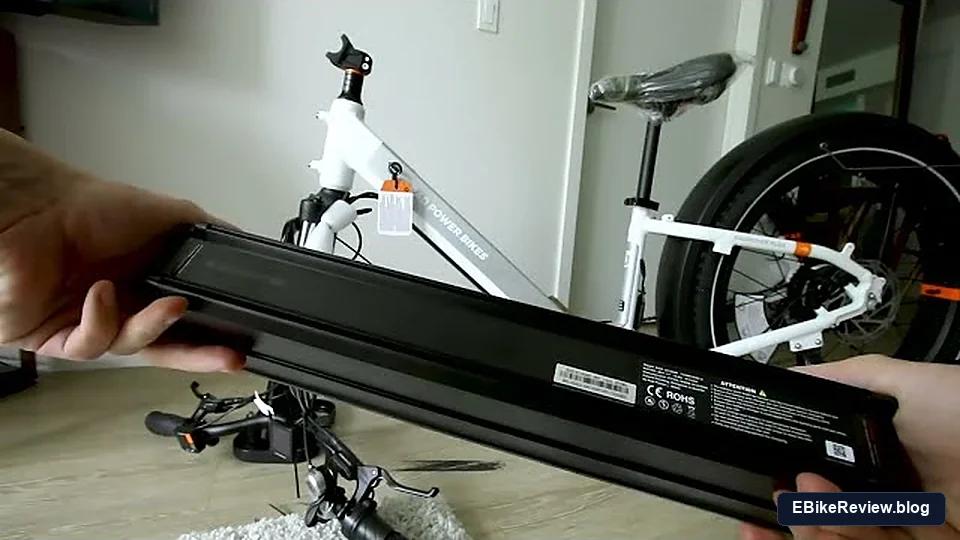
Integrated battery routing protects internal wiring from environmental hazards and physical damage. Explore our Rad Power Radrunner 3 Plus vs Super73 S2 review to examine frame designs and clean internal cable layouts.
Massive 4-inch wide tires absorb minor surface irregularities before they reach the chassis. Such massive volume requires robust frame clearance and reinforced dropouts to prevent flex.
The custom aluminum frame utilizes hydroformed tubing to maximize structural integrity across high-stress junctions like the head tube and bottom bracket shell, supporting a total payload capacity of 275 pounds.
Integrated cable routing enters the frame near the tapered head tube, protecting internal electronic harnesses from moisture intrusion, trail debris, and mechanical friction while maintaining a clean, industrial silhouette throughout.
Geometry centers on a relaxed upright posture with a 68-degree head angle, balancing low-speed stability when navigating technical obstacles and predictable tracking during high-speed descents on loose gravel or hard-packed dirt paths.
- Rigid 6061 aluminum alloy chassis
- Internal electronic cable routing
- Generous 4-inch tire clearance
Weight Distribution and Geometry
A long wheelbase enhances straight-line tracking over loose gravel, sand, and mud surfaces. However, this stretched dimension reduces low-speed maneuverability inside tight urban environments.
Centralizing the heavy battery pack lowers the overall center of gravity significantly. Riders will notice improved stability during cornering despite the heavy total weight.
- Extended wheelbase for high-speed tracking
- Low battery placement for stability
Real-World Motor Output and Power Delivery
A rear-mounted 750W geared hub motor delivers robust acceleration from a complete stop. Review our Rad Power Radrover 6 Plus vs Himiway Zebra comparison to see how different motor systems handle steep inclines.
The integrated torque sensor reacts naturally to pedaling pressure rather than simple rotation. This responsive feedback loop provides smooth, predictable power delivery without sudden surges.
Operating noise remains minimal, emitting only a faint whir under maximum throttle load. Thermal management inside the stator housing prevents dangerous overheating during extended climbs.
A customized 750W brushless geared hub motor delivers peak torque figures capable of conquering steep inclines, utilizing an internal planetary gear reduction system to maintain mechanical advantage at low rotational speeds.
Cadence sensor integration dictates power deployment with a slight rotational lag, requiring riders to pedal roughly half a crank revolution before the controller activates the stator windings and applies steady forward momentum.
Throttle override functionality provides immediate acceleration from a complete standstill without requiring pedal input, bypassing the cadence sensor delay to deliver maximum battery amperage directly to the hub motor instantaneously.
- 750W rear geared hub motor
- Responsive pedal torque sensor
- Low operating noise profile
Performance Across Varying Terrains
Soft sand and deep snow demand lower tire pressures to maximize contact patches. The motor maintains traction effectively as long as momentum does not drop entirely.
Paved ascents require minimal effort when utilizing the higher assist levels available. Efficiency drops noticeably when tackling sustained grades purely on throttle power alone.
- Excellent sand and snow flotation
- Reliable hill climbing capability
Video Review: E-Bike Review | Rad Rover 6 Plus | One beast of an adventure commuter
Braking Dynamics and Thermal Management
Hydraulic disc brakes provide the necessary stopping force for this heavy chassis. Factory setups deliver progressive bite, though aggressive trail riding demands superior pad compounds.
Upgrading to sintered copper brake pads prevents thermal fade during long, steep descents. These metallic compounds withstand extreme heat and dissipate energy rapidly in wet environments.
Proper rotor clearance prevents annoying rubbing noises during normal daily commuting cycles. Inspecting pad thickness regularly ensures consistent stopping performance across all weather conditions.
Hydraulic disc brakes utilize ceramic pad compounds paired with dual-piston calipers to clamp down on thick rotors. Read our Rad Power Radcity 5 Plus vs Aventon Level 2 guide for more braking comparisons.
Rotor thickness measures 2 millimeters, providing sufficient thermal mass to dissipate heat energy generated during prolonged descents, thereby reducing brake fade and preventing premature fluid boiling under heavy rider loads.
Lever reach adjustments allow riders to customize the bite point ergonomics, ensuring optimal finger placement and reducing hand fatigue during extended braking sessions on steep, technical mountain bike trails.
- Hydraulic disc brake system
- Compatible with metallic pad upgrades
- Effective thermal heat dissipation
Ergonomics, Cockpit Controls, and Rider Interface
An upright riding posture reduces lower back strain during long-distance excursions. Adjustable handlebars accommodate various rider heights easily while maintaining clear forward visibility.
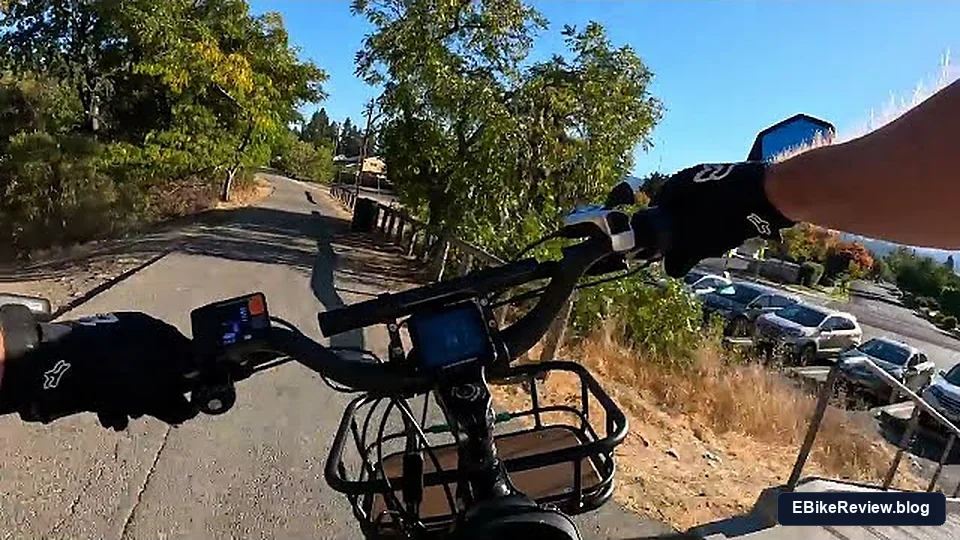
The center-mounted LCD display remains legible under direct sunlight conditions. Essential metrics like speed, battery level, and assist tier appear in sharp, high-contrast typography.
Ergonomic grip designs prevent hand fatigue by distributing pressure evenly across palms. Integrated button pads allow quick adjustments to lighting and assist levels without losing grip.
The dual-display setup positions a top LCD screen for primary metrics like speed and battery level while placing a lower control pad near the left grip for seamless assist level adjustments on the fly.
Ergonomic locking grips feature a wide paddle design that distributes palm pressure evenly across the ulnar nerve, preventing numbness during long-distance commuting and reducing vibration transmission from rough road surfaces.
Handlebar sweep and rise geometry place the wrists in a neutral alignment, minimizing shoulder tension and accommodating riders ranging from five feet four inches to six feet four inches tall comfortably.
- Comfortable upright riding position
- High-contrast center LCD screen
- Ergonomic handlebar grip design
Battery Efficiency, Range, and Charging Metrics
The 672Wh lithium-ion battery pack secures respectable real-world mileage figures. Conservative pedal assist yields over forty miles, while heavy throttle usage cuts that distance significantly.
Charging times hover around standard industry expectations using the supplied wall charger. Storing the battery at room temperature maximizes overall lifespan and cell health longevity.
Secure locking mechanisms prevent unauthorized removal while parked in public spaces. Weather-sealed charging ports protect delicate electrical pins from moisture intrusion during heavy downpours.
The semi-integrated 48V 14Ah lithium-ion battery pack utilizes high-density cells housed within a locked aluminum cradle, protecting the internal management system from physical impacts and severe environmental weather exposure.
Real-world range tests demonstrate that utilizing mid-level pedal assist yields approximately 35 miles of travel, while heavy throttle usage on maximum assist drastically reduces operational distance to roughly twenty miles per charge.
The included 4A fast charger replenishes a depleted battery pack from zero to full capacity in roughly six hours, utilizing an active internal cooling fan to regulate operational temperatures safely during rapid charging.
- 672Wh lithium-ion power pack
- Key-lock frame security integration
- Weather-sealed charging terminals
Setup, Routine Maintenance, and Long-Term Durability
Initial assembly requires basic mechanical skills and standard hex tool kits. Aligning the heavy front wheel securely demands careful attention to torque specifications on axle bolts.
Routine maintenance involves checking spoke tension and lubricating pivot points regularly. Keeping drivetrain components clean prevents premature wear on chains and sprocket teeth over time.
Weather-resistant hardware resists corrosion from road salt and morning dew accumulation. Inspecting tire casings for embedded debris prevents sudden flats on rough gravel paths.
Initial assembly requires securing the front wheel, handlebars, and pedals using standard hex keys, demanding careful attention to torque specifications on stem bolts to prevent steering component slippage during rides.
Routine drivetrain maintenance involves wiping down the 7-speed derailleur and applying a dry lubricant to the chain every hundred miles to prevent premature wear on the cassette sprockets and chainrings.
Hub motor connections utilize waterproof Julet quick-disconnect plugs, simplifying wheel removal during flat tire repairs while protecting sensitive copper pin interfaces from road salt, dirt, and corrosive moisture accumulation over time.
- Straightforward out-of-box assembly
- Corrosion-resistant exterior hardware
- Standardized mechanical component layout
Definitive Buyer Verdict and Competitive Positioning
This model excels as a heavy-duty utility vehicle for rough terrain explorers. Its substantial build quality outweighs minor portability drawbacks for everyday adventure seekers.
For heavy-duty options, consult our Quietkat Ranger vs Radrover 6 Plus analysis to evaluate motor power, frame geometry, and real-world payload capacity before purchasing your new utility machine.
This heavy-duty fat tire platform excels as a utilitarian commuter and recreational cruiser, offering robust structural engineering and reliable stopping power that justifies its substantial physical weight and overall frame dimensions.
Prospective buyers seeking agile handling or lightweight portability should look elsewhere, but riders prioritizing raw cargo capacity, hill-climbing torque, and all-weather stability will find exceptional value in this comprehensive electrical setup.
- Best suited for utility and adventure
- Strong cargo and towing capacity
- Heavier frame requires dedicated storage
Frequently Asked Questions
Can this ebike handle steep mountain trails?
Yes, the powerful motor and robust frame conquer steep inclines easily. However, its heavy weight requires careful handling during technical descents and sharp turns.
How far does a single battery charge last?
Real-world range typically spans twenty-five to forty miles. Actual distance depends heavily on rider weight, terrain profile, tire pressure, and selected assist levels.
Are the stock brakes sufficient for wet weather?
Hydraulic brakes perform reliably in rain and mud conditions. Upgrading to sintered copper pads enhances stopping power and prevents thermal fade on long downhills.
What is the total weight capacity of the frame?
The chassis supports substantial cargo and rider weight loads safely. Always verify total payload limits in the manual before mounting heavy rear racks.
Is assembly difficult for a novice user?
Basic assembly takes about an hour with included tools. Having a second person help attach the heavy front wheel makes the setup process much easier.