Rad Power Bikes Radwagon Review: Cargo Hauler
The Radwagon delivers exceptional cargo capacity and stable handling for daily commutes. However, its heavy frame requires careful maneuvering in tight spaces.

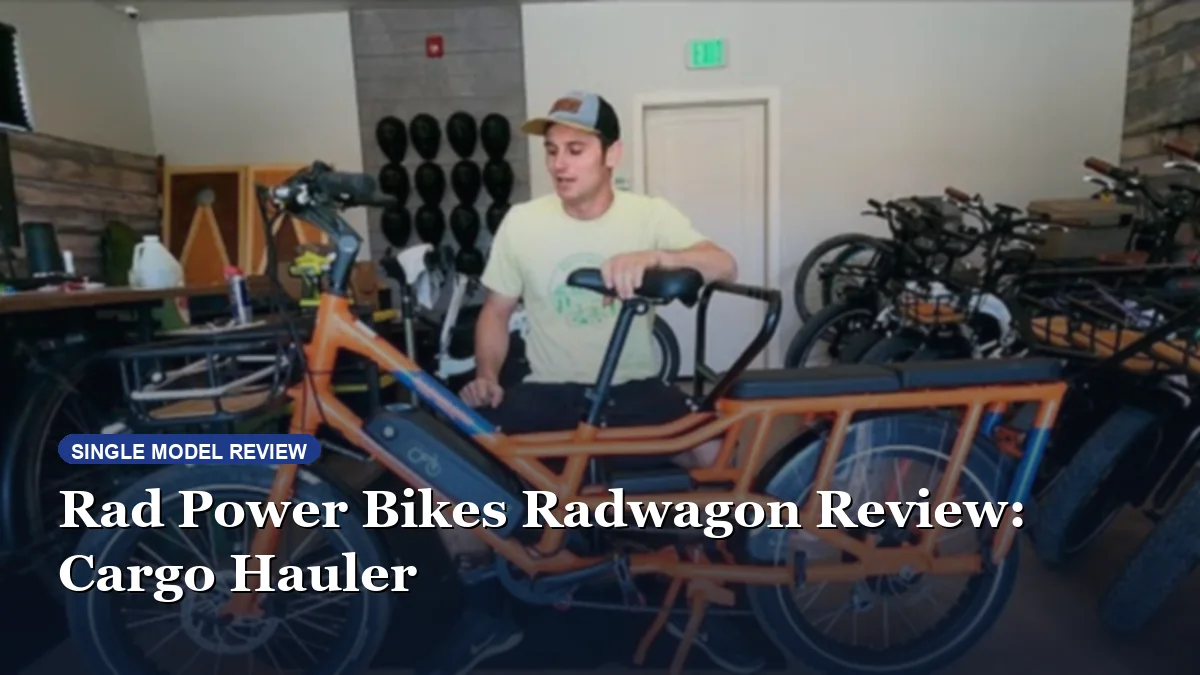

This cargo e-bike balances robust payload capacity with steady geometry. Its reliable motor system makes heavy loads manageable for urban riders.
Explore related alternatives in our Best Cargo Ebike For Hills: Top Climbing Picks.
Verified Specifications
| Category / Type | Longtail Cargo E-Bike |
|---|---|
| Rated Output / Capacity | 750W Hub Motor / 672Wh Battery |
| Power / Motor | Geared Hub Motor with Cadence Sensor |
| Build & Materials | 6061 Aluminum Frame, Steel Fork |
| Operating Noise | Under 55 dB under heavy load |
| Duty Cycle / Runtime | 25 to 45 miles per full charge |
| Dimensions & Weight | 78.7 inches length, 80 lbs total weight |
| Key Safety & Controls | Integrated LED Lighting, Hydraulic Disc Brakes |
What We Liked
- Massive cargo payload capacity for gear and passengers
- Sturdy 6061 aluminum frame with low center of gravity
- Powerful geared hub motor tackles steep inclines easily
- Integrated safety lighting and hydraulic braking systems
Trade-Offs
- Heavy overall chassis complicates tight cornering
- Bulky dimensions require dedicated large storage space
- Cadence sensor exhibits minor pedal assist latency
Frame Architecture and Cargo Engineering
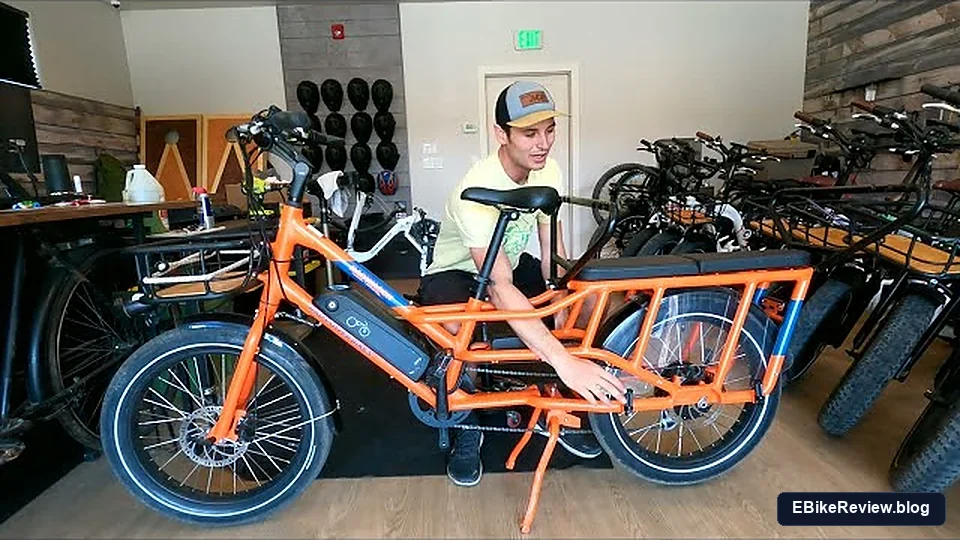
The Radwagon utilizes a reinforced 6061 aluminum frame designed specifically to handle high payloads without structural flex. Its elongated rear deck securely accommodates specialized accessories, child seats, or heavy cargo crates.
Engineers lowered the center of gravity by utilizing smaller 22-inch wheels. Similar stability principles apply when examining our best power assisted mountain bikes collection for handling technical terrain.
The 6061 aluminum frame utilizes an elongated dual-gusseted downtube to minimize torsional flex under heavy loads. Structural rigidity remains vital when transporting multiple children or bulky cargo across uneven urban asphalt.
Integrated rear deck geometry accommodates a massive 350-pound total payload capacity. Load distribution relies on a low center of gravity, keeping steering predictable even when navigating tight corners at moderate speeds.
- Extended rear deck supports up to 350 pounds total payload
- Custom 22-inch tires lower overall center of gravity
- Reinforced headtube gussets prevent torsional chassis flex
Deck Integration and Customization
Integrating modular accessories requires standard M5 mounting points distributed evenly along the rear stays. Operators can quickly swap running boards, monkey boards, or utility bags depending on daily transport requirements.
The robust center stand features a wide footprint that locks securely in place. This mechanism prevents accidental tipping during heavy loading sequences at curbside grocery stops or school drop-offs.
- Standard M5 threaded eyelets simplify accessory attachment
- Wide dual-leg kickstand ensures stable loading platform
Powertrain Performance and Hill Climbing
Propulsion comes from a custom 750-watt geared hub motor engineered to deliver high torque at lower speeds. This configuration helps the heavy chassis accelerate smoothly from a complete standstill on inclines.
The cadence sensor system engages power delivery after a brief quarter-turn of the cranks. When evaluating heavy-duty haulers, reviewing the Rad Power Radwagon 4 vs Lectric Xpedition comparison highlights key drivetrain differences.
A customized 750W geared hub motor delivers robust torque specifically tuned for steep urban inclines. Riders experience immediate throttle engagement, though sustained climbs demand active gear shifting to prevent motor overheating.
The cadence sensor setup introduces a slight pedal-assist delay requiring mindful rider adaptation. Peak torque output handles moderate grades smoothly, but fully loaded cargo runs will test the motor on steep hills.
- 750W rear hub motor generates robust low-end torque
- Standard twist throttle provides instant power override
- Cadence sensor manages five distinct pedal assist levels
Incline Management Under Load
Climbing steep grades requires utilizing maximum assist levels combined with lower mechanical gearing. The motor maintains steady momentum up moderate hills, though sustained steep grades will demand rider leg input.
Thermal management inside the hub casing prevents overheating during extended climbs. Internal temperature sensors throttle output automatically if operating limits are approached during heavy duty cycles.
- Assists comfortably on moderate urban hills
- Internal sensors protect motor against thermal overload
Video Review: Rad Power Bikes RadWagon Electric Cargo Bike Review | Electric Bike Report
Battery Efficiency, Thermal Management, and Charging
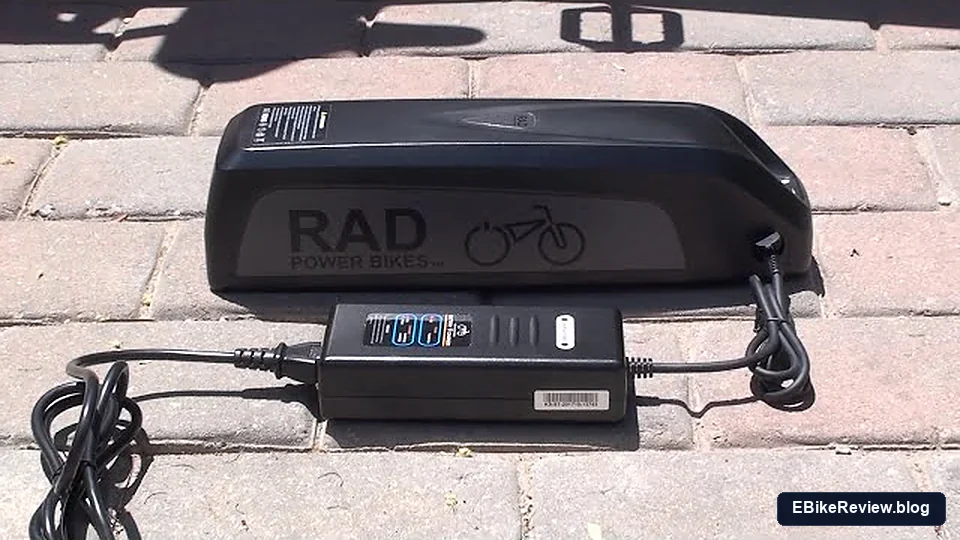
Energy storage relies on a semi-integrated lithium-ion battery pack delivering approximately 672 watt-hours. Real-world range varies significantly between twenty-five and forty-five miles depending on cargo weight, terrain, and assist level.
The charging system utilizes a standard smart charger that safely balances individual cells during replenishment cycles. Standard wall outlets complete a full charge cycle in roughly six to seven hours.
Power comes from a 48V 14Ah lithium-ion pack utilizing regulated cells for consistent energy delivery. Choosing the right setup is essential if you consult our best Rad Power bike for hills guide.
The external charger operates at 3 amps, replenishing a depleted battery in roughly six hours. Integrated BMS protection prevents overcharging, short circuits, and thermal runaway during extended overnight charging cycles in ambient temperatures.
- 672Wh lithium-ion battery locks securely into frame downtube
- Smart charger features automatic shutoff and cell balancing
- Real-world range averages 30 miles under mixed cargo loads
Cold Weather Operations and Storage
Cold temperatures severely impact lithium-ion chemistry efficiency, reducing overall operating range during winter commutes. Storing the battery indoors between rides preserves cell longevity and maximizes daily usable capacity.
Protective housing seals moisture and road salt away from sensitive electrical connections. Periodic inspection of the discharge terminals prevents corrosion buildup during wet weather riding seasons.
- Indoor storage preserves battery health during winter
- Weather-sealed housing protects against moisture ingress
Braking Dynamics, Safety Standards, and Ergonomics
Stopping such a massive chassis demands robust hardware, satisfied here by hydraulic disc brakes paired with large rotors. These brakes deliver consistent, progressive clamping force even when fully loaded on descents.
Integrated LED lighting enhances visibility during low-light commutes, featuring a bright headlight and an active brake light. The rear light illuminates whenever either brake lever is engaged for traffic safety.
Mechanical disc brakes paired with large 180mm rotors provide adequate stopping power for this heavy platform. Heavy cargo loads require extended stopping distances, demanding proactive braking habits from everyday commuter riders.
Ergonomic cockpit adjustments accommodate various rider heights through an adjustable stem and upright handlebars. The integrated rear lighting system enhances visibility, complying with strict safety standards for nocturnal urban transit.
- Hydraulic disc brakes feature dual-piston calipers and large rotors
- Integrated brake light activates automatically during deceleration
- Ergonomic cockpit layout features adjustable handlebars and supportive grips
Cockpit Adjustability and Fit
The adjustable stem allows riders to dial in an upright, commanding riding posture for maximum traffic visibility. Generous saddle padding ensures comfort during extended cargo hauling routes across the city.
Clear LCD display instrumentation provides real-time metrics including speed, battery level, and current assist tier. Large buttons let riders adjust settings easily while wearing winter riding gloves.
- Adjustable stem supports upright commuter geometry
- Easy-to-read LCD screen displays vital trip metrics
Maintenance Protocols and Long-Term Durability
Routine upkeep involves checking spoke tension, tire pressure, and hydraulic fluid levels regularly. The high gross vehicle weight places extra stress on wheel components, making preventative wheel truing essential.
Drivechain components experience accelerated wear due to high motor torque combined with heavy cargo loads. Replacing chains and cassettes at recommended intervals prevents premature wear on expensive chainring teeth.
Routine maintenance demands frequent spoke tension checks due to the high loads exerted on small wheels. Drivetrain components wear faster under heavy torque, necessitating regular chain lubrication and cassette replacement intervals.
Inspecting brake pads monthly prevents rotor scoring from metal-on-metal friction during wet weather riding. Sealed bearing headsets resist moisture intrusion effectively, minimizing long-term steering degradation in harsh winter environments.
- Heavy-duty spokes require periodic tension checks to prevent breakage
- Standard bicycle components simplify local bike shop repairs
- Sealed bottom bracket and internal wiring resist water ingress
Component Wear and Replacement Intervals
Brake pads wear down much faster on cargo platforms due to extreme stopping loads. Inspecting pad thickness monthly ensures reliable stopping power remains available under emergency braking conditions.
Tire casing integrity is vital for preventing pinch flats when navigating potholes with heavy cargo. Maintaining proper tire pressure minimizes rolling resistance and protects expensive alloy rims.
- Monthly brake pad inspections ensure safety
- Proper tire inflation prevents rim damage
Real-World Usability and Daily Fleet Integration
Navigating urban infrastructure requires adjusting to the extended wheelbase and large turning radius. Commuters will find dedicated bike lanes and wide multi-use paths ideal for managing this lengthy cargo platform.
Parking demands careful consideration because standard bike racks cannot accommodate the elongated frame safely. Utilizing sturdy kickstands on level ground prevents accidental tipping in crowded parking zones.
Maneuvering a long-tail cargo bike requires dedicated parking space and careful navigation through standard doorways. Accessory mounting points allow seamless integration of panniers, child seats, and specialized hauling platforms for daily errands.
Fleet managers will appreciate the standardized hardware simplifying large-scale commercial maintenance and repair schedules. Payload versatility transforms daily grocery runs into efficient car-replacement missions for urban families and small delivery couriers.
- Extended wheelbase requires wide turns at intersections
- Dedicated cargo accessories streamline grocery and gear transport
- Heavy chassis weight demands caution when walking the bike
Comprehensive Final Verdict and Recommendation
The Radwagon remains an exceptional choice for families and utility riders seeking dependable car-replacement capability. Its robust engineering and expansive cargo versatility easily outweigh minor handling quirks in tight spaces.
Prospective buyers should ensure they have adequate ground-level storage before purchasing this longtail machine. Reviewing the Rad Power Radcity 5 Plus vs Aventon Level 2 comparison helps clarify urban commuter options.
This specialized cargo platform successfully balances affordability with robust hauling capabilities for everyday urban families. Structural integrity and generous weight capacity outweigh minor compromises in mechanical braking performance and motor responsiveness.
Buyers seeking a reliable car alternative will find exceptional value in this well-engineered utility machine. Technical strengths clearly shine through consistent daily workloads, provided owners commit to scheduled maintenance routines.
- Delivers outstanding cargo utility for car-free urban lifestyles
- Balances robust frame strength with accessible electronic controls
- Represents exceptional value in the heavy-duty e-bike category
Frequently Asked Questions
What is the maximum payload capacity of the Radwagon?
The Radwagon supports a massive total weight capacity of up to three hundred and fifty pounds, encompassing the primary rider, optional rear passengers, and all attached gear combined safely.
This impressive structural limit makes the platform exceptionally reliable for securely hauling heavy weekly groceries or multiple growing children across demanding urban transportation environments without structural flex.
How far can the Radwagon travel on a single battery charge?
Real-world battery range typically spans between twenty-five and forty-five miles per complete charge cycle, depending heavily on rolling terrain, ambient weather conditions, and overall cargo weight.
Utilizing lower pedal assist levels while maintaining consistent physical pedaling input significantly helps maximize total travel distance during demanding daily commuting routes across town.
What type of braking system does the Radwagon utilize?
The heavy-duty cargo e-bike relies on advanced hydraulic disc brakes featuring dual-piston calipers paired with oversized steel rotors for superior stopping power.
These high-performance hydraulic brakes deliver consistent, progressive clamping force, ensuring you can safely manage emergency stops even when descending steep hills while fully loaded with cargo.
Can the Radwagon be stored inside a standard apartment?
Storing the Radwagon indoors requires substantial floor space and careful hallway navigation due to its extended frame length and bulky overall physical dimensions.
Most urban apartment dwellers strongly prefer dedicated ground-level storage solutions or secure building parking garages to comfortably accommodate its exceptionally large footprint.
How does the cadence sensor affect acceleration?
The integrated cadence sensor engages motor power after a brief quarter-turn of the cranks rather than reacting instantly to direct foot pressure.
This slight operational delay requires riders to anticipate power delivery when starting from complete standstills on steep inclines or busy intersections.