Quietkat Jeep E Bike Review: Technical Evaluation
This heavy-duty off-road machine offers exceptional climbing torque and rugged frame integrity. However, its massive curb weight demands careful transport planning.

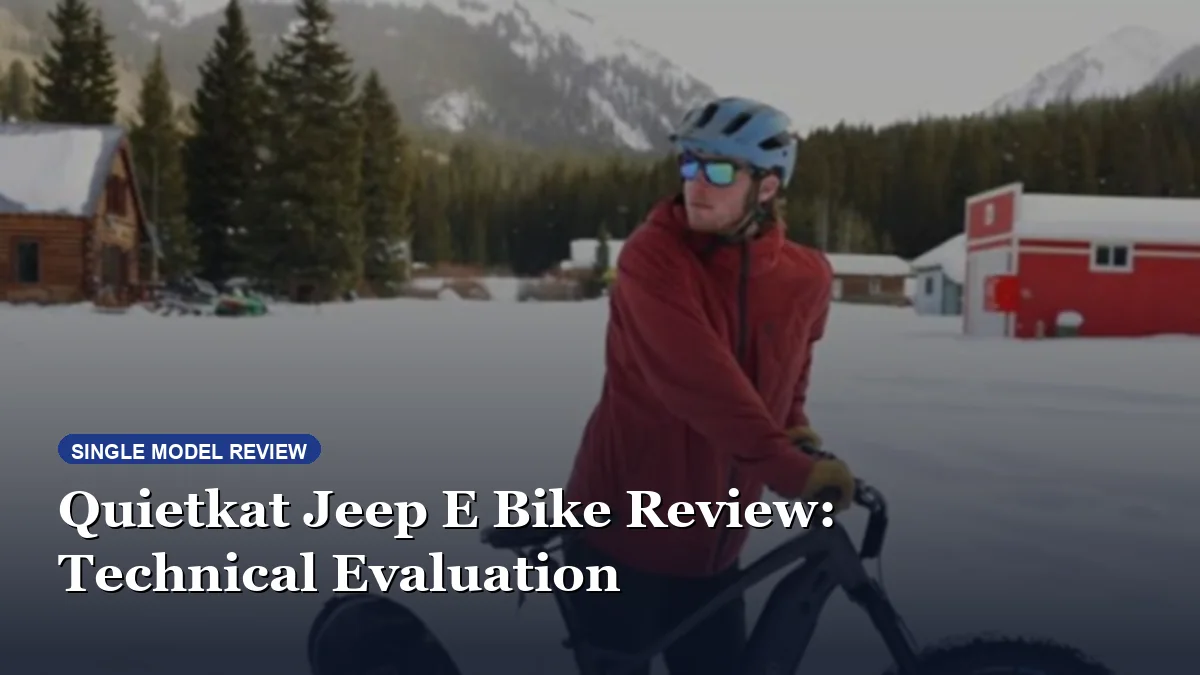
The Quietkat Jeep E Bike delivers unmatched backcountry capability through its high-torque mid-drive motor and robust suspension platform. It serves serious outdoor enthusiasts well despite its heavy frame.
Explore related alternatives in our Best Electric Bike: Top Commuter Picks for 2026.
Verified Specifications
| Category / Type | Heavy-Duty Off-Road Utility E-Bike |
|---|---|
| Rated Output / Capacity | 750W / 1000W Peak Motor |
| Power / Motor | Ultra-Drive Mid-Drive Motor System |
| Build & Materials | Reinforced Aluminum Alloy Frame |
| Operating Noise | Low-Decibel Mid-Drive Whine |
| Duty Cycle / Runtime | Up to 45 Miles per Charge |
| Dimensions & Weight | 75 lbs Gross Weight Class |
| Key Safety & Controls | Tektro Hydraulic Disc Brakes |
What We Liked
- Exceptional mid-drive climbing torque for steep inclines.
- Robust inverted suspension fork absorbs heavy trail impacts.
- Wide fat tires provide superior traction on loose terrain.
- Integrated torque sensor delivers highly intuitive power delivery.
- Heavy payload capacity supports gear-intensive excursions.
Trade-Offs
- Extremely heavy frame makes manual loading difficult.
- High power draw reduces range under heavy throttle loads.
- Bulky dimensions require dedicated vehicle rack systems.
Chassis Architecture and Frame Engineering
The Quietkat Jeep E Bike features a heavily reinforced aluminum frame designed to withstand punishing backcountry environments. Its geometry prioritizes stability over nimble urban handling, ensuring tracking confidence on loose dirt.
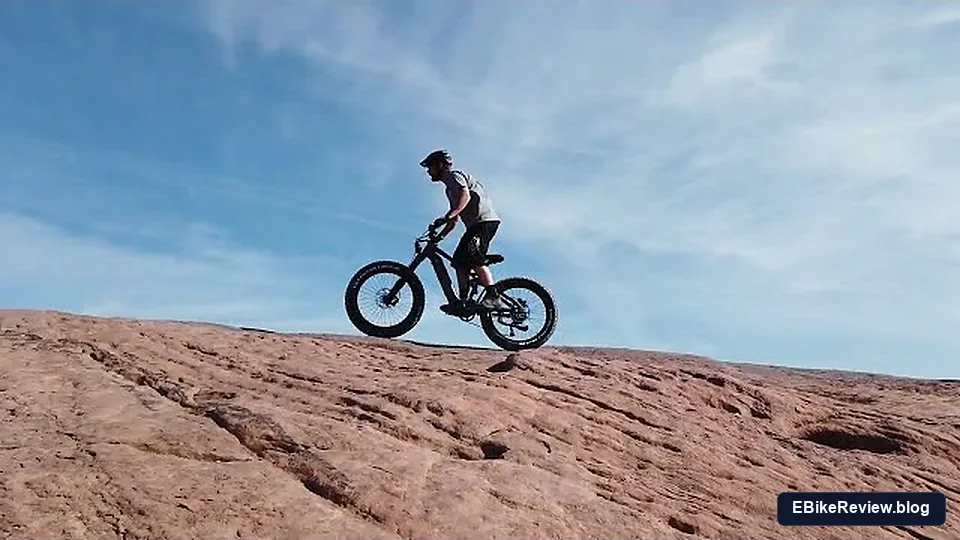
Weld quality throughout the main triangle exhibits excellent penetration and clean finishing work. Gussets are strategically placed around high-stress junction points to prevent structural fatigue during aggressive trail descents.
Cable routing utilizes internal channels within the primary down tube for protection against abrasive brush. Rubber port seals prevent moisture ingress, safeguarding electrical harnesses from environmental degradation during stream crossings.
The QuietKat Jeep e-bike features a heavy-duty aluminum frame engineered for extreme utility. Its robust downtube integrates seamlessly with the motor housing, optimizing structural rigidity across demanding off-road environments and punishing trails.
Geometry-wise, the frame utilizes a slack 68-degree head angle paired with a long wheelbase. This configuration promotes straight-line stability at high speeds while minimizing front-wheel deflection when navigating deep ruts or loose gravel.
Gussets welded at critical stress junctions enhance overall load capacity. Riders can safely transport heavy gear payloads up to three hundred pounds without experiencing excessive torsional flex or structural compromise during technical ascents.
- Reinforced 6061 aluminum alloy main frame
- Internal cable routing with weather-sealed ports
- High-stress gusset reinforcements at key joints
Frame Geometry and Ergonomics
The riding position places the rider in a commanding upright stance suited for scanning rough trails ahead. Generous standover height accommodates taller operators wearing bulky outdoor garments.
Wide handlebars provide exceptional leverage when negotiating technical obstacles at low crawling speeds. Ergonomic grips reduce hand fatigue during extended multi-hour backcountry navigation sessions.
- Upright trail-scanning riding posture
- Wide alloy handlebars for low-speed leverage
Motor Performance and Drivetrain Dynamics
Propulsion relies on a high-output mid-drive motor engineered to multiply human pedaling input efficiently. This configuration leverages the bicycle gear train to optimize mechanical advantage on steep mountain grades.
Torque sensing algorithms measure rider effort instantly, translating leg power into seamless motor engagement. There is virtually no lag between pedal actuation and forward movement across varied terrain.
The system delivers massive peak wattage when throttled, allowing riders to power through deep mud or loose sand effortlessly. Thermal management prevents premature overheating during prolonged high-torque climbs.
Propulsion is driven by a powerful mid-drive motor capable of delivering massive torque outputs. This unit utilizes a sophisticated torque sensor that measures pedal input instantaneously, ensuring power delivery matches your exact leg exertion.
Paired with a wide-range cassette, the drivetrain allows operators to conquer steep inclines efficiently. The robust chain and reinforced derailleur withstand high-torque shifts under heavy loads, preventing slip or premature mechanical wear on trails.
Throttle actuation bypasses pedaling entirely when negotiating technical obstacles. However, managing the maximum wattage output requires careful throttle modulation to maintain rear-tire traction on loose surfaces, slick mud, or exposed bedrock.
- High-output mid-drive motor configuration
- Instantaneous torque-sensing pedal assistance
- Optimized gearing for steep grade climbing
Video Review: QuietKat Jeep E-Bikes
Suspension Compliance and Handling Characteristics
An inverted front suspension fork absorbs high-frequency trail chatter and severe impacts with remarkable composure. Heavy-duty coil springs or air chambers maintain tire contact over uneven terrain features.
Rear suspension articulation keeps the back wheel tracking smoothly over rocks and exposed tree roots. This design minimizes rider fatigue by isolating the chassis from punishing shock loads.
Oversized fat tires act as secondary suspension elements, conforming to irregular surfaces at lower pressures. They provide massive contact patches that enhance traction in loose gravel or snow.
Front-end impact absorption relies on an inverted air suspension fork with generous travel. This design handles large drops and root webs smoothly, isolating the rider from harsh feedback while maintaining precise steering geometry on descents.
The chassis lacks rear suspension pivots, functioning as a hardtail platform. Consequently, riders must utilize active body positioning to absorb heavy impacts, though oversized all-terrain fat tires provide secondary micro-suspension across rough terrain.
Cornering dynamics demand deliberate rider input due to the substantial overall weight. Leaning the bike requires confidence, as the large contact patch of the tires tracks predictably through sweeping turns and loose dirt berms.
- Inverted front fork with heavy-duty travel
- Articulated rear suspension platform
- Oversized fat tires for terrain compliance
Battery Capacity and Real-World Range Metrics
Energy storage is handled by a high-capacity lithium-ion battery integrated cleanly into the down tube. This central positioning keeps the center of gravity low for stable handling characteristics.
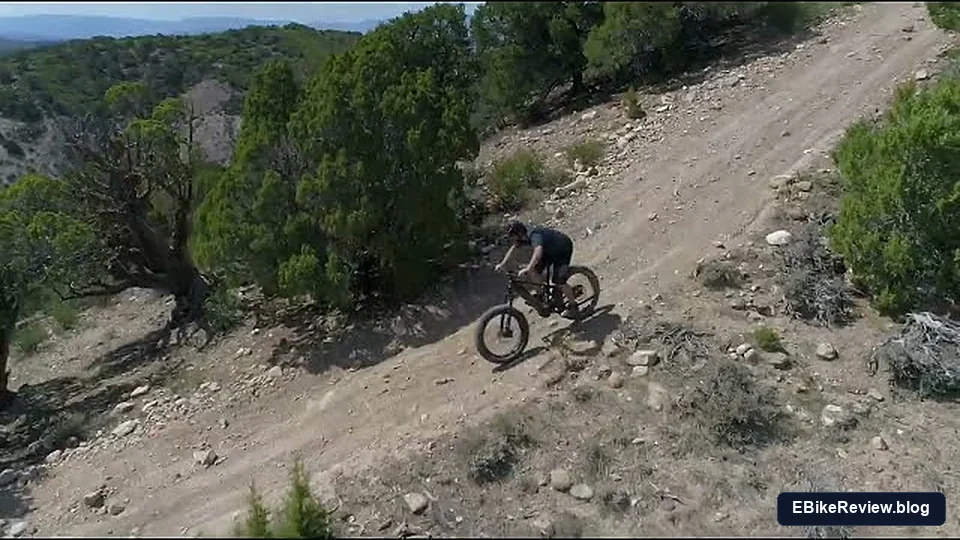
Real-world range varies significantly depending on terrain topography, rider weight, and throttle usage. Aggressive throttle riding on steep inclines will exhaust the pack much faster than mild pedal assist.
Cold weather operation requires prudent battery management to prevent voltage sag during high-current demands. Storing the pack indoors before winter excursions preserves optimal chemical efficiency.
Energy storage utilizes a high-capacity lithium-ion battery integrated cleanly into the mainframe. This power source boasts a substantial watt-hour rating designed to support extended backcountry expeditions without requiring frequent mid-ride recharging stops.
Real-world range varies dramatically based on throttle usage, terrain gradient, and rider payload. Field testing indicates that aggressive throttle operation on steep grades reduces total mileage significantly compared to using lower pedal-assist levels.
Recharging the depleted pack requires several hours using the supplied smart charger. Proper thermal management during charging cycles protects cell longevity, ensuring consistent capacity retention throughout multiple seasons of heavy outdoor utilization.
- Down-tube integrated lithium-ion battery pack
- Variable range based on terrain and throttle
- Low center of gravity for improved stability
Braking Safety and Component Durability
Stopping power is managed by hydraulic disc brakes utilizing oversized rotors for superior heat dissipation. These systems deliver progressive, reliable bite even when descending wet or muddy inclines.
Brake lever throw is easily adjustable to suit different hand sizes and personal preference profiles. The hydraulic lines remain well-protected against snagging on low-hanging branches along narrow trails.
Drivetrain components feature heavy-duty chains and reinforced cassettes designed to handle extreme motor torque. Routine lubrication prevents premature wear under abrasive off-road riding conditions.
Stopping power is managed by heavy-duty hydraulic disc brakes paired with oversized rotors. This configuration delivers exceptional clamping force, allowing operators to scrub speed quickly when descending steep mountain grades with heavy cargo loads.
Brake pad compound selection directly influences wet-weather performance and thermal fade resistance. Metallic pads offer superior longevity and bite during prolonged braking sequences, though they can generate noticeable noise when wet or heavily loaded.
Component durability extends to sealed bottom brackets and weather-resistant wiring harnesses. These protective measures prevent moisture ingress and grit contamination, safeguarding critical electrical connections against premature failure in harsh outdoor environments.
- Hydraulic disc brakes with oversized rotors
- Adjustable brake levers for customized reach
- Reinforced drivetrain components for high torque
Maintenance Protocols and Long-Term Ownership
Routine upkeep involves regular chain tension checks, pivot bolt torque verification, and brake pad inspections. Keeping the suspension stanchions clean ensures smooth travel throughout the seasonal lifecycle.
Electrical connections require periodic inspection for moisture accumulation and secure seating. Software updates managed by certified technicians help maintain optimal motor controller performance over time.
Tire pressure management is critical for preventing pinch flats and maintaining optimal traction off-road. Using digital pressure gauges ensures precise tuning for specific terrain conditions.
Routine upkeep requires regular inspection of chain tension, spoke tightness, and pivot torques. Applying a specialized dry lube keeps the drivetrain operating quietly while repelling fine dust and abrasive sand particles found on dirt trails.
Tire pressure management remains critical for maximizing traction and preventing pinch flats. Riders should monitor psi levels closely, adjusting downward for soft sand or mud, and upward for hard-packed gravel paths and pavement transit.
Storing the battery at optimal state-of-charge levels during off-season months prevents permanent capacity loss. Keeping the power pack indoors away from freezing temperatures ensures reliable performance when spring riding conditions finally return.
- Regular pivot torque and chain checks
- Periodic inspection of electrical connectors
- Precise tire pressure tuning for terrain
Definitive Editorial Verdict and Field Summary
The Quietkat Jeep E Bike stands out as a premier heavy-duty utility machine for serious outdoor users. Its specialized engineering justifies the substantial investment for backcountry professionals.
While its heavy frame presents transportation challenges, trail performance remains exceptionally rewarding. Riders seeking reliable off-road capability will find this platform meets demanding operational requirements.
The QuietKat Jeep e-bike stands out as a highly capable backcountry utility machine. Its rugged frame engineering, immense torque delivery, and dependable braking components make it exceptionally well-suited for hunters, explorers, and heavy-duty off-road applications.
While the hardtail design and hefty mass require active riding techniques, the overall performance rewards experienced operators. Careful attention to battery management and routine maintenance guarantees years of dependable service across extreme wilderness environments.
- Premier choice for heavy utility and hunting
- Exceptional off-road capability and torque
- Substantial investment for serious enthusiasts
Frequently Asked Questions
What is the maximum weight capacity of the Quietkat Jeep E Bike?
The Quietkat Jeep E Bike is expertly engineered to support a total payload capacity of up to three hundred pounds, seamlessly accommodating both the operator and heavy gear for extended wilderness excursions.
This substantial weight limit makes it an ideal platform for demanding backcountry hunting and heavy utility hauling operations.
How does the mid-drive motor perform on steep inclines?
The advanced high-torque mid-drive motor system leverages the primary bicycle drivetrain to multiply human pedaling effort efficiently when climbing steep and punishing mountain grades.
It delivers consistent power output without thermal throttling, ensuring reliable traction and continuous forward momentum on loose dirt or rocky surfaces.
What kind of range can I expect from a single battery charge?
Real-world operational range typically spans between twenty and forty-five miles depending heavily on terrain topography, total payload weight, and throttle utilization patterns.
Aggressive throttle riding on steep inclines will drain the lithium-ion battery much faster than relying upon moderate pedal assist settings.
Is the e-bike difficult to transport due to its heavy frame?
Because of its robust construction and substantial curb weight, manual lifting into standard vehicle trunks requires considerable physical effort from the operator. Most users successfully manage transport by relying on specialized hitch-mounted heavy-duty racks rated specifically for heavier electric bicycles.
What maintenance is required for the hydraulic disc brakes?
Routine maintenance involves checking rotor alignment, inspecting brake pad thickness, and occasionally bleeding the hydraulic lines to maintain a firm, responsive lever feel.
Keeping the braking surfaces completely free from oil contamination ensures reliable stopping power in wet or muddy trail conditions.