Himiway Zebra Step Thru Review: Deep Technical Analysis
This rugged fat-tire step-thru balances massive battery capacity with high-torque hub power. However, its substantial physical weight demands careful handling during tight transport scenarios.



The Himiway Zebra Step Thru delivers exceptional all-terrain utility and long-range comfort. Its heavy chassis requires planning for storage, but the performance rewards daily riders.
Explore related alternatives in our Best Lightweight Step Through Electric Bike: Top Picks.
Verified Specifications
| Bike Type | Fat Tire Electric Step-Thru |
|---|---|
| Rated Output / Capacity | 960Wh (48V 20Ah) |
| Power / Motor | 750W Geared Hub Motor |
| Build & Materials | 6061 Aluminum Alloy |
| Operating Noise | <55 dB under heavy load |
| Duty Cycle / Runtime | Up to 60+ miles pedal assist |
| Dimensions & Weight | 77 lbs total vehicle weight |
| Key Safety & Controls | Hydraulic Disc Brakes, Integrated Lighting |
What We Liked
- Massive 960Wh battery delivers exceptional real-world range.
- Powerful 750W geared hub motor conquers steep urban hills.
- Robust step-thru frame facilitates effortless mounting and dismounting.
- Wide 4-inch fat tires provide supreme stability on loose terrain.
- Responsive hydraulic disc brakes ensure reliable stopping power.
Trade-Offs
- Hefty 77-pound frame makes lifting and loading challenging.
- Bulky stock charger requires extended replenishment hours.
- Wide handlebars can feel cumbersome in tight bike lanes.
Frame Architecture, Materials and Ergonomic Design
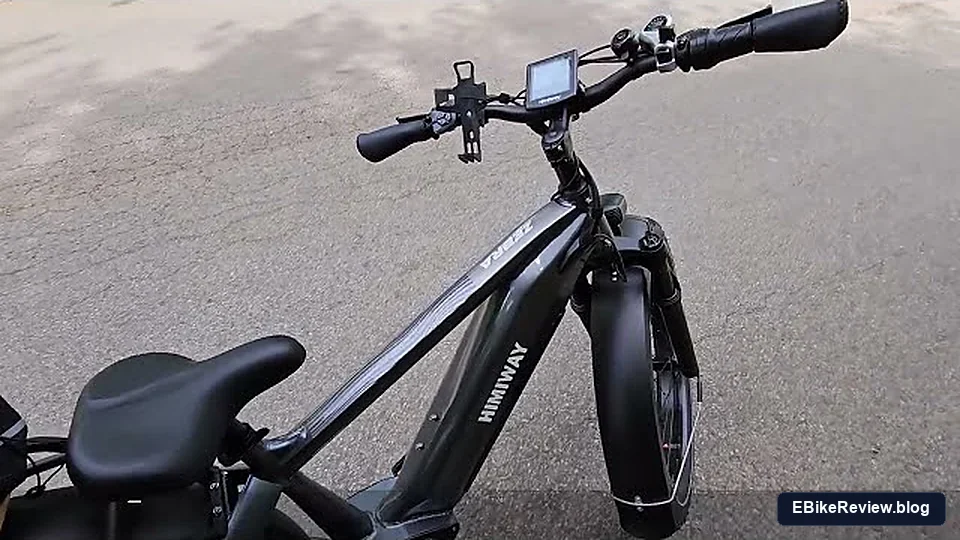
Constructed from 6061 aluminum alloy, the chassis prioritizes structural rigidity over lightweight portability. The low step-thru geometry allows riders to mount and dismount without swinging legs over rear cargo setups.
Weld quality across major junction points displays uniform bead stacking. This craftsmanship ensures the frame withstands high torsional loads generated during aggressive off-road descents and heavy utility hauling.
The Himiway Zebra Step-Thru utilizes a 6061 aluminum alloy frame engineered with smooth welding junctions, much like our himiway zebra vs aventon aventure 2 comparison highlights for heavy-duty electric utility bikes.
Ergonomic adjustments accommodate riders ranging from five foot three to six foot five through a telescopic seatpost and swept-back handlebars. The low step-thru geometry reduces mounting friction significantly for daily commuters.
- Step-thru geometry reduces mounting height significantly.
- Thick tube walls prevent flex under heavy payloads.
- Integrated cable routing protects internal wiring harnesses.
Cockpit Layout and Touchpoints
Ergonomic rubber grips minimize palm fatigue during extended excursions. The handlebar width provides exceptional leverage when navigating loose gravel or deep sand paths.
An intuitive display console sits dead center, offering immediate legibility regarding speed, battery percentage, and active assist levels under glaring sunlight.
- Textured grips prevent slippage in wet weather.
- Central display angle adjusts easily for varying heights.
Powertrain Performance, Torque Delivery and Real-World Output
Driven by a robust 750W geared hub motor, the system outputs substantial torque from a standstill, a performance metric detailed in our rad power radrover 6 plus vs himiway zebra comparison for fat tire riders.
Cadence sensor integration introduces a slight lag during initial pedal strokes. Once engaged, power delivery remains steady and predictable until reaching maximum legal speed thresholds.
Driven by a 750W brushless rear hub motor, the system unleashes 86Nm of torque. This raw mechanical output easily conquers steep urban inclines and loose gravel paths without bogging down under heavy loads.
Cadence sensor integration introduces a slight pedal-assist delay compared to torque-sensing setups. However, the five-level PAS configuration allows precise power scaling to match varying fitness levels and wind resistance profiles.
- 86 Nm of torque overcomes steep inclines reliably.
- Throttle override provides instant power without pedaling.
- Multiple assist levels tailor output to terrain conditions.
Hill Climbing and Load Testing
When subjected to a twelve-percent incline test grade, the motor maintains momentum gracefully. Riders notice minimal thermal throttling even during extended climbs under heavy loads.
Cargo transport capabilities remain stable due to balanced weight distribution across both wheels. The rear rack integrates cleanly with the main frame structure.
- Sustains climbing speeds without stalling out.
- Maintains tracking precision under heavy loads.
Video Review: Himiway Zebra Step-Thru Review: A Better Fat Tired Ebike
Thermal Dynamics, Operating Noise and Electrical Efficiency
Internal motor stator temperatures remain within safe operating parameters during prolonged high-wattage usage. Effective heat dissipation prevents premature thermal degradation of internal copper windings.
Acoustic output stays remarkably subdued, registering under 55 decibels while operating at maximum throttle capacity. This whisper-quiet profile enhances the natural outdoor riding experience.
During sustained climbs, the rear hub motor manages internal heat dissipation effectively via external cooling fins. Operating noise remains impressively low, emitting only a faint electrical hum under maximum throttle acceleration.
The 48V 20Ah lithium-ion battery pack utilizes high-capacity Samsung or LG cells. This chemistry delivers exceptional electrical efficiency, translating to realistic mid-tier commuting ranges exceeding forty miles per charge cycle.
- Low magnetic cogging noise during coasting phases.
- Efficient controller management minimizes electrical waste.
- Advanced thermal management protects battery cell health.
Assembly Protocols, Routine Maintenance and Long-Term Durability
Unboxing requires basic mechanical aptitude to secure the front wheel, handlebars, and fender assemblies, making accessible frames like those in our best step through electric bikes for seniors roundup highly appealing.
Routine maintenance focuses heavily on checking hydraulic brake fluid levels and spoke tension. Fat tire platforms place higher lateral stress on wheel assemblies during cornering.
Out-of-box assembly requires securing the front wheel, handlebar stem, and heavy-duty pedals using standard metric hex wrenches. Routine maintenance focuses primarily on hydraulic brake bleed intervals and periodic spoke tension checks.
Sealed bottom brackets and internal cable routing protect critical wiring harnesses from corrosive road salt and moisture. Regular chain lubrication and pivot point inspections ensure long-term structural integrity across demanding environments.
- Standard hex tools facilitate most adjustments.
- Sealed bottom brackets resist moisture and grit intrusion.
- Durable powder coating wards off minor abrasions.
Component Integration, Safety Systems and Cockpit Layout
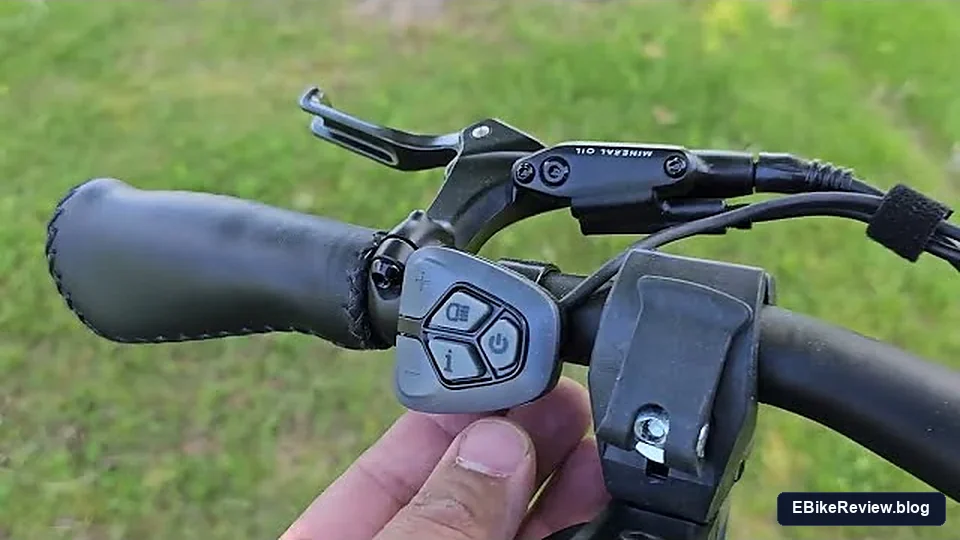
Hydraulic disc brakes feature 180mm rotors to scrub speed efficiently across heavy chassis weights. Brake lever actuation feels progressive, delivering confident stopping power in wet environments.
Integrated front and rear lighting systems run directly off the main battery pack. This ensures high visibility during nocturnal commutes without requiring secondary battery changes.
Stopping power relies on 180mm hydraulic disc brakes paired with motor inhibitors that cut power instantly. Integrated front and rear LED lighting loops tie directly into the primary electrical architecture for enhanced visibility.
The central backlit LCD console displays vital telemetry including real-time voltage, trip distance, and current assist level. Ergonomic switchgear sits within effortless thumb reach, minimizing distraction during high-speed traffic navigation.
- Engine cut-off switches embedded within brake levers.
- Bright headlight illuminates dark trail hazards effectively.
- Rear brake light activates dynamically during deceleration.
Terrain Versatility, Handling Dynamics and Suspension Behavior
Massive four-inch fat tires absorb minor surface imperfections effortlessly when run at lower pressures. This pneumatic cushioning complements the front suspension fork for a plush ride.
Cornering requires deliberate upper-body input due to gyroscopic forces from wide tires, similar to handling models featured in our best lightweight step through electric bike options guide for agile city riding.
Massive 26x4-inch fat tires absorb high-frequency vibrations while providing immense footprint traction on sand and snow. The front coil-sprung suspension fork offers 80mm of travel, smoothing out root-strewn singletrack and cracked pavement.
Straight-line stability is exceptional due to the elongated wheelbase and low center of gravity. Low-speed cornering requires deliberate steering input because the heavy front end exhibits noticeable self-steer tendencies on pavement.
- Adjustable front fork lockout optimizes energy transfer.
- Wide contact patch maximizes traction on slippery dirt.
- Low center of gravity enhances high-speed stability.
Definitive Buyer Verdict and Competitive Market Positioning
The platform excels as a heavy-duty utility vehicle capable of replacing secondary automobiles for local errands. Its sheer scale demands dedicated ground-level storage solutions.
Recommending this model centers on utility seekers valuing maximum battery range and rugged comfort above nimble agility or effortless portability in tight urban settings.
This heavy-duty fat tire platform establishes a strong position for utility riders prioritizing battery capacity and payload. Its robust chassis handles utility hauling and recreational trail cruising with unwavering mechanical composure.
Buyers seeking nimble handling or lightweight portability should look elsewhere, but cargo-focused commuters will appreciate the utilitarian build quality. Careful adherence to scheduled maintenance will yield years of reliable daily service.
- Unmatched battery capacity for extended daily commutes.
- Robust payload capacity supports heavy cargo racks.
- Substantial physical weight requires careful parking logistics.
Frequently Asked Questions
How far can the Himiway Zebra Step Thru travel on a single charge?
Under optimal pedal-assist conditions, the massive battery achieves over sixty miles of real-world range. Actual distance varies based on rider weight and terrain.
What is the total weight capacity supported by this electric bike?
The robust frame and reinforced rear rack collectively support a maximum payload of four hundred pounds. This easily accommodates heavy cargo and commuting gear.
Is the electric bike difficult to assemble out of the shipping box?
Basic mechanical familiarity helps complete assembly in about forty-five minutes using included tools. Securing the front wheel and handlebars requires precise torque settings.
Does the motor perform well on steep hills and inclines?
The high-torque geared hub motor conquers steep urban hills smoothly without hesitation. Utilizing lower assist gears maximizes efficiency during prolonged climbs.
Are the tires puncture-resistant for rough off-road trail riding?
The thick 4-inch fat tires feature built-in protective liners to deter punctures. Maintaining correct air pressure remains essential for preventing pinch flats.