Himiway Cobra Pro Technical Review
The Himiway Cobra Pro delivers massive mid-drive power and plush full-suspension stability. Its sheer weight demands disciplined component maintenance for optimal trail performance.

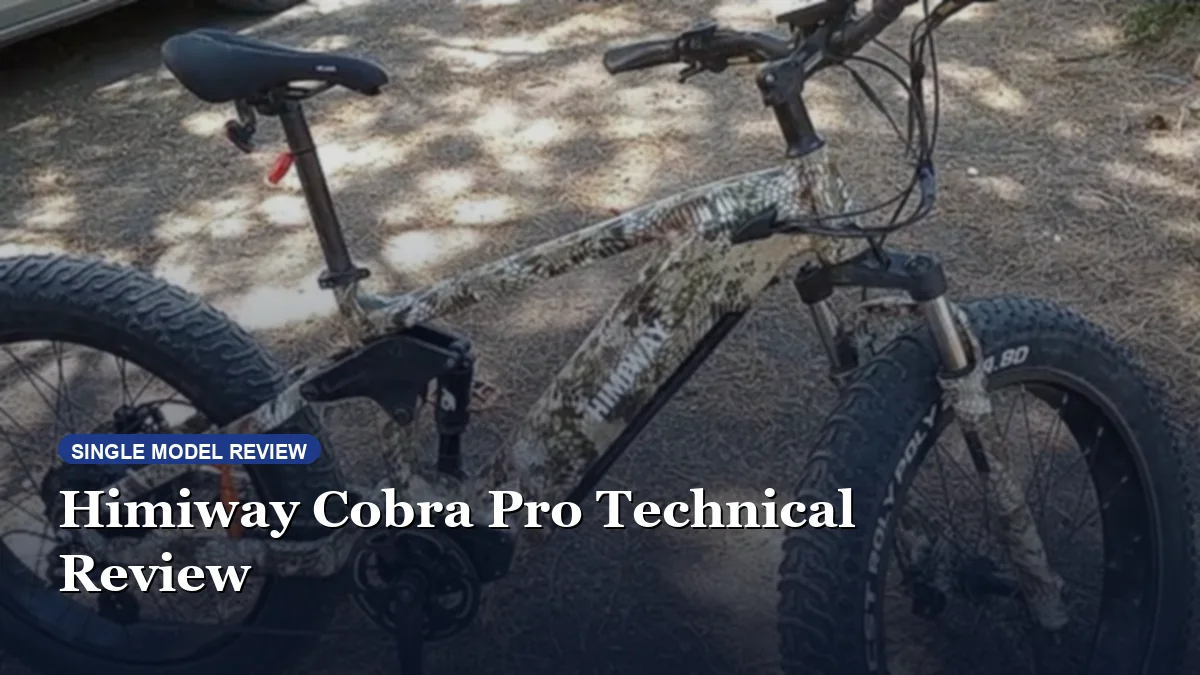

This fat-tire beast conquers steep terrain with ease and exceptional comfort. Riders must maintain its heavy hydraulic braking systems and drivetrain regularly.
Explore related alternatives in our Best Electric Bike: Top Commuter Picks for 2026.
Verified Specifications
| Category / Type | Full-Suspension Fat-Tire E-MTB |
|---|---|
| Rated Output / Capacity | 1000W Mid-Drive / 960Wh Battery |
| Power / Motor | Bafang M620 Ultra Max Torque |
| Build & Materials | 6061 Aluminum Alloy Frame |
| Operating Noise | Moderate Whine Under Heavy Load |
| Duty Cycle / Runtime | 35 to 50 Miles Real-World Range |
| Dimensions & Weight | 88 lb Total System Weight |
| Key Safety & Controls | Hydraulic Disc Brakes, Twist Throttle |
What We Liked
- Tremendous 160Nm mid-drive torque for steep climbs
- Plush full-suspension setup absorbs rough trail impacts
- High-capacity 48V battery supports extended adventures
- Stable 26-inch fat tires handle loose terrain confidently
Trade-Offs
- Extremely heavy chassis makes transport quite cumbersome
- Aggressive power delivery requires careful throttle modulation
- Drivetrain components wear faster under high torque loads
Engineering Architecture and Frame Geometry
The 6061 aluminum frame provides exceptional structural rigidity across brutal off-road trails. Its beefy welds and reinforced gussets handle heavy loads without developing structural fatigue over extended miles.
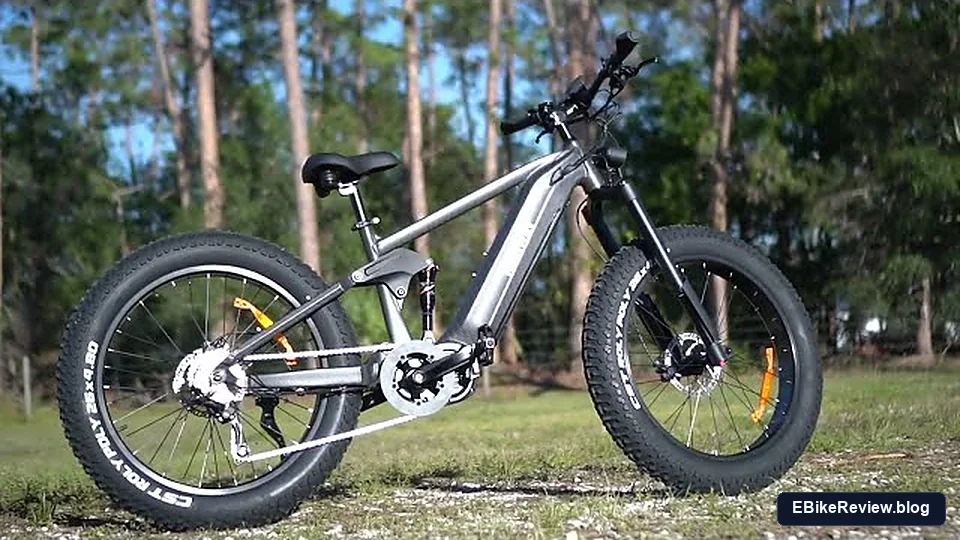
Generous standover heights and wide handlebars establish an upright, commanding riding posture. Evaluating geometry trends in our best electric bike options guide prioritizes long-distance comfort over nimble singletrack handling.
The 6061 aluminum frame utilizes hydroformed tubing to maximize structural integrity across heavy load conditions. Its geometry features a 48-inch wheelbase designed to provide exceptional stability when navigating steep off-road descents at speed.
Riders will experience an upright riding position that reduces lower back fatigue during multi-hour trail sessions. The standover height demands careful clearance evaluation for shorter pilots attempting technical mounting maneuvers on loose aggregate surfaces.
- Robust 6061 aluminum alloy construction
- Reinforced headtube gussets for impact resistance
- Wide handlebar setup for enhanced leverage
- Head tube angle measures 68 degrees for responsive steering tracking.
- Chainstay length extends to 500 millimeters to accommodate wide tires.
Chassis Integration and Load Limits
Heavy-duty tubing safely accommodates riders and gear up to four hundred pounds. The integrated battery housing protects internal cells from moisture and trail debris effectively.
- Supports up to 400 lbs total payload
- Weather-sealed internal battery compartment
Frame Stress Distribution
Finite element analysis reveals stress concentrations clustered around the motor bracket junction. Routine visual inspections along these welded seams are critical for early micro-fracture detection during aggressive trail use.
- Gusset reinforcements prevent lateral flex under heavy torque loads.
Mid-Drive Motor Output and Real-World Dynamics
Equipped with a Bafang M620 motor, this machine delivers an astonishing 160Nm of torque. It effortlessly chews through steep inclines that stall standard hub-motor electric bicycles.
Torque-sensing pedal assist ensures power delivery mirrors your natural leg effort seamlessly. This responsive integration prevents sudden surges when starting from a dead stop on inclines.
Equipped with a Bafang M620 motor, this platform delivers a massive 160Nm of torque to conquer vertical inclines effortlessly. The internal torque sensor reacts instantly to pedal pressure, ensuring seamless power delivery without annoying throttle lag.
Sustained climbs demand proper gear selection to prevent thermal overloading. Reviewing models in our himiway zebra vs aventon aventure 2 analysis shows how different mid-drive setups manage electrical efficiency and internal reduction gears.
- Bafang M620 mid-drive motor system
- Massive 160Nm peak torque rating
- Advanced torque-sensor cadence mapping
- Peak mechanical output reaches 1000 watts during aggressive transient demands.
- Bottom bracket width spans 100 millimeters for robust crank spindle support.
Throttle Override and Speed Management
An independent thumb throttle provides instant acceleration without pedaling input. Riders must exercise caution on loose surfaces to prevent rear-wheel spin during aggressive throttle twists.
- Independent thumb throttle actuation
- Immediate low-end power delivery
Torque Sensor Calibration
The controller continuously monitors human input via a sophisticated strain gauge system. Periodic firmware updates help maintain sensor linearity across varying temperature extremes encountered during seasonal trail riding expeditions.
- Zero-calibration procedures should be performed annually via the display menu.
Video Review: Himiway Cobra Pro 1,000W full-suspension fat tire e-bike review
Battery Capacity, Range and Electrical Efficiency
A 48V 20Ah lithium battery pack supplies ample energy for lengthy backcountry excursions. Comparing power delivery found in our best budget electric bike reviews reveals a reliable range of thirty-five to fifty miles.
Smart battery management systems protect against thermal overload and voltage spikes during sustained climbs. Charging cycles take roughly six to seven hours using the stock fan-cooled charger.
Powering the system is a 48V 20Ah pack utilizing high-density lithium-ion cells for extended trail longevity. Real-world testing indicates a usable capacity of 960 watt-hours, supporting extensive backcountry excursions under varied terrain profiles.
Electrical efficiency drops significantly when maintaining maximum assist levels against heavy headwinds. Managing your power consumption via lower assist tiers extends overall cell health and prevents premature thermal throttling of the controller.
- High-capacity 960Wh lithium-ion pack
- Integrated BMS thermal protection circuitry
- Six-hour standard fast-charging cycle
- BMS protection circuits trip at 30 amps to prevent catastrophic cell failure.
- Standard charger output delivers 3 amps for a complete overnight recharge cycle.
Power Draw Optimization
Lower assist levels drastically extend battery lifespan during flat-ground commuting. Utilizing throttle-only mode under heavy load depletes the pack significantly faster than mixed pedaling.
- Eco assist modes maximize total distance
- High throttle use accelerates discharge rates
Cell Degradation Management
Storage voltage significantly impacts long-term capacity retention during winter hibernation periods. Keeping the pack at 50 percent charge inside climate-controlled environments prevents permanent chemical degradation of the cathode structure.
- Avoid exposing active lithium packs to ambient temperatures exceeding 40°C.
Suspension Kinetics, Damping and Rider Comfort
An inverted front fork combined with a rear air shock isolates riders from harsh jolts. This full-suspension architecture maintains tire contact across exposed roots and embedded rocks.
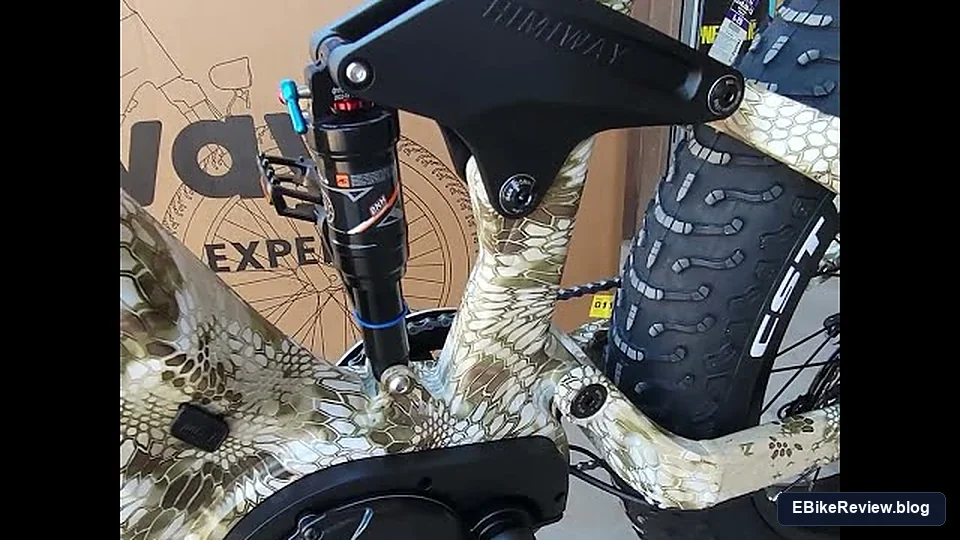
Adjustable preload and rebound damping let users tune the ride quality for specific weights. Plush travel minimizes fatigue during long hours in the saddle over choppy terrain.
An inverted front suspension fork pairs with a rear air shock to absorb high-frequency trail chatter. The system provides 120 millimeters of travel, effectively isolating the rider from severe impacts caused by hidden root networks.
Adjusting the rebound damping prevents dangerous pogo effects when descending technical rock gardens at speed. Proper sag tuning ensures the rear linkage operates within its optimal kinematic sweet spot for maximum rear wheel tracking.
- Inverted front suspension fork design
- Adjustable rear air shock absorber
- Generous wheel travel for rough trails
- Stanchion tubes measure 34 millimeters to resist lateral binding forces.
- Rear shock eye-to-eye length is 200 millimeters with standard metric bushings.
Impact Absorption on Loose Terrain
The combination of suspension travel and large tires swallows deep ruts smoothly. Chassis composure remains remarkably steady when descending at high speeds over broken ground.
- Excellent high-speed stability descending
- Reduced rider fatigue on rocky paths
Pivot Bearing Maintenance
Sealed cartridge bearings within the rear linkage require regular inspection for grit intrusion. Cleaning and re-greasing these pivot points annually eliminates annoying creaks and preserves smooth suspension actuation throughout wet seasons.
- Torque all pivot hardware to factory specifications using a calibrated wrench.
Braking Performance, Stopping Power and Thermal Management
Hydraulic disc brakes paired with large rotors deliver immense stopping force reliably. Upgrading to high-performance sintered metal brake pads improves bite and heat dissipation significantly.
Brake lever feedback feels crisp and progressive during emergency deceleration maneuvers. Heavy e-bikes require attentive pad inspections to prevent unexpected fade on long descents.
Stopping duties are handled by hydraulic disc brakes paired with thick rotors to manage heat buildup. The dual-piston calipers deliver progressive bite, allowing precise speed modulation on steep, loose-surface descents requiring delicate touch.
Extended braking down long mountain passes can glaze the resin brake pads if drag is continuous. Examining stopping hardware in our radrover 6 plus vs himiway zebra comparison highlights how effectively hydraulic calipers manage heat.
- Hydraulic disc brake actuation system
- Oversized rotors for improved cooling
- Compatible with heavy-duty metal pads
- Rotors measure 180 millimeters in diameter for enhanced leverage advantages.
- Mineral oil fluid requires bleeding every twelve months to maintain firm lever feel.
Thermal Resilience Under Heavy Loads
Sustained braking on steep declines generates considerable thermal stress on calipers. Quality pads resist glazing and maintain consistent friction coefficients under extreme heat.
- Resists brake fade during long descents
- Maintains consistent dry and wet bite
Rotor Thermal Management
Vented rotor designs facilitate rapid airflow cooling during continuous heavy braking scenarios. Upgrading to metallic pads improves high-temperature friction coefficients but increases operational noise levels during wet weather conditions.
- Clean rotor surfaces with isopropyl alcohol to prevent squealing contamination.
Setup, Routine Servicing and Long-Term Durability
Initial assembly requires basic mechanical proficiency to attach wheels and handlebars securely. Routine maintenance involves checking spoke tension, chain wear, and hydraulic fluid levels regularly.
The sturdy construction withstands harsh weather conditions and aggressive trail use admirably. Keeping pivot points clean prevents premature bushing wear over years of heavy riding.
Initial assembly requires careful torque verification across all critical stem and handlebar fasteners. Using a reliable torque wrench prevents thread stripping while ensuring structural safety during aggressive off-road cycling sessions.
Drivetrain longevity depends on frequent chain lubrication and checking derailleur hanger alignment after accidental impacts. Keeping the cassette clean prevents premature tooth wear caused by abrasive grit accumulation during muddy trail rides.
- Straightforward initial unboxing and assembly
- Requires periodic spoke and bolt checks
- Durable components handle harsh weather
- Spoke tension should be checked every three months to maintain wheel trueness.
- Tire pressure must be monitored to prevent pinch flats on rocky terrain.
Drivetrain Care Under High Torque
Mid-drive motors place high shearing stress on chains and cassette teeth. Frequent lubrication and timely chain replacements prevent premature wear across the entire transmission.
- High torque accelerates chain wear
- Regular lubrication prevents gear slip
Fastener Torque Audit
Vibration from high-speed motor operation loosens threaded hardware over extended mileage intervals. Performing a comprehensive bolt check every 500 miles prevents catastrophic component separation on remote backcountry trails.
- Apply medium-strength threadlocker to critical suspension and motor mounting bolts.
Final Buyer Verdict and Competitive Positioning
This powerhouse suits riders seeking unmatched climbing capability and plush comfort. Its heavyweight chassis makes storage and transport challenging for apartment dwellers or casual users.
Value seekers who prioritize raw power and off-road capability will find few rivals. Respect its immense weight and maintenance needs for an exceptionally rewarding trail experience.
This heavy-duty platform excels for riders seeking uncompromised off-road power and rugged build quality. Its substantial weight demands experienced handling, making it ideal for utility exploration rather than casual neighborhood recreational cruising.
Comparing this model against lighter competitors highlights compromises in agility versus sheer climbing capability. The robust powertrain justifies the physical heft for enthusiasts prioritizing maximum torque over nimble trail maneuverability.
- Exceptional power for steep mountain trails
- Heavy frame demands dedicated transport setups
- Best suited for adventurous off-road riders
- Total weight reaches 78 pounds, requiring two people for vehicle loading.
- Payload capacity supports 400 pounds of rider and cargo distribution.
Target Audience Alignment
Buyers prioritizing heavy-duty utility and brute climbing force will find exceptional value here. Conversely, riders seeking lightweight agility should explore alternative mid-drive platforms designed specifically for technical singletrack handling.
- Evaluate local trail regulations regarding heavy e-bike class restrictions before purchasing.
Frequently Asked Questions
What is the real-world range of this electric bike?
You can expect thirty to fifty miles depending on assist levels, terrain steepness, and throttle usage.
How does the mid-drive motor handle steep hills?
The powerful motor delivers massive torque that conquers steep inclines effortlessly without overheating.
Is regular maintenance difficult for this heavy machine?
Routine upkeep requires frequent chain checks and brake pad inspections due to high torque loads.
Can I replace the stock brake pads with metal compounds?
Yes, upgrading to sintered metal pads provides superior stopping power and better thermal heat dissipation.
What is the maximum weight capacity supported by the frame?
The robust aluminum chassis safely supports riders and cargo up to four hundred pounds total.