How To Calculate Real World Ebike Range And Battery Metrics
Accurate range estimation prevents mid-ride power failures. Master the core electrical formulas and environmental variables.


Multiply pack voltage by amp-hours to find total watt-hours, then divide by your average consumption rate to reveal true mileage.
Looking for matching picks? See our Best Long Range Electric Bike With Dual Battery: Top Picks.
Practical Quick-Reference Table
| Scenario / Metric | Recommended Target | Why It Matters |
|---|---|---|
| Battery Capacity | 500 Wh to 750 Wh | Establishes baseline energy reserve for typical commutes. |
| Energy Consumption | 15 Wh to 25 Wh per mile | Reflects mixed pedaling effort and moderate terrain. |
| Tire Pressure | 45 PSI to 55 PSI | Minimizes rolling resistance to preserve pack energy. |
| Voltage Sag | Under 15 Percent Drop | Prevents premature low-voltage cutoff under heavy loads. |
| Ambient Temperature | 65 to 75 Degrees Fahrenheit | Optimizes lithium-ion chemical efficiency and capacity. |
| Assistant Level | Level 2 out of 5 | Balances motor assistance with rider leg power output. |
Battery Capacity Fundamentals And Watt-Hour Mathematics
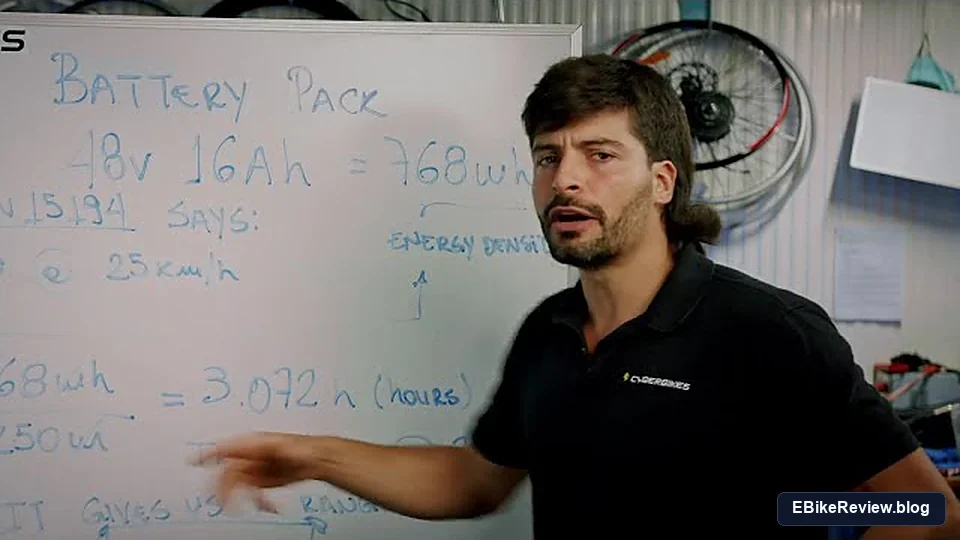
Calculating your electric bike range starts inside the lithium-ion battery pack. You can streamline this math using our ebike range calculator to find the exact watt-hour capacity stored inside your system.
A standard forty-eight volt system paired with a fourteen amp-hour rating yields approximately six hundred seventy-two watt-hours. This raw figure serves as your primary numerator during mathematical modeling.
Lithium cells rarely discharge to zero percent without triggering protective electronic circuits. Real-world calculations apply an eighty percent usable depth of discharge to protect internal battery chemistry.
Voltage sag under physical load reduces instantaneous available energy during acceleration. Always account for resistive losses caused by wiring harnesses, controller limits, and BMS resistance thresholds.
- Locate nominal pack voltage on the hard casing label.
- Identify total amp-hour rating from manufacturer specifications.
- Multiply volts by amp-hours to determine total watt-hours.
- Apply an eighty percent safety factor for usable capacity.
Decoding Nominal Versus Peak Voltage Metrics
Nominal voltage reflects the resting chemical state of your cells under normal conditions. Peak voltage occurs immediately after charging and drops quickly under load.
Using peak voltage figures for range equations will inflate your final mileage estimates. Stick strictly to nominal voltage values to maintain mathematical accuracy.
- Measure resting voltage using a digital multimeter.
- Ignore maximum charge thresholds during baseline math.
Motor Power Draw And Average Energy Consumption Rates
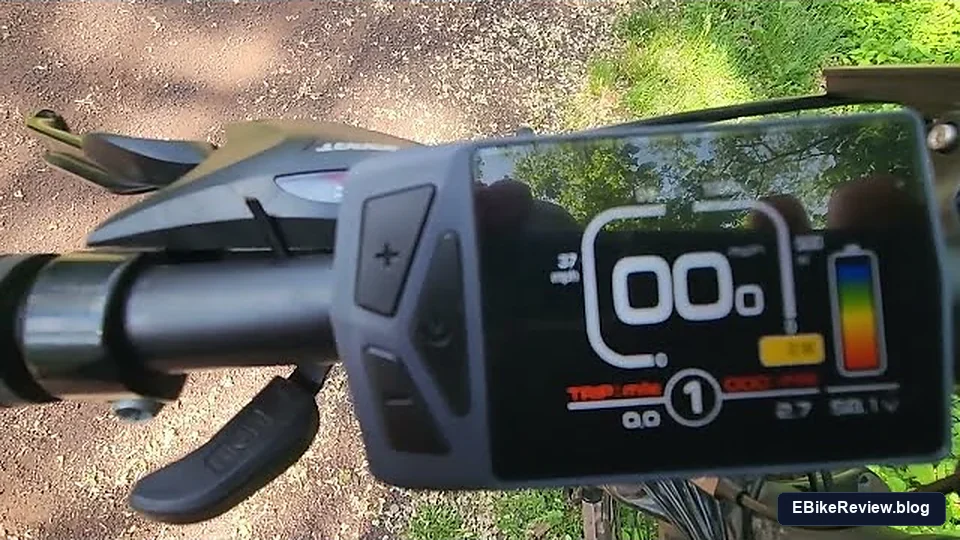
Electric motors consume energy measured in watt-hours per mile traveled. Most city machines featured in our best commuter ebike roundup draw between fifteen and twenty-five watt-hours per mile under mixed riding conditions.
Throttle-only operation significantly spikes your consumption rate toward thirty or forty watt-hours per mile. Heavy cargo setups and sustained hill climbing require even higher energy budgets.
Hub motors and mid-drive motors handle torque delivery differently across varying cadences. Mid-drives leverage mechanical gears to keep motor efficiency peaks within optimal operational RPM windows.
Controller current limits dictate how many amps flow directly into the stator windings. Exceeding continuous amp ratings generates excessive heat and wastes precious battery capacity.
- Monitor real-time display wattage output during test rides.
- Calculate baseline consumption over a flat five-mile circuit.
- Factor in higher energy draws for throttle-heavy commutes.
- Adjust pedaling cadence to keep motor efficiency high.
Analyzing Controller Amp Limits And Stator Heat
Controller amperage ratings directly cap how much electrical current reaches the motor. High current draws create thermal saturation and reduce overall system efficiency rapidly.
Keep continuous output well below maximum controller limits to ensure stable range calculations.
- Check controller amperage label specifications.
- Avoid prolonged full-throttle climbs on hot days.
Video Walkthrough: Real E Bike Range?? How to calculate REAL E-Bike Range in the real world!
Rider Input Terrains And Environmental Resistance Factors
External environmental forces drastically alter real-world efficiency, which you can analyze further via our best range ebike guide. Headwinds and steep elevation gains demand significantly more watt-hour expenditure per mile.
Rider weight and cargo mass increase the force required to accelerate from a complete stop. Every additional ten pounds of gear shifts your efficiency baseline downward noticeably.
Tire compound, tread pattern, and lower inflation pressures amplify surface rolling resistance. Maintaining correct pneumatic pressure preserves vital battery range across paved urban bike paths.
Ambient air temperature impacts chemical reactions inside lithium-ion battery cells. Cold winter conditions reduce total usable capacity by twenty to thirty percent compared to summer.
- Verify tire pressure with a calibrated floor pump weekly.
- Weigh your commuter backpack and cargo attachments accurately.
- Account for headwind resistance on open coastal routes.
- Store batteries indoors during freezing winter weather.
Accounting For Elevation Profiles And Gradients
Climbing hills transforms potential energy requirements into massive electrical current spikes. A five percent grade doubles the power draw compared to riding on flat asphalt.
Calculate total elevation gain per route to refine your predicted battery drain.
- Use topographic mapping apps to check route elevation.
- Increase rider pedal input during steep inclines.
Step-by-Step Field Testing And Data Logging Procedures
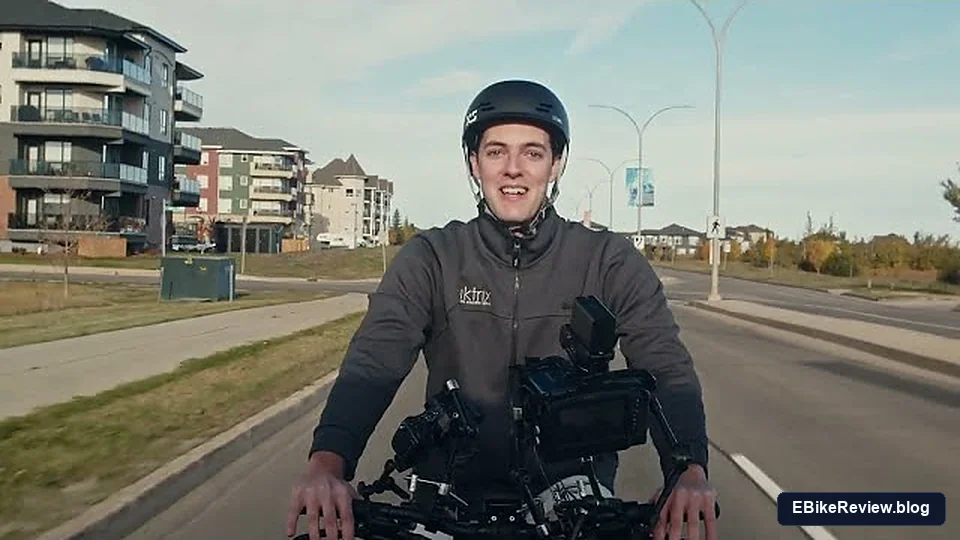
Theoretical calculations provide a baseline, but field testing validates your mathematical models. Charge your battery to one hundred percent and reset your cycle computer trip odometer.
Ride a standardized ten-mile loop featuring flat straightaways and moderate slopes. Maintain your typical cadence and preferred assist level throughout the entire test circuit.
Record the exact percentage of battery capacity consumed upon returning to your workshop. Divide the watt-hours used by distance traveled to establish your real-world consumption factor.
Repeat this diagnostic test across different weather conditions and assist settings. Averaging multiple data logs creates an exceptionally reliable personal range calculation formula.
- Start field tests with a fully balanced battery pack.
- Reset trip meters and auxiliary energy monitoring tools.
- Record remaining battery percentage immediately upon return.
- Calculate precise watt-hours used per mile traveled.
Recording Telemetry Using External Cycle Computers
Factory displays often lack granular watt-hour consumption tracking capabilities. Installing an auxiliary shunt-based monitor delivers precise voltage, current, and energy metrics.
Analyze exported log files to pinpoint exact efficiency drops during your commute.
- Mount external power meters securely to handlebars.
- Calibrate shunt sensors according to manufacturer instructions.
Common Calculation Errors And Voltage Sag Disruptions
Many riders miscalculate range by assuming linear battery discharge curves. Voltage sags under load cause displays to misread remaining capacity during heavy acceleration phases.
Another frequent error ignores transmission drivetrain losses and mechanical friction. Unlubricated chains and misaligned brake calipers silently drain valuable electrical energy reserves.
Relying solely on manufacturer-quoted range figures leads to unexpected mid-ride power depletion. Advertised ranges typically assume flat terrain, light riders, and minimal assist.
Failing to update your calculations after changing tire sizes or gear ratios causes tracking errors. Always recalibrate wheel circumference settings inside your display computer firmware.
- Avoid using manufacturer maximum range claims blindly.
- Account for voltage sag during high-amperage acceleration.
- Keep mechanical drivetrains clean and properly lubricated.
- Recalibrate wheel size metrics after tire replacements.
Correcting Firmware Wheel Circumference Parameters
Inaccurate wheel circumference settings distort speed, distance, and efficiency readouts. Measure your actual rollout distance on flat ground with your full riding weight.
Input the exact millimeter measurement into your display settings menu.
- Measure tire rollout with a flexible tape measure.
- Update display computer settings with precise values.
Video Walkthrough: How To Find Your Maximum E Bike Range | EMTB Battery Life
Workshop Setup For Diagnostic Battery Capacity Testing
Establishing a clean workshop bench helps you run accurate hardware diagnostics. Inspect your battery terminals for oxidation, pitting, or loose internal connection points regularly.
Use a digital multimeter to measure resting terminal voltage after a full charge cycle. Comparing resting voltage against factory specifications reveals degraded internal cell groups.
Check charger output voltage to ensure it reaches proper balancing cutoff thresholds. Faulty chargers can under-charge packs, reducing your effective daily operational range significantly.
Keep your diagnostic area free from conductive debris and moisture hazards. Safety protocols protect both delicate electronic testing equipment and your battery pack.
- Organize digital multimeters and insulated hand tools.
- Inspect battery terminals for corrosion or physical wear.
- Verify charger output voltage with a multimeter probe.
- Maintain a clean, dry, and fire-safe workshop bench.
Inspecting Battery Management System Balance Taps
The Battery Management System monitors individual parallel cell group voltages. Damaged balance leads cause uneven charging and trigger premature low-voltage cutoffs.
Inspect accessible balance wiring harnesses for signs of pinching or heat damage.
- Examine BMS wiring harnesses for visual defects.
- Test individual group voltages if access ports allow.
Preventive Maintenance To Preserve Total Pack Longevity
Proactive mechanical and electrical maintenance directly preserves your daily battery range. Clean electrical contact points with isopropyl alcohol to prevent resistive energy losses.
Keep your bicycle tires inflated to the maximum recommended sidewall pressure rating. Proper inflation reduces rolling resistance and safeguards your electrical energy reserves.
Avoid storing lithium-ion batteries at one hundred percent charge for extended periods. Keep storage levels around fifty percent capacity in climate-controlled indoor spaces.
Inspect axle nuts, torque arm fasteners, and motor cable routing periodically. Secure electrical connections prevent intermittent power dropouts during rough road riding.
- Clean battery terminals with specialized contact cleaner.
- Maintain correct tire pressure before every commuting trip.
- Store packs at fifty percent charge during long pauses.
- Check motor cable connections for secure fitment.
Managing Long-Term Seasonal Storage Procedures
Winter storage requires careful voltage management to prevent permanent capacity degradation, especially for heavy-duty rigs found in our best hunting ebike selection. Check resting voltages monthly and top up packs if levels drop.
Keep storage temperatures stable between fifty and seventy degrees Fahrenheit.
- Monitor storage pack voltages every thirty days.
- Avoid exposing batteries to sub-zero temperatures.
Frequently Asked Questions
How do I convert watt-hours into estimated riding range?
Divide total usable watt-hours by your average consumption rate in watt-hours per mile. This simple equation reveals your true operational mileage under current conditions.
Why does my battery drain faster in cold winter weather?
Low temperatures slow down internal chemical reactions inside lithium-ion cells. This temporary kinetic limitation reduces total usable pack capacity by up to thirty percent.
Does tire pressure significantly impact my overall ebike range?
Underinflated tires increase surface rolling resistance and force the motor to work harder. Maintaining maximum recommended PSI preserves vital battery energy on every trip.
What causes sudden voltage sag during steep hill climbs?
High current draw forces the battery voltage to drop temporarily across internal cell resistances. Quality battery packs minimize this sag to maintain stable power delivery under load.
How can I accurately measure my personal energy consumption rate?
Record the watt-hours consumed over a standardized test loop using an external power meter. Dividing consumed energy by distance traveled yields your exact consumption factor.