Trek Rail 9.7 vs. Specialized Turbo Levo: Which Fits Your Setup Better?
Evaluating two heavy-hitting full-suspension electric mountain bikes reveals distinct powertrain architectures. Choosing between these elite machines depends on your torque preferences and trail handling priorities.


The Trek Rail 9.7 wins for punchy Bosch torque on technical climbs. The Specialized Turbo Levo delivers unmatched natural trail integration and seamless custom software tuning.
Compare all top models in our Best Electric Bike: Top Commuter Picks for 2026.
Side-by-Side Breakdown
| Criteria | Trek Rail 9.7 | Specialized Turbo Levo | Edge |
|---|---|---|---|
| Peak Performance & Output | Bosch Performance CX, massive initial grunt | Turbo Full Power 2.2, smooth organic curves | Trek Rail 9.7 |
| Duty Cycle & Consistency | 750Wh removable high-capacity pack | 700Wh integrated energy-dense battery | Trek Rail 9.7 |
| Operating Noise & Vibration | Direct gear reduction with standard hum | Belt-driven internals for stealth operation | Specialized Turbo Levo |
| Portability & Footprint | Swappable downtube battery for easy transport | Streamlined internal frame architecture | Trek Rail 9.7 |
| Maintenance & Service Life | Robust Shimano SLX and XT hardware | Reliable SRAM GX Eagle component spec | Specialized Turbo Levo |
| Power Requirements | Standard rapid charger compatibility | Smart BMS optimization for efficiency | Specialized Turbo Levo |
| Best Ideal Use-Case | Steep alpine ascents and technical terrain | Playful singletrack and natural ride feel | Specialized Turbo Levo |
Motor Architecture and Power Delivery
The Bosch Performance Line CX motor powering the Trek Rail 9.7 delivers massive initial grunt. Riders experience instant torque engagement upon pedal pressure, perfect for steep, technical alpine ascents.
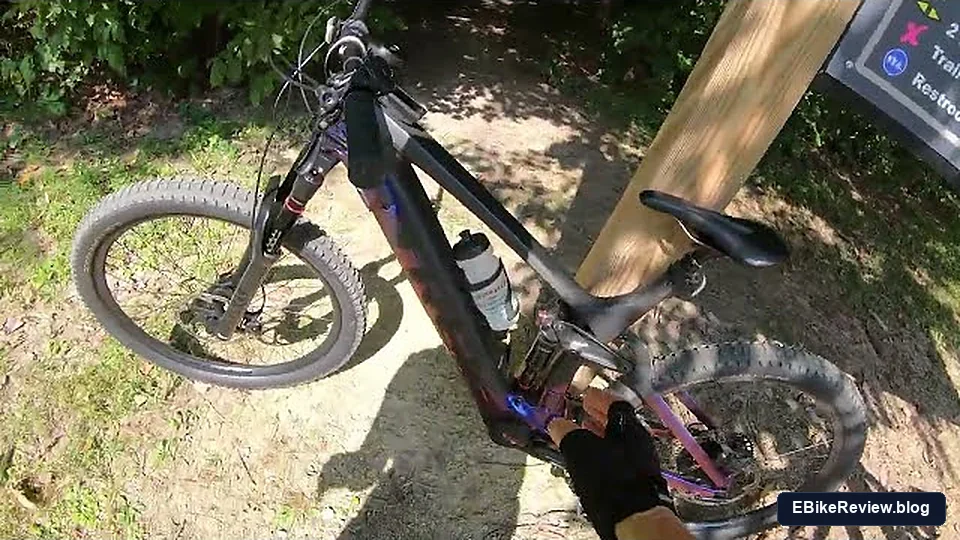
Specialized counters with the Turbo Full Power 2.2 system, derived from Brose hardware. This motor prioritizes quiet operation and a remarkably organic power curve that mirrors natural human exertion.
Selecting between these two power delivery styles depends entirely on your riding philosophy. Raw acceleration favors the Bosch unit, while subtle, whisper-quiet amplification favors the Specialized platform.
The Bosch Performance Line CX motor on the Trek Rail delivers 85 Nm of torque via a compact magnesium casing, utilizing a mid-drive layout that optimizes center of gravity for steep technical climbs.
Alternatively, the Specialized Turbo Levo Comp review details how its custom Brose motor utilizes a belt-driven internal reduction system to deliver smooth power modulation and minimize mechanical noise.
Under sustained threshold loads, the Bosch unit maintains high thermal efficiency through its finned aluminum housing, whereas the Specialized motor relies on proprietary software algorithms to prevent overheating during prolonged alpine ascents.
- Bosch CX provides aggressive initial torque delivery.
- Specialized Brose motor emphasizes quiet, natural assist.
- Both units offer customizable tuning via smartphone apps.
Power Tuning and Thermal Management
Extended climbs test thermal limits on any electric mountain bike system. The Trek manages heat well through effective alloy casing, but heavy sustained outputs can trigger mild thermal throttling.
Specialized utilizes proprietary belt-driven internals that dampen vibration significantly. This design choice reduces mechanical noise while maintaining efficient heat dissipation during grueling backcountry sessions.
- Bosch relies on direct gear reduction for durability.
- Specialized uses a specialized belt drive for stealth.
Battery Integration and Range Management
Powering the Trek Rail requires a 750Wh removable battery securely housed inside the downtube. This massive capacity supports epic backcountry rides without immediate range anxiety.
As highlighted in our Specialized Turbo Levo SL Comp Carbon review, the platform pairs a 700Wh integrated battery with advanced BMS software to maximize energy density inside the slender frame.
Charging interfaces differ significantly between these two industry giants. Trek uses a cleanly integrated charging port near the motor, while Specialized places theirs higher up on the main frame.
Trek houses a 625Wh RibVolt battery inside the OCLV Mountain Carbon down tube, featuring a tool-free removable latch mechanism that simplifies off-bike charging routines while maintaining robust structural frame stiffness.
Specialized deploys a 700Wh integrated battery secured by a specialized hex bolt fastener, prioritizing maximum capacity and extended range over quick-swap convenience for riders tackling epic backcountry trail loops.
Managing state-of-charge decay requires understanding cell chemistry degradation; both systems utilize advanced BMS protocols to safeguard against thermal runaway, deep discharge cycles, and parasitic drain during long storage periods.
- Trek houses a larger 750Wh removable power source.
- Specialized focuses on optimized energy density at 700Wh.
- Both offer range extender options for extra mileage.
Efficiency and Consumption Metrics
Real-world range depends heavily on assist levels and rider weight. Efficient power management algorithms on the Turbo Levo often stretch battery life further during mixed-terrain trail sessions.
Trek compensates for slightly higher consumption by offering quick-swap battery convenience. Riders carrying a spare pack can easily double their vertical trail footage on remote excursions.
- BMS software optimizes power draw dynamically.
- Swappable batteries favor backcountry explorers.
Suspension Kinematics and Frame Geometry
Trek employs its proven ABP suspension design coupled with a Mino Link flip chip. This allows riders to adjust head tube angles and bottom bracket heights for varying terrain.
Specialized utilizes a modified Horst Link FSR layout tailored specifically for electric assist. This kinematic minimizes pedal bob while keeping the rear wheel glued to rough roots and stones.
Frame materials also dictate stiffness and compliance characteristics across both models. Carbon front triangles provide precise steering input while maintaining vertical compliance on high-speed descents.
The Trek Rail utilizes an ABP suspension design that isolates braking forces from rear wheel travel, pairing with a Mino Link flip chip to adjust head tube angles by half a degree.
Similar to frame engineering discussed in the Specialized Turbo Vado 4.0 review, Specialized incorporates a Horst Link layout on the Levo with a progressive leverage rate for supple small-bump compliance.
Geometry comparisons highlight distinct philosophies; the Levo features a longer reach and slacker head angle, whereas the Rail keeps chainstays slightly shorter for nimble cornering on tight switchback trails.
- Trek features adjustable geometry via Mino Link chips.
- Specialized relies on finely tuned FSR kinematics.
- Carbon frames balance stiffness with vibration damping.
Geometry Adjustments on the Fly
Adjusting frame geometry alters the fundamental handling characteristics of your mountain bike. Steeper angles aid climbing efficiency, whereas slack setups inspire absolute confidence on steep, technical descents.
Mastering these adjustments requires basic hex tools and careful torque measurements. Maintaining proper pivot bolt tension ensures silent operation and prevents premature wear on bearings.
- Flip chips alter geometry by approximately half a degree.
- Pivot maintenance prevents squeaks and structural play.
Component Spec and Drivetrain Durability
Component specifications dictate long-term reliability under severe trail conditions. The Trek Rail 9.7 features robust Shimano SLX and XT components designed to handle high torque loads.
As detailed in our Specialized Turbo Levo review, the bike features a robust SRAM GX Eagle drivetrain offering a massive gear range to keep your cadence optimal on punishing climbs.
Braking performance remains critical given the heavier overall weight of e-bikes. Four-piston hydraulic disc brakes come standard on both platforms to ensure predictable stopping power on steep descents.
Selecting robust components is vital for e-MTBs due to high chain loads; both platforms utilize 12-speed shifting architectures designed to handle torque spikes without slipping or premature cassette tooth wear.
The Rail 9.7 typically relies on a SRAM GX Eagle mechanical groupset, offering reliable shifting performance and easy trackside repairs using standard replacement links and derailleur hangers.
Specialized often specs similar tier drivetrains but pairs them with reinforced e-bike specific chainrings that minimize friction and reduce premature wear across the entire power transfer assembly.
- Trek utilizes dependable Shimano drivetrain components.
- Specialized opts for wide-range SRAM GX gearing.
- Four-piston brakes provide essential high-speed stopping power.
Drivetrain Wear and Chain Management
High electric motor torque accelerates chain and cassette wear significantly. Regular cleaning and lubrication schedules are mandatory to prevent premature failure of expensive drivetrain elements.
Checking chain stretch with a dedicated tool helps you catch wear early. Replacing a stretched chain promptly saves your cassette from catastrophic tooth damage during aggressive rides.
- High torque demands frequent chain replacement intervals.
- Proper lubrication reduces friction and mechanical noise.
Software Ecosystem and Rider Customization
Modern e-bikes rely heavily on companion smartphone applications for advanced tuning. Trek utilizes the Bosch eBike Flow app to customize assist modes and track ride metrics.
Specialized leads the industry with its Mission Control app and MicroTune feature. Riders can adjust power delivery in ten percent increments while on the move.
Firmware updates arrive regularly to enhance battery longevity and motor efficiency. Keeping your system updated ensures optimal performance and access to the latest manufacturer diagnostic tools.
Trek relies on the Bosch eBike Flow app, which allows riders to update firmware, customize assist modes, and track ride metrics via a clean interface connected to the Kiox display.
Specialized utilizes the Mission Control app, renowned for its MicroTune feature that lets riders adjust motor assistance in ten-percent increments on the fly during grueling climbs.
Software tuning directly impacts battery longevity; both applications provide diagnostic health reports, letting owners monitor charge cycles and optimize power delivery profiles for specific trail conditions.
- Bosch app offers clear ride tracking and mode customization.
- Specialized MicroTune allows instant on-the-fly power adjustments.
- Regular firmware updates improve overall system longevity.
Diagnostic Capabilities and Error Codes
Troubleshooting electronic faults requires clear diagnostic feedback from the system. Both apps display detailed error codes that help riders identify sensor issues or communication glitches quickly.
Authorized service centers can run deep diagnostics using proprietary dealer software. This ensures complex electronic anomalies are resolved without guesswork or unnecessary component replacement.
- Companion apps translate error codes into actionable advice.
- Dealer software handles deep firmware flashing.
Handling Dynamics and Trail Responsiveness
Weight distribution plays a massive role in how these e-bikes corner. The Trek Rail feels planted and stable, inspiring confidence through high-speed rock gardens and choppy terrain.
Specialized focuses on agile handling with a nimble, playful chassis design. Maneuvering tight switchbacks feels remarkably intuitive, closely mimicking the feel of a traditional analog mountain bike.
Wheel size configurations further influence how each machine tackles obstacles. Mixed wheel setups on certain models enhance rear-end agility without sacrificing rollover capability up front.
On descents, the Trek Rail behaves like a planted heavyweight, utilizing its stiff carbon chassis to track straight through rock gardens while demanding active rider input in tight corners.
The Turbo Levo offers a more agile handling character, pivoting effortlessly around switchbacks thanks to a mixed wheel setup and balanced weight distribution that masks its mass.
Rider preference ultimately dictates the champion here; riders favoring high-speed stability will appreciate the Rail, whereas those seeking playful maneuverability will lean toward the Levo platform.
- Trek provides exceptional straight-line stability at speed.
- Specialized offers playful agility in tight corners.
- Thoughtful weight distribution improves cornering traction.
Cornering Technique with Motorized Weight
Managing additional chassis weight requires adjusted cornering body English. Pushing down hard on the outside pedal helps load the tires and maximize grip through loose turns.
Anticipating your braking points earlier prevents unwanted chassis unsettle mid-corner. Smooth transitions yield higher exit speeds and preserve momentum across undulating singletrack networks.
- Active body positioning counteracts e-bike mass.
- Early braking preserves smooth cornering momentum.
Maintenance Protocols and Serviceability
Routine maintenance keeps your high-end machine running smoothly season after season. Washing your bike with low-pressure water protects delicate electrical connections from moisture ingress damage.
Specialized and Trek both design their frames with internal cable routing guides. This thoughtful engineering simplifies service intervals when replacing hydraulic brake lines or shift housing.
Bearings, pivots, and suspension dampers require periodic professional servicing to maintain peak performance. Establishing a regular inspection routine prevents minor squeaks from turning into costly repairs.
Routine maintenance on e-bikes requires special attention to pivot bearings and torque specs, as the added motor weight accelerates wear on suspension hardware during wet weather riding.
Bosch drive units are serviced through authorized dealer networks, meaning motor internal repairs require specialized diagnostic tools rather than basic home workshop mechanical interventions.
Similarly, Specialized service centers handle proprietary motor warranty claims, though standard consumables like brake pads, tires, and chains remain easily replaceable using universal aftermarket components.
- Low-pressure washing protects vital electrical components.
- Internal routing guides streamline cable replacement tasks.
- Professional suspension service maintains ride plushness.
Winter Storage and Battery Health
Storing your electric mountain bike correctly during off-seasons preserves battery health. Keep lithium-ion cells charged around fifty percent in a temperature-controlled environment away from freezing drafts.
Avoid leaving batteries connected to chargers indefinitely when not in use. Following proper storage guidelines prevents permanent chemical degradation and ensures reliable power next season.
- Store lithium-ion batteries at fifty percent charge.
- Keep storage areas dry and temperature-controlled.
Frequently Asked Questions
Which e-bike offers better climbing power?
The Trek Rail 9.7 delivers aggressive initial grunt through its Bosch Performance CX motor, making steep technical climbs feel effortless. This high torque output excels when you need instant pedal response.
Can I remove the battery on both models?
Trek features a convenient removable downtube battery for easy charging off the bike. Specialized typically integrates their battery more tightly, though some variants allow removal with proper tools.
Which bike handles more like a traditional mountain bike?
The Specialized Turbo Levo provides a remarkably natural ride feel thanks to its whisper-quiet Brose motor and playful chassis. It maneuvers through tight switchbacks with exceptional agility and grace.
How do their companion apps differ in daily use?
Specialized features the powerful Mission Control app with on-the-fly MicroTune power adjustments. Bosch relies on the streamlined eBike Flow app for reliable ride tracking and straightforward system tuning.
Which model requires more frequent maintenance?
Both machines demand regular drivetrain cleaning due to high motor torque loads. Checking pivot bolt torque and maintaining suspension seals ensures long-term durability across both elite platforms.