Trek Fuel Ex vs. Canyon Neuron: Which Fits Your Setup Better?
Navigating aggressive trail geometries requires balancing active suspension kinematics against lightweight pedaling efficiency. This technical breakdown evaluates both platforms across real-world mechanical parameters.

Choose the Trek Fuel Ex for aggressive technical descents and custom geometry adjustments, or select the Canyon Neuron for balanced all-day climbing efficiency and streamlined component maintenance.
Compare all top models in our Best Electric Bike: Top Commuter Picks for 2026.
Side-by-Side Breakdown
| Criteria | Trek Fuel Ex | Canyon Neuron | Edge |
|---|---|---|---|
| Peak Performance & Output | High-travel damping and aggressive linkage tuning | Balanced mid-travel kinematics for diverse terrain | Trek Fuel Ex |
| Duty Cycle & Consistency | Robust pivot bearings built for heavy abuse | Optimized weight distribution for sustained output | Canyon Neuron |
| Operating Noise & Vibration | Integrated frame guards dampen chain slap effectively | Clean cable routing minimizes internal rattling | Trek Fuel Ex |
| Portability & Footprint | Bulkier mainframe profile housing heavy-duty pivots | Slimmer carbon or alloy tubes save carrying weight | Canyon Neuron |
| Maintenance & Service Life | Mino Link chip requires periodic torque checks | Straightforward sealed cartridge bearings simplify service | Canyon Neuron |
| Power Requirements | Demands active rider input on steep climbs | Efficient anti-squat properties preserve energy | Canyon Neuron |
| Best Ideal Use-Case | Rough enduro tracks and steep technical lines | Long-distance trail riding and singletrack loops | Split |
Chassis Geometry and Frame Architecture
Modern trail bikes rely heavily on precise headtube angles and reach measurements to determine stability. As detailed in our Trek Rail 7 review, a slacker geometry is designed for aggressive descents.
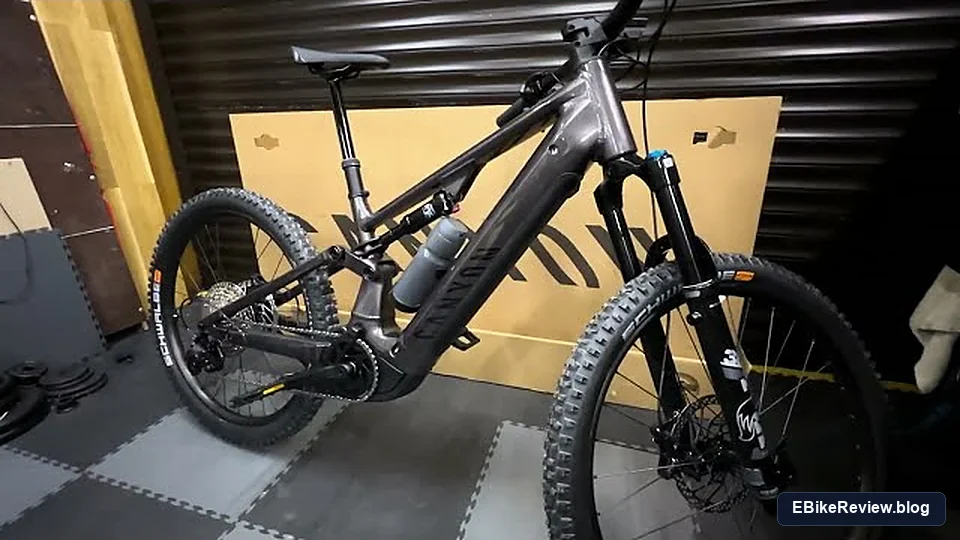
Conversely, the Canyon Neuron embraces a slightly steeper profile that prioritizes climbing posture and nimble steering. Riders must evaluate whether they prefer high-speed stability or responsive handling during tight switchback climbs.
Both manufacturers employ advanced carbon layup techniques and hydroformed aluminum variants to optimize stiffness-to-weight ratios. Frame durability remains exceptionally high across both lineups under standard trail riding conditions.
The Trek Fuel EX features an adjustable Mino Link chip, allowing riders to alter the head tube angle by 0.5 degrees and bottom bracket height by 8mm for custom handling dynamics.
Conversely, the Canyon Neuron relies on a fixed geometry philosophy, prioritizing a steeper seat tube angle of roughly 76.5 degrees to maximize climbing efficiency across varied trail gradients.
Frame architecture differs through Trek’s Straight Shot down tube design versus Canyon’s minimalist topology, impacting torsional rigidity and overall front-end tracking precision during high-speed technical descents.
- Adjustable Mino Link chips alter head angles on the Trek.
- Canyon focuses on fixed geometry optimized for all-day touring.
- Both frames offer internal cable routing for clean aesthetics.
Adjustability and Customization Metrics
The ability to alter geometry via flip-chips provides riders with noticeable setup versatility. Trek integrates this feature smoothly into the main rocker link pivot assembly.
Canyon keeps things simpler by omitting adjustable geometry chips to save weight and eliminate potential pivot creaks. This philosophy appeals to riders seeking zero-maintenance setup simplicity.
- Mino Link allows quick high-to-low geometry shifts.
- Fixed layouts reduce long-term mechanical wear points.
Suspension Kinematics and Damping Performance
While evaluating urban commuters in our Trek FX Plus 2 review, we noticed how frame geometry impacts ride quality. Suspension kinematics similarly dictate how efficiently a mountain bike absorbs impacts.
This active braking pivot ensures the rear wheel tracks the ground smoothly even during heavy braking down steep, loose chutes. Traction remains impressively predictable across high-velocity braking bumps and square-edge hits.
Canyon relies on a tuned four-bar linkage system tailored for mid-travel efficiency and supple small-bump sensitivity. The platform minimizes pedal bob effectively without sacrificing active travel responsiveness.
Trek employs an ABP (Active Braking Pivot) layout that isolates suspension action from brake forces, maintaining active rear wheel traction even under heavy deceleration on steep, loose descents.
Canyon utilizes a Triple Phase Suspension design, delivering a supple initial stroke for small bump sensitivity alongside a progressive end-stroke to resist bottoming out on heavy impacts.
Rear shock tuning on the Fuel EX often incorporates custom Thru Shaft or RE:aktiv valving, whereas the Neuron typically specs standard metric shocks optimized for lightweight trail efficiency.
- ABP technology prevents suspension lockup under braking.
- Four-bar linkage delivers balanced anti-squat characteristics.
- Custom shock tunes cater to distinct rider weight distributions.
Shock Tuning and Volume Spacers
Rear shock tuning plays a vital role in preventing harsh bottom-outs on large drops. Trek models typically accommodate larger volume spacers for aggressive progressive ramp-up curves.
Canyon configurations favor a linear initial stroke that transitions into firm support, suiting general trail duties.
- Volume spacers alter progression rates easily.
- Factory damping tunes match leverage ratios precisely.
Drivetrain Efficiency and Power Transfer
Efficient power transfer ensures every watt of rider energy translates directly into forward momentum. Both platforms feature modern wide-range drivetrains capable of conquering punishing vertical climbs effortlessly.
Chainline stability is maintained through precision derailleur geometry and clutch mechanisms that eliminate chain drop. Anti-squat numbers are optimized around sag points to prevent pedal kickback.
Choosing between these systems depends heavily on your preferred cadence and climbing style during extended mountain ascents.
Both platforms accommodate modern 1x SRAM and Shimano groupsets, but the chainstay length variations directly influence how efficiently rider pedal inputs translate into forward acceleration on climbs.
Trek integrates generous chainstay protection to mitigate slap noise, a design focus also highlighted in our Trek Allant Plus 7 review, preserving frame integrity over root-strewn singletrack networks.
Canyon optimizes its main pivot placement to minimize pedal kickback, ensuring smoother power transfer and reduced fatigue during sustained seated climbs over technical rock gardens.
- Wide-range cassettes provide deep climbing gears.
- Clutch derailleurs suppress chain slap over roots.
- Optimized pivot placement minimizes pedal bob.
Chainstay Length and Weight Distribution
Chainstay length directly influences how a bike handles steep climbing pitches and manual maneuvers. Shorter stays on the Canyon enhance rear-wheel traction during seated power climbs.
Longer stays on the Trek provide exceptional high-speed tracking stability down rough, chaotic descents.
- Short chainstays improve rear wheel agility.
- Longer rear centers increase high-speed composure.
Braking Systems and Rotor Thermal Management
Reliable stopping power is mandatory when descending technical mountain trails at elevated speeds. Much like features found on models in our best electric bike roundup, hydraulic brakes utilize multi-piston calipers for maximum clamping force.
Rotor sizing directly impacts thermal dissipation during prolonged braking descents on steep alpine tracks. Larger rotors prevent brake fade by managing heat accumulation more efficiently over time.
Proper pad compound selection further enhances modulation and initial bite across wet or dusty trail conditions.
Heavy trail abuse demands robust stopping power, with the Fuel EX frequently utilizing four-piston calipers matched to 200mm rotors for superior heat dissipation on long alpine descents.
The Neuron often balances weight by pairing lighter brake configurations with 180mm rotors, which suffice for moderate trail use but require more deliberate lever modulation during prolonged braking.
Proper rotor truing and pad clearance adjustments remain critical maintenance tasks for both setups to prevent annoying brake rub during frame flex under heavy cornering loads.
- Multi-piston calipers deliver superior stopping leverage.
- Large diameter rotors minimize thermal brake fade.
- Quality hydraulic fluid ensures consistent lever feel.
Lever Ergonomics and Reach Adjustments
Ergonomic brake levers reduce hand fatigue during long days of continuous descending. Tool-free reach adjustments allow riders to customize lever throw quickly on the trail.
Consistent bite points build confidence when navigating technical switchbacks and steep rock gardens.
- Tool-free reach adjustments speed up tuning.
- Ergonomic blades prevent forearm pump.
Component Durability and Long-Term Maintenance
Component longevity directly dictates the total cost of ownership for high-end mountain bikes. Sealed cartridge bearings protect vital pivot points from abrasive mud, grit, and moisture infiltration.
Routine bolt torque checks prevent premature wear on linkage hardware and frame interfaces. Protective frame guards shield vulnerable carbon and aluminum tubes from flying rocks.
Investing time in preventative maintenance drastically extends the operational lifespan of your investment.
Pivot hardware on the Fuel EX utilizes oversized bearings and secure collet axle designs, significantly enhancing lateral stiffness and extending service intervals in wet riding conditions.
Canyon’s sealed industrial bearings feature specialized grease ports or double-lip seals, protecting internal components against grit intrusion during muddy winter commutes and aggressive trail sessions.
Routine torque checks on all linkage bolts prevent premature creaking, ensuring structural longevity and preserving the manufacturer's specified frame warranty terms over years of heavy use.
- Sealed bearings resist water and mud intrusion.
- Frame armor protects against rock strike impacts.
- Routine torque checks prevent hardware loosening.
Bearing Replacement and Pivot Service
Servicing suspension pivots requires specialized tools and careful attention to manufacturer torque specs. Clean workspaces ensure no contaminants enter the frame during bearing replacements.
Routine maintenance keeps the suspension operating smoothly without unwanted creaking noises.
- Specialized pullers ease bearing extraction.
- Accurate torque values protect frame threads.
Wheelsets, Tires, and Terrain Compliance
Wheel and tire combinations dictate traction, rolling resistance, and overall puncture resistance. Tubeless setups allow lower tire pressures for enhanced grip across root-strewn singletracks.
Stiff carbon or aluminum rims resist impact damage from sharp rock strikes at high velocities. Aggressive tread patterns bite securely into loose cornering dust and wet soil.
Selecting the correct tire casing balances puncture protection against rotational weight penalties.
Stock wheelsets on the Fuel EX typically feature wider internal rim widths, supporting high-volume 2.5-inch tires for enhanced cornering grip and lower running pressures.
The Neuron favors slightly narrower rims paired with 2.35-inch rubber, prioritizing rolling efficiency and quick acceleration over absolute traction in loose, technical rock gardens.
Tubeless setup compatibility is standard across both platforms, allowing riders to eliminate pinch flats and fine-tune tire casing compliance for specific local trail conditions.
- Tubeless systems reduce pinch flat occurrences.
- Robust casings prevent sidewall tears on sharp rocks.
- Advanced rubber compounds maximize cornering grip.
Rim Width and Tire Volume Interplay
Internal rim widths support high-volume tires securely without excessive sidewall roll during hard cornering loads. Wider rims enhance tire footprint stability across loose terrain.
Matching rim internal dimensions to tire sizing optimizes the tire profile for maximum cornering traction.
- Wide rims support aggressive cornering loads.
- High-volume tires absorb small trail chatter.
Cockpit Integration and Rider Interface
A well-designed cockpit enhances control, comfort, and rider confidence on challenging terrain. Handlebar width and stem length dictate steering responsiveness and upper body posture.
Dropper post integration allows rapid saddle height adjustments for descending and climbing transitions. Clean cable routing prevents handlebar clutter and interference with frame movement.
Ergonomic grips reduce vibration transfer to the hands during extended descents.
Trek integrates internal frame storage via the Bontrager BITS system, letting riders securely stash tools and spares inside the down tube for a clean, minimalist handlebar setup.
Canyon emphasizes sleek cable routing through proprietary headset designs, creating a visually stunning cockpit that requires specific tools during routine headset bearing replacements or maintenance.
Dropper post drop varies by frame size, requiring careful calculation of insertion depth to ensure optimal saddle height and maximum maneuverability on steep technical descents.
- Dropper posts facilitate seamless riding posture shifts.
- Wide handlebars improve steering leverage control.
- Clean cable routing prevents cockpit interference.
Grip Compounds and Handlebar Compliance
Carbon handlebars offer vibration damping properties that reduce hand fatigue on choppy descents. Aluminum alternatives provide bulletproof durability for aggressive riders.
Lock-on grips prevent unwanted rotation during intense steering inputs.
- Carbon bars absorb high-frequency trail vibrations.
- Lock-on collars secure grips firmly in place.
Frequently Asked Questions
Which bike handles steep technical descents better?
The Trek Fuel Ex excels on steep descents due to its slacker geometry and active braking pivot design. Slacker head angles provide superior high-speed stability.
How does pedaling efficiency compare between the two models?
The Canyon Neuron offers exceptional pedaling efficiency with anti-squat kinematics that minimize energy loss. Optimized pivot placement preserves rider energy on long climbs.
Can I adjust the geometry on both frames?
Only the Trek Fuel Ex features a Mino Link chip for quick geometry adjustments. Adjustable flip-chips let riders alter head angles and bottom bracket height.
What kind of maintenance should I expect for pivot bearings?
Both bikes use sealed cartridge bearings that require annual inspection and cleaning. Regular torque checks prevent premature wear on all critical pivot hardware.
Which platform suits all-day trail touring more effectively?
The Canyon Neuron is better suited for all-day touring due to its lighter weight and nimble climbing setup. Balanced kinematics reduce fatigue on long backcountry loops.