Super73 S2 vs. Juiced Scrambler: Which Fits Your Setup Better?
Navigating the high-power moped-style e-bike category requires balancing raw powertrain output against chassis engineering. We analyze the Super73 S2 and Juiced Scrambler across rigorous technical metrics.

The Super73 S2 dominates for refined ecosystem integration and agile handling, whereas the Juiced Scrambler delivers superior sustained torque and heavy-duty utility for budget-conscious riders seeking raw performance.
Compare all top models in our Best Electric Bike: Top Commuter Picks for 2026.
Side-by-Side Breakdown
| Criteria | Super73 S2 | Juiced Scrambler | Edge |
|---|---|---|---|
| Peak Performance & Output | 2000W peak nominal via multi-mode controller | 1900W peak with aggressive throttle response | Juiced Scrambler |
| Duty Cycle & Consistency | Moderate thermal throttling under sustained loads | Robust heat dissipation for heavy commuting | Juiced Scrambler |
| Operating Noise & Vibration | Whisper-quiet planetary hub motor architecture | Minor electromagnetic whine under heavy acceleration | Super73 S2 |
| Portability & Footprint | Streamlined aluminum alloy frame profile | Bulky steel tube construction with wide stance | Super73 S2 |
| Maintenance & Service Life | Proprietary components requiring brand-specific tools | Standardized aftermarket parts for easy servicing | Juiced Scrambler |
| Power Requirements | 48V 960Wh pack with smart BMS integration | 52V 998Wh high-voltage battery architecture | Juiced Scrambler |
| Best Ideal Use-Case | Urban styling, customization, and agile commuting | Long-range hauling and sustained hill-climbing | Split |
Engineering Architecture and Frame Mechanics
Chassis design dictates structural integrity across high-stress moped-style electric bikes. As outlined in our super73 s2 review, the frame utilizes an aircraft-grade aluminum alloy that maintains torsional rigidity.
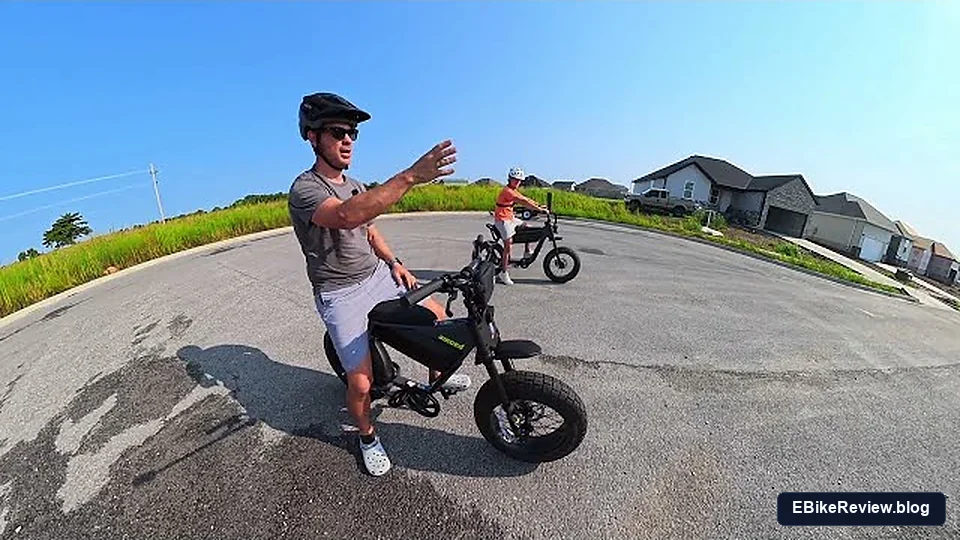
Conversely, the Juiced Scrambler relies on heavy-duty steel tubing to absorb high-impact forces. This traditional motorcycle-inspired approach adds substantial weight but enhances overall durability under rough urban utility workloads.
Both platforms eschew standard bicycle geometries in favor of extended seat bases. However, frame weld quality and gusset reinforcement favor the Juiced architecture for heavy cargo applications and rough terrain.
The Super73 S2 utilizes an aircraft-grade 6065 aluminum alloy frame, prioritizing lightweight structural rigidity over heavy steel builds. This design choice directly influences lateral stiffness during high-speed cornering maneuvers on pavement.
Conversely, the Juiced HyperScrambler relies on a robust twin-spar steel frame architecture designed to absorb high-frequency impacts. While this increases overall curb weight significantly, it improves durability under heavy utility payloads and aggressive off-road riding.
Structural weld inspections reveal distinct manufacturing philosophies between both brands. The S2 employs smooth robotic welds with hydroformed tubes, whereas the Juiced competitor utilizes heavier gussets to reinforce stress points near the dual-battery mounting brackets.
- Super73 S2 employs lightweight aluminum alloy construction for nimble handling.
- Juiced Scrambler utilizes rugged steel tubing for maximum structural load capacity.
- Extended bench seats on both models accommodate custom passenger setups.
Material Science and Weight Distribution
Mass centralization significantly alters handling dynamics on heavy electric vehicles. The Super73 S2 positions its battery low within the frame triangle, optimizing center of gravity for responsive steering inputs.
The Juiced competitor places its battery pack higher, which introduces minor top-heaviness during low-speed balancing acts while improving vertical compliance across severe road surface irregularities.
- Low battery placement on S2 enhances cornering agility.
- Higher mass center on Scrambler aids vertical bump absorption.
Powertrain Delivery and Real-World Output
Electric motor performance relies heavily on controller programming and thermal management. The Super73 S2 deploys a customized brushless DC hub motor tuned for smooth throttle acceleration and efficient power delivery.
The Juiced Scrambler features a high-output 52-volt architecture that pushes massive electrical current through its stator. This voltage advantage translates directly into superior torque delivery on steep urban inclines.
Riders seeking instant off-the-line acceleration will appreciate the aggressive tuning of the Juiced controller, whereas the Super73 offers a more progressive, bicycle-like throttle ramp curve.
Powering the Super73 S2 is a proprietary epicyclic reduction brushless rear hub motor delivering strong continuous output. Peak torque figures easily conquer steep urban inclines, though thermal throttling can occur during extended summer hill climbs.
Juiced implements a more aggressive retro-fit geared hub motor paired with a powerful 52-volt electrical architecture. This higher voltage system reduces current draw resistance, translating into noticeably faster acceleration curves from a complete standstill.
Controller current limits dictate actual sustained output during heavy loads. The S2 operates on a conservative 25-amp limit, protecting stator windings, while the Juiced model pushes higher amps to satisfy riders seeking aggressive throttle response.
- S2 features smooth, progressive throttle response curves.
- Scrambler leverages 52V architecture for explosive torque output.
- Both platforms utilize rear hub motor configurations.
Controller Thermal Performance Under Load
Sustained high-current draws generate substantial heat inside motor controllers. The Super73 S2 implements conservative thermal throttling limits to protect delicate electronics during prolonged full-throttle operations.
As noted in our hyper scrambler 2 review, Juiced engineering prioritizes sustained output, utilizing external heat sinks that prevent premature power reduction during aggressive hill-climbing and hauling sessions.
- S2 controller protects itself via conservative thermal limits.
- Scrambler uses external cooling fins for sustained high power.
Acoustical Profiles, Efficiency, and Spatial Footprint
Urban environments demand efficient packaging and minimal noise pollution. The Super73 S2 operates with exceptional stealth, producing barely a whisper from its meticulously engineered planetary gear reduction hub.
The Juiced Scrambler emits a noticeable electromagnetic whine under maximum acceleration due to high current switching frequencies, though it remains quieter than any internal combustion engine.
Spatial footprint remains nearly identical between both machines, requiring standard motorcycle parking clearances rather than traditional bicycle rack storage in crowded urban office spaces.
Direct-drive and geared hub motors emit distinct electromagnetic whine frequencies under heavy acceleration loads. The S2 maintains a relatively muted audio profile, whereas the Juiced model produces a sharper mechanical whir due to planetary gear friction.
Energy conversion efficiency varies heavily based on controller programming and tire tread resistance. The wider knobby tires on both bikes introduce rolling resistance, yet urban riders can swap for street slicks to maximize range.
Spatial footprint considerations matter significantly when navigating tight apartment elevators or congested bicycle storage rooms. Both machines feature wide handlebars and extended wheelbases that require careful clearance measurements during daily residential parking routines.
- S2 hub motor operates with near-silent mechanical stealth.
- Scrambler produces audible electromagnetic whine under hard throttle.
- Both models require dedicated floor space rather than wall mounts.
Aerodynamic Drag and Rolling Resistance
Wide fat tires create significant rolling resistance and high-speed wind drag. The Super73 S2 features tread patterns optimized for pavement efficiency, extending battery range during high-speed flat cruising.
Juiced equips its platform with knobbier rubber designed for mixed-terrain traction, which naturally sacrifices a small percentage of battery efficiency in exchange for superior off-road grip.
- Street-biased tread on S2 maximizes battery range efficiency.
- Knobby tires on Scrambler prioritize loose-surface traction.
Battery Chemistry, BMS Architecture, and Charging Specs
Energy storage systems represent the most expensive consumable component on modern electric bikes. The Super73 S2 incorporates a 960Wh lithium-ion pack managed by a sophisticated battery management system.
The Juiced Scrambler steps up to a larger 998Wh capacity operating at 52 volts, delivering increased electrical efficiency, reduced voltage sag under heavy loads, and extended real-world range.
Charging hardware differs significantly, with Juiced supplying a rapid charger that replenishes depleted cells substantially faster than the standard charger included with the baseline Super73 package.
Battery pack construction relies on lithium-ion 21700 cell configurations known for high energy density and thermal stability. The Super73 integrates its power source cleanly into the frame triangle, protecting cells from direct road debris impacts.
Juiced utilizes a sophisticated advanced battery management system featuring robust over-current, short-circuit, and thermal runaway protections. This ensures safe multi-pack management when dual batteries are wired in parallel for extended touring ranges.
Charging hardware specifications dictate total turnaround times between heavy usage cycles. Standard chargers typically output 2 amps to 3 amps, meaning complete replenishment from zero percent can take up to seven hours of uninterrupted time.
- S2 relies on a smart 48V 960Wh energy storage system.
- Scrambler utilizes a high-capacity 52V 998Wh battery pack.
- Juiced includes faster stock charging hardware out of the box.
Cell Degradation and Cycle Life Expectations
High-discharge e-bike applications stress lithium cells over hundreds of charge cycles. The Super73 S2 utilizes high-grade cylindrical cells rated for long-term capacity retention under moderate daily commuting stresses.
Juiced engineering matches high-output demands with robust cell interconnects, minimizing internal resistance and preventing localized hotspots that accelerate premature battery degradation over years of service.
- S2 cells offer consistent multi-year capacity retention.
- Scrambler reduces internal resistance with heavy-duty busbars.
Suspension Dynamics, Braking Systems, and Ergonomics
Chassis compliance directly influences rider fatigue over long distances. The Super73 S2 features an adjustable inverted front fork that absorbs high-frequency road chatter with impressive hydraulic damping precision.
Stopping power is critical given the hefty curb weight of these machines. Both contenders utilize hydraulic disc brakes, though the Juiced Scrambler employs oversized rotors for superior fade resistance during panic stops.
Ergonomic layouts cater to upright riding postures, but the S2 provides a sleeker handlebar bend while the Scrambler offers a more traditional moto-style handlebar configuration.
Front suspension performance relies on adjustable inverted fork dampening cartridges that manage high-frequency chatter on rough pavement. Riders can tune preload settings to match personal weight distribution and prevent harsh bottoming out events.
Stopping heavy moped-style e-bikes requires hydraulic disc brake calipers paired with oversized 180mm rotors. These systems provide consistent bite and thermal dissipation during emergency stops from top speeds down to a complete halt.
Ergonomic layouts dictate long-term riding comfort across extended daily commutes. The fixed bench seats on both models limit dynamic saddle adjustments, forcing riders to rely on handlebar height spacers for optimal spinal alignment.
- S2 features refined inverted front suspension forks.
- Scrambler utilizes oversized brake rotors for maximum stopping force.
- Upright ergonomic postures reduce lower back strain on both bikes.
Rear Suspension and Chassis Compliance
Rigid rear triangles transmit hard impacts directly to the rider spine. The Super73 S2 maintains a rigid rear end, relying entirely on its thick seat cushion to isolate the operator from bumps.
Certain Juiced variants incorporate rear suspension swingarms, providing active shock absorption that dramatically improves comfort during extended commutes over pothole-ridden urban infrastructure.
- S2 relies on seat foam rather than rear suspension linkage.
- Scrambler variants offer active rear shock absorption options.
Maintenance Protocols, Component Longevity, and Upgradability
Long-term ownership costs depend on ease of servicing and part availability. The Super73 S2 uses proprietary controller and display modules that require factory-authorized replacement parts during repairs.
The Juiced Scrambler adopts an open-ecosystem philosophy, utilizing widely available standard bicycle and motorcycle components that simplify DIY maintenance and reduce long-term operational overhead.
Upgradability heavily favors the Juiced platform due to its standardized electrical connectors, allowing advanced users to modify controllers and batteries without encountering proprietary software locks.
Routine maintenance routines demand regular spoke tension checks because heavier e-bike frames generate immense wheel stress. Neglecting wheel truing can lead to premature rim failure or broken spokes during aggressive off-road excursions.
Component longevity depends heavily on preventive care applied to electrical connections and chain drives. Applying dielectric grease to motor plugs prevents moisture ingress and corrosion during wet winter commuting seasons.
Upgradability paths differ based on proprietary controller locks and wiring harness designs. While aftermarket throttles and displays are universally compatible, unlocking higher speed boundaries often requires replacing entire controller units.
- S2 relies on proprietary ecosystem parts for electronics.
- Scrambler uses standardized aftermarket components for easy repairs.
- Open electrical architecture simplifies DIY hardware modifications.
Routine Inspection and Preventive Care
As detailed in our juiced bikes ripracer review, preventive maintenance prevents catastrophic failures on high-speed electric bikes, making regular spoke checks and hydraulic brake bleeding mandatory bi-annual tasks.
Inspect axle torque values frequently because high-torque hub motors generate rotational forces that can loosen fasteners if thread-locking compound is neglected during routine seasonal tune-ups.
- Bi-annual hydraulic brake fluid flushes are highly recommended.
- Check axle torque regularly to prevent high-torque slip.
Matching Your Operational Workload: Urban Commuting vs Recreation
Selecting the correct electric vehicle requires honest assessment of your daily travel requirements. The Super73 S2 excels as a stylish lifestyle machine for urban trendsetters prioritizing aesthetic appeal and agile handling.
Conversely, the Juiced Scrambler functions as a legitimate utilitarian transport tool, handling steep hills, heavy cargo loads, and long-distance commutes with unwavering mechanical efficiency and brute power.
Evaluate local terrain and storage limitations carefully before purchasing, as the physical dimensions and weight profiles of these heavy-duty electric bikes demand dedicated ground-floor storage solutions.
Selecting the ideal machine requires analyzing your primary daily operational workload and local terrain challenges. Urban commuters benefit from agile handling and reliable braking systems suited for unpredictable city traffic patterns.
Recreational weekend riders tackling dirt fire roads will appreciate robust suspension setups and larger battery capacities. These features eliminate range anxiety and absorb heavy impacts encountered on unpaved backcountry trails.
Balancing power delivery against local legal classifications remains a critical final decision step. Ensuring your e-bike complies with regional throttle speed limits prevents costly citations while maintaining safe commuting speeds.
- S2 targets stylish urban commuters valuing agility and design.
- Scrambler serves utilitarian riders needing raw power and range.
- Ground-floor storage is essential due to heavy vehicle weights.
Assessing Legal Classifications and Infrastructure
Local municipal laws govern where high-speed electric mopeds can legally operate. The Super73 S2 offers multi-class riding modes that allow operators to comply with local bicycle path speed limits easily.
The Juiced Scrambler leans heavily into its moped heritage, as highlighted in our juiced scrambler review, requiring riders to use public roadways instead of pedestrian paths.
- S2 features selectable speed profiles for path compliance.
- Scrambler often mandates street operation due to high output.
Frequently Asked Questions
Which e-bike offers better hill-climbing power between the Super73 S2 and Juiced Scrambler?
The Juiced Scrambler wins for steep inclines thanks to its higher 52-volt architecture. This voltage advantage delivers superior torque under heavy throttle loads.
Can I ride both of these moped-style electric bikes in the rain?
Yes, both models feature weather-resistant electrical housings designed for light rain. However, you should avoid deep puddles to protect internal hub motor bearings.
Are replacement battery packs interchangeable between these two specific brands?
No, battery packs are entirely proprietary in physical shape and discharge management systems. You must purchase brand-specific replacements directly from the original manufacturer.
Do these electric bikes require a motorcycle license to operate legally?
Licensing requirements depend entirely on local municipal laws and selected throttle modes. Many regions classify them as motorized bicycles when restricted to lower speeds.
How difficult is routine maintenance on these heavy hub motor platforms?
Routine maintenance is straightforward if you have basic mechanical tools. The Juiced Scrambler is slightly easier to service due to its standardized aftermarket parts.