Mid Drive Motor vs. Hub Motor: Which Fits Your Setup Better?
Understanding powertrain architectures dictates your riding efficiency. Selecting between centralized torque multiplication and direct-wheel propulsion defines your daily utility.

Choose a mid drive for steep topography and hauling maximum payloads. Select a hub motor for low-maintenance urban commuting and cost-effective flat-ground cruising.
Compare all top models in our Best Electric Bike: Top Commuter Picks for 2026.
Side-by-Side Breakdown
| Criteria | Mid Drive Motor | Hub Motor | Edge |
|---|---|---|---|
| Peak Performance & Output | High torque amplification through gears | Direct electromagnetic wheel force | Mid Drive Motor |
| Duty Cycle & Consistency | Superior thermal management on climbs | Prone to thermal throttling on hills | Mid Drive Motor |
| Operating Noise & Vibration | Audible planetary reduction gear whir | Near-silent gearless operation | Hub Motor |
| Portability & Footprint | Standard wheel removal for flats | Heavy axle wiring complicates flats | Mid Drive Motor |
| Maintenance & Service Life | Accelerated chain and cassette wear | Zero internal motor maintenance needed | Hub Motor |
| Power Requirements | Efficient wattage conversion via gears | Higher continuous wattage demands | Mid Drive Motor |
| Best Ideal Use-Case | Steep hills, cargo hauling, trail riding | Flat-ground commuting and budget utility | Tie (Workload Dependent) |
Fundamental Architectural Differences and Torque Delivery Mechanisms
Mid-drive motors mount directly into the frame bottom bracket. This positions the center of gravity low and central while leveraging the bicycle's mechanical gear train.
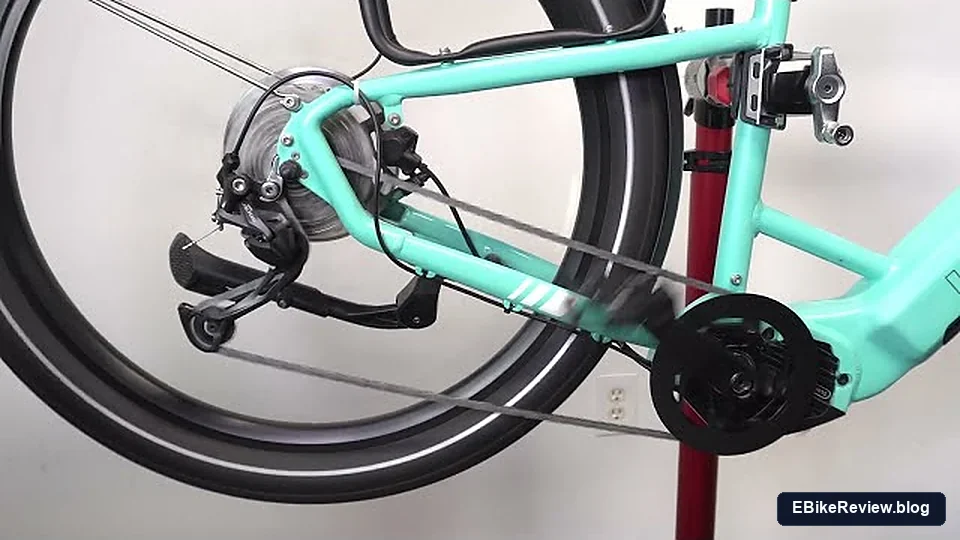
Conversely, hub motors integrate directly into the front or rear wheel axle. They apply rotational force straight to the tire, completely bypassing the chain and cassette sprockets.
This fundamental mechanical divergence changes how power reaches the pavement. Centralized power multiplication amplifies rider input directly through the chain, transforming physical pedaling force into proportional propulsion.
Hub motors house the electromagnetic stator directly inside the wheel hub, applying rotational force independently of the bicycle's gear cluster. This design generates direct propulsion but bypasses the mechanical drivetrain entirely.
Mid-drive motors mount centrally within the bottom bracket shell, routing power directly through the chain and cassette. By leveraging existing gear ratios, they multiply rotational torque for superior mechanical advantage on steep ascents.
Torque-sensing mid-drives measure rider pedal input using strain gauges, instantly modulating current to match human effort. Conversely, cadence-sensing hub systems simply detect crank rotation, resulting in a less nuanced power delivery profile.
- Mid drives leverage existing bicycle gears.
- Hub motors spin the wheel independently.
- Bottom bracket placement centers weight.
Mechanical Advantages of Crank-Mounted Systems
Crank-mounted systems utilize internal reduction gears to optimize motor RPM. This keeps the electric motor operating within its highest thermal efficiency band during grueling climbs.
Riders experience smooth power delivery because torque sensors read pedaling cadence instantly. The system responds naturally to human effort, creating a seamless ride quality.
- Internal reduction gears optimize motor RPM.
- Torque sensors read pedaling cadence instantly.
Performance Metrics Across Challenging Topography and Grades
When confronting steep inclines, mid-drive units dominate performance metrics. Top choices highlighted in our best hill-climbing e-bikes overview utilize the bike’s gears to maintain high rotational speeds at reduced ground speeds.
Hub motors face distinct thermodynamic limitations on extended steep grades. Operating at low wheel speeds under heavy loads forces high current draw, risking rapid thermal throttling.
Flat terrain cruising favors the direct simplicity of geared or gearless hub configurations. They deliver steady, unassisted propulsion without wearing down your bicycle chain or derailleur components.
Tackling sustained inclines exceeding ten percent exposes severe thermal limitations in geared hub motors due to fixed gear ratios. Mid-drives excel here by dropping into lower gears, keeping motor RPMs within optimal efficiency bands.
Direct-drive hub motors offer excellent high-speed momentum on flat terrain through massive copper windings and heavy magnets. However, their lack of internal gear reduction causes efficiency losses when climbing steep mountain grades slowly.
Real-world grade-climbing performance heavily favors centralized mid-drive configurations because they prevent thermal overload. By utilizing bicycle transmissions, they maintain high torque outputs without drawing excessive amperage from batteries.
- Mid drives conquer steep sustained climbs easily.
- Hub motors risk overheating on long grades.
- Flat terrain favors direct hub propulsion.
Gradeability and Continuous Power Output
Continuous power output differs significantly based on geographical demands. Mid drives convert wattage into usable wheel torque through mechanical advantage, multiplying force effectively on steep mountain passes.
Hub motors rely purely on raw electromagnetic force. Without gear reduction, high wattage is mandatory to move heavy loads up steep inclines without stalling the motor windings.
- Mechanical advantage multiplies force on passes.
- Raw electromagnetic force drives wheel hubs.
Mechanical Efficiency and Long-Term Drivetrain Wear Factors
Routing electric motor torque through a traditional bicycle drivetrain accelerates component wear. Chains, cassettes, and chainrings experience significantly higher tensile loads, demanding more frequent replacement intervals.
Hub motors isolate propulsion entirely within the wheel shell. Because motor force never touches the chain, drivetrain components experience normal wear comparable to standard unpowered bicycles.
Energy conversion efficiency also varies during stop-and-go urban riding. Shifting gears properly keeps mid drives in optimal zones, while direct-drive hubs can suffer from low-speed stator inefficiency.
Hub motor setups isolate propulsion forces to the wheel, meaning chains, cassette sprockets, and chainrings experience normal analog bicycle wear rates. This design preserves standard drivetrain component lifespan across heavy daily commuting usage.
Mid-drives multiply force through the entire chain and gear cluster, drastically accelerating chain elongation and cassette tooth wear. Riders must frequently replace stretched chains to prevent premature skipping under heavy loads.
Internal planetary gears inside mid-drive units require periodic lubrication maintenance using specialized high-shear greases. Riders evaluating platforms featured in our affordable mid-drive e-bike selections must account for these crucial internal gear upkeep routines.
- Motor torque accelerates chain and cassette wear.
- Hub motors isolate propulsion inside the wheel.
- Proper shifting optimizes mid-drive energy conversion.
Component Longevity and Replacement Costs
Long-term ownership expenses hinge on drivetrain maintenance realities. Mid-drive owners must budget for frequent chain and cassette swaps due to extreme high-torque friction.
Hub motor commuters enjoy lower ongoing drivetrain consumable costs. However, servicing an integrated rear wheel motor requires specialized technical knowledge if internal clutches eventually fail.
- Mid-drive owners budget for frequent chain swaps.
- Hub motor commuters enjoy lower consumable costs.
Acoustic Profiles and Operating Thermal Dynamics
Operating noise levels vary widely across different motor architectures. Mid drives often produce a noticeable whirring sound due to internal planetary reduction gears spinning at high rotational velocities.
Gearless hub motors operate with near-silent electromagnetic stealth. Because they contain fewer moving internal parts, they generate virtually no mechanical gear noise during everyday street transit.
Thermal management dictates sustained performance limits under heavy loads. Premium models featured in our mid-drive e-bike buying guide rely on external airflow and frame conduction to dissipate internal heat generated during intense climbs.
Direct-drive hub motors operate with near-silent electromagnetic smoothness because they lack internal reduction gears. Geared hubs and mid-drives introduce mechanical gear meshing noise, producing a noticeable whine under acceleration.
Thermal management differs drastically between motor types during extended heavy climbs under maximum load conditions. Mid-drive housings have limited surface area for heat dissipation, occasionally triggering thermal throttling protection circuits.
Rear hub motors benefit from ambient airflow directly over the outer casing, though enclosed multi-gear setups trap internal heat. Proper thermal engineering prevents permanent neodymium magnet degradation caused by extreme sustained temperatures.
- Reduction gears create audible mid-drive whirring.
- Gearless hub motors provide near-silent operation.
- Thermal management dictates sustained performance limits.
Managing Heat Soak and Environmental Sealing
Heavy commuting in hilly regions exposes motors to severe heat soak. Mid drives handle sustained thermal loads better when paired with adequate aluminum cooling fin designs.
Rear hub motors enclose stators tightly within wheel rims, trapping heat. This restricted airflow makes them vulnerable to thermal saturation during continuous high-output hill climbing excursions.
- Aluminum cooling fins help dissipate heat.
- Sealed wheel rims can trap stator heat.
Weight Distribution, Handling Characteristics, and Frame Integration
Weight distribution fundamentally dictates bicycle handling and cornering agility. Mid drives concentrate heavy electrical mass low in the frame center, preserving natural steering dynamics.
Rear hub motors add significant unsprung weight directly to the back wheel. This rear-biased weight concentration can alter suspension compliance and complicate flat tire repairs significantly.
Frame integration requires proprietary manufacturing for mid-drive systems. Manufacturers must engineer custom bottom bracket shells, whereas hub motors fit into standard dropouts with minimal modification.
Rear hub motors concentrate unsprung mass directly inside the rear wheel, heavily impacting suspension responsiveness and handling agility. This extra rotational weight makes lifting the rear wheel over obstacles noticeably harder.
Mid-drives centralize weight perfectly at the bottom bracket, maintaining balanced center-of-gravity dynamics ideal for technical trail riding. This optimal mass placement enhances overall frame compliance and predictable cornering stability.
Frame integration requires specialized bottom bracket shells for mid-drives, limiting aftermarket retrofitting options significantly. Standard dropouts easily accommodate various hub motor sizes, offering broad compatibility across diverse frame geometries.
- Centralized mass preserves natural steering dynamics.
- Rear hub motors add heavy unsprung weight.
- Hub motors fit standard bicycle frame dropouts.
Trail Maneuverability and Road Stability
Mountain biking demands agile handling and balanced suspension response. Mid drives excel here because unhindered wheel weight allows rear suspensions to track rough trail obstacles effectively.
Cargo hauling and commuting on paved roads tolerate rear weight bias well. Heavy rear hub motors track straight at high speeds, offering a stable cruising experience.
- Balanced suspension tracks rough trail obstacles.
- Rear weight bias offers stable high-speed cruising.
Maintenance Protocols and Long-Term Workshop Serviceability
Routine maintenance tasks differ drastically between these two electric powertrains. Servicing a mid-drive unit usually involves checking crank torque bolts and replacing stretched drive chains regularly.
Hub motors require virtually zero internal maintenance throughout their operational lifespan. However, removing a rear hub motor wheel for flat tire repairs demands unplugging waterproof motor cables.
Professional workshop serviceability also presents distinct technical hurdles. You can master custom parameters using our Bafang mid-drive programming guide, while sealed hub motors often necessitate complete motor assembly replacements.
Changing a flat tire on a hub-motor-driven wheel requires disconnecting heavy phase wires and dealing with axle torque washers. This intricate roadside procedure complicates routine inner tube repairs compared to standard wheels.
Mid-drive systems leave wheel axles entirely standard, allowing rapid tire changes without touching electrical connections or motor wiring harnesses. Workshop service focuses primarily on bottom bracket maintenance and chainline alignment.
Specialized diagnostic software is frequently required by bike shops to troubleshoot proprietary mid-drive firmware error codes. Hub systems typically rely on simpler controller swaps, making them easier for independent repair technicians.
- Mid-drive maintenance involves checking crank bolts.
- Hub motors require zero internal operational maintenance.
- Workshop serviceability varies by proprietary software access.
Roadside Repair Realities and Flat Tires
Fixing a flat tire on a hub-motor wheel challenges novice riders. Heavy axle nuts, torque washers, and integrated power cables complicate quick roadside inner tube replacements.
Mid-drive bikes feature standard quick-release axles and traditional wheels. Changing a flat tire requires no electrical disassembly, making roadside repairs identical to standard analog bicycles.
- Hub motors complicate roadside flat repairs.
- Mid-drive bikes utilize standard wheel axles.
Financial Investment Thresholds and Workload Optimization Strategies
Upfront purchasing costs reflect the complex engineering inside central motors. Mid-drive systems command higher prices due to precision torque sensors and specialized frame manufacturing requirements.
Hub motors provide an economical entry point into electric mobility. Their mass-produced direct-drive or geared designs lower manufacturing expenses, making them highly accessible for budget commuters.
Workload optimization ensures you select the correct motor for your needs. Match your local terrain and cargo carrying requirements to the specific operational strengths of each system.
Hub motors generally offer an economical entry point into electric cycling due to simpler manufacturing processes and fewer proprietary components. Commuter fleets frequently leverage this cost advantage for high-volume deployment strategies.
Mid-drive systems command higher initial acquisition costs driven by complex torque-sensing electronics and precision internal gearing. Their unmatched hill-climbing efficiency justifies the investment for utility riders tackling hilly urban topography.
Matching motor architecture to your specific daily riding workload ensures optimal battery longevity and minimized mechanical upkeep. Choosing correctly prevents premature component failure and guarantees satisfactory long-term operational performance.
- Central motors require precision frame engineering.
- Hub motors offer economical electric mobility entry.
- Terrain matching optimizes your powertrain choice.
Matching Powertrains to Daily Commuter Profiles
Urban commuters traversing flat city grids benefit from reliable hub motors. They require minimal upkeep and deliver effortless throttle-based cruising through busy downtown traffic corridors.
Cargo transporters and mountain trail riders need mid-drive torque multiplication. Maximizing gear ratios ensures heavy loads move smoothly up demanding, steep geographic inclines without strain.
- Flat city grids suit reliable hub motors.
- Cargo transport requires mid-drive torque multiplication.
Frequently Asked Questions
Which motor type offers better battery range efficiency?
Mid-drive motors generally provide better range efficiency on hilly terrain. By leveraging bicycle gears, they keep the motor operating within its optimal RPM sweet spot.
Are hub motors harder to repair when a flat tire occurs?
Yes, removing a rear hub motor wheel requires disconnecting electrical cables and handling heavy axle hardware. Standard quick-release setups make mid-drive flat repairs much easier.
Do mid-drive motors wear out bicycle chains faster?
Mid drives subject chains and cassettes to high tensile loads from both human and motor power. Consequently, riders must replace drivetrain components more frequently.
Can hub motors handle steep mountain climbing?
Geared hub motors manage moderate inclines well, but steep mountain passes can cause overheating. For consistent heavy climbing, mid-drive systems are superior choices.
Which motor provides a more natural riding experience?
Mid drives offer a more natural riding feel because integrated torque sensors measure pedaling force instantly. This creates proportional power assistance that mimics organic motion.