Levo vs. Rail: Which Fits Your Setup Better?
Evaluating the Specialized Levo and Trek Rail reveals stark differences in kinematics, motor tuning, and chassis rigidity. Understanding these engineering priorities ensures you select the optimal platform for aggressive trail riding.


The Specialized Levo dominates technical climbing efficiency and ride customization, whereas the Trek Rail excels in high-speed descent stability and brute suspension travel. Choose based on your local terrain demands.
Compare all top models in our Best Electric Bike: Top Commuter Picks for 2026.
Side-by-Side Breakdown
| Criteria | Levo | Rail | Edge |
|---|---|---|---|
| Peak Performance & Output | Custom Turbo motor tuning | Brute torque delivery | Levo |
| Duty Cycle & Consistency | Advanced thermal management | Robust downtube housing | Levo |
| Operating Noise & Vibration | Damped internal routing | Reinforced linkage design | Rail |
| Portability & Footprint | Mixed-wheel agility focus | Balanced full-size setup | Levo |
| Maintenance & Service Life | Diagnostic app integration | Heavy-duty pivot bearings | Levo |
| Power Requirements | High-density lithium cells | Optimized watt-hour capacity | Rail |
| Best Ideal Use-Case | Technical climbing & tuning | High-speed descent stability | Split |
Frame Kinematics and Suspension Design
Suspension kinematics dictate how efficiently each full-power electric mountain bike absorbs high-speed impacts and tracks technical terrain. Engineers utilize distinct linkage layouts to optimize anti-squat characteristics during sustained climbs.
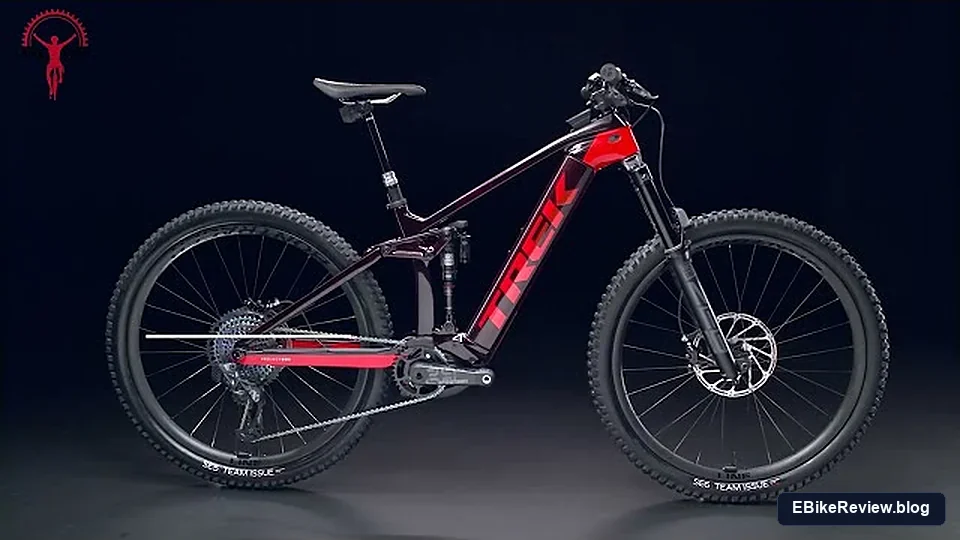
The Levo employs a refined Horst-link suspension layout designed to isolate braking forces from active travel. This architecture maintains exceptional rear-wheel traction across slippery roots and loose rock gardens without pedal bob.
As detailed in our Specialized Levo review, the platform utilizes a proven Horst-link suspension layout engineered to deliver active small-bump compliance and predictable mid-stroke support under heavy braking forces.
Conversely, the Trek Rail relies on an active ABP pivot system designed to keep the rear wheel tracking smoothly over square-edge impacts by preventing brake jack across technical descents.
- Horst-link architecture isolates braking forces effectively.
- Trek utilizes a proprietary ABP linkage design.
- Suspension leverage ratios vary across frame sizes.
Rear Shock Tuning and Leverage Curves
Analyzing leverage curves reveals how each platform handles mid-stroke support and bottom-out resistance. Proper damper tuning enhances overall chassis composure under heavy rider weight shifts.
Custom shock tunes on the Levo provide progressive progression, while the Rail leverages a high initial leverage rate for small bump compliance.
- Progressive leverage prevents harsh bottom-outs.
- Custom damping tunes alter trail feedback.
Motor Architecture and Power Delivery
Electric assist systems define the primary riding character, influencing cadence responsiveness and torque delivery. Modern mid-drive units require sophisticated sensor arrays to interpret rider input accurately in real time.
Specialized equips the Levo with a custom Turbo Full Power motor, delivering massive torque instantaneously. The tuning software allows granular micro-adjustments via a dedicated mobile smartphone application.
Specialized equips the Levo with a custom Turbo 2.2 motor tuned for ultra-quiet operation and smooth torque delivery, matching rider input organically through advanced dual-sensor cadence architecture.
Highlighting top alternatives in our best ebike for rail trails guide, the Trek Rail utilizes Bosch's powerful Performance CX unit delivering high instantaneous torque for punchy technical ledge climbs.
- Custom motor tuning enhances natural pedal feel.
- Torque sensors measure rider input continuously.
- Firmware updates improve thermal efficiency over time.
Torque Sensors and Cadence Processing
Dual-sensor technology measures both force and pedaling cadence to eliminate power lag during technical starts. This precision ensures seamless transitions when navigating tight switchbacks.
Motor firmware algorithms actively adjust power output to match fluctuating terrain resistance, preserving battery longevity and drivetrain integrity.
- Dual-sensor setup eliminates lag.
- Algorithms protect drivetrain components.
Battery Capacity and Thermal Management
Extended backcountry excursions demand substantial watt-hour capacities and efficient heat dissipation during prolonged ascents. Thermal throttling can severely degrade motor output if internal temperatures exceed safe operating thresholds.
Integrating high-density lithium-ion cells inside downtube chassis requires robust protective housing and vibration damping. Both platforms secure large energy reserves to support multi-hour alpine missions.
Powering the Levo is a massive 700Wh integrated battery paired with sophisticated BMS software designed to optimize discharge rates and protect cell longevity across extreme ambient temperature swings.
The Trek Rail similarly adopts a removable RIB frame design housing large-capacity power sources up to 750Wh, prioritizing frame rigidity alongside straightforward tool-free battery removal procedures.
- High-density cells maximize range potential.
- Downtube housing protects against heavy impacts.
- Thermal management prevents mid-ride power loss.
Charging Protocols and Range Optimization
Fast-charging capabilities reduce downtime between grueling trail sessions, while smart battery management systems protect cell longevity over hundreds of complete charge cycles.
Utilizing eco modes and customized assist profiles significantly extends total operational range during mixed-elevation rides.
- Smart BMS extends overall battery lifespan.
- Eco modes maximize total trail distance.
Geometry, Handling, and Wheel Configurations
Modern trail geometry heavily influences stability at speed, cornering agility, and technical climbing prowess. Adjustable headset cups and flip chips allow riders to tailor head tube angles to specific riding styles.
As evaluated in our Specialized Levo Comp review, the platform utilizes a mixed-wheel setup featuring a larger front tire paired with a nimble rear to balance rollover capability with cornering agility.
Specialized integrates adjustable head tube cups into the Levo chassis, allowing riders to tailor steering angles between 63 and 65.5 degrees for diverse trail demands and speeds.
Trek anchors the Rail in a fixed aggressive geometry featuring a long reach matrix and low bottom bracket height designed specifically for high-speed stability through choppy terrain.
- Mixed-wheel setup optimizes cornering agility.
- Adjustable headset cups alter head tube angles.
- Wheelbase length dictates high-speed stability.
Center of Gravity and Weight Distribution
Distributing motor and battery weight low within the aluminum or carbon frame enhances overall cornering confidence. Proper weight distribution prevents front-wheel lift on steep inclines.
Chassis balance remains critical when executing rapid line changes or airborne maneuvers across demanding backcountry descents.
- Low motor placement improves cornering.
- Frame balance aids technical descents.
Component Specifications and Drivetrain Durability
High-torque electric drivetrains subject chains, cassettes, and freehubs to extreme mechanical stress during heavy acceleration. Selecting robust components minimizes premature wear and prevents catastrophic trailside failures.
Manufacturers specify heavy-duty e-bike rated chains alongside wide-range cassettes to handle increased rotational forces. Hydraulic disc rotors feature increased thickness for superior heat dissipation.
Drivetrain longevity on the Levo depends heavily on robust SRAM Eagle transmissions engineered to withstand high electrical torque loads without premature chainring wear or shifting degradation.
The Rail incorporates heavy-duty Shimano XT components offering crisp mechanical shifting performance paired with extremely reliable hyperglide teeth profiles tailored for high-wattage e-mountain biking applications.
- E-bike rated chains withstand high torque.
- Thick disc rotors prevent thermal warping.
- Drivetrain durability reduces maintenance intervals.
Braking Systems and Rotor Management
Stopping a heavy electric assist mountain bike from high speeds demands powerful four-piston hydraulic calipers. Large-diameter rotors dissipate kinetic energy efficiently on long, steep descents.
Metallic brake pads offer superior bite and longevity compared to organic compounds, though proper bedding procedures remain essential.
- Four-piston calipers ensure reliable stopping power.
- Metallic pads maximize component longevity.
Maintenance Protocols and Long-Term Serviceability
Routine inspection of pivot bearings, linkage hardware, and electrical connections ensures long-term operational reliability. Specialized diagnostic tools simplify firmware troubleshooting and error code identification.
Authorized service centers provide necessary software calibrations and mechanical overhauls to preserve factory warranty coverage over years of rugged use.
As noted in our Levo SL Comp Carbon review, routine pivot bearing servicing requires specific torque wrench calibrations to prevent premature side-load wear on expensive carbon frame linkages.
Servicing the Rail demands regular inspection of motor mount bolts using thread-locking compounds to eliminate persistent creaking noises generated by high-torque frame stress during aggressive trail sessions.
- Pivot bearing checks prevent frame play.
- Diagnostic tools simplify electrical troubleshooting.
- Authorized service maintains warranty validity.
Pivot Bearings and Linkage Maintenance
Sealed cartridge bearings within the suspension linkages require regular cleaning and grease replenishment to prevent premature wear. Wielding torque wrenches during reassembly preserves thread integrity.
Preventative maintenance schedules significantly reduce unexpected mechanical failures during remote backcountry expeditions and severe weather riding.
- Grease replenishment protects cartridge bearings.
- Torque wrenches ensure proper fastener tension.
Frequently Asked Questions
How do the Levo and Rail motor systems differ in real-world performance?
The Levo utilizes a fully customizable Turbo motor focusing on smooth pedal response. Conversely, the Rail delivers aggressive, direct power suited for rapid technical climbs.
Can I adjust the frame geometry on both of these electric mountain bikes?
Yes, both platforms feature adjustable geometry via flip chips or headset cups. These mechanisms allow riders to modify head angles and bottom bracket heights.
What wheel size configuration is standard on the Levo and Rail platforms?
The Levo traditionally uses a mixed-wheel setup with a larger front tire. Meanwhile, the Rail typically features dual wheels for predictable rollover characteristics.
How should I manage battery health for long-term durability?
Avoid storing the battery at extreme temperatures and keep charge levels between twenty and eighty percent when not riding for extended periods.
What maintenance is most critical for high-torque electric drivetrains?
Regularly inspecting chain wear and lubricating pivot bearings prevents premature component failure. Using e-bike rated cassettes also minimizes excessive drivetrain stress.