Lectric Xp Lite vs. Radexpand 5: Which Fits Your Setup Better?
Evaluating compact electric platforms requires assessing raw frame rigidity, motor torque delivery, and storage integration. This technical breakdown contrasts the lightweight Lectric XP Lite against the utility-focused Radexpand 5.


Choose the Lectric XP Lite if urban portability and lightweight lifting dominate your daily commuting routine. Alternatively, select the Radexpand 5 for superior cargo carrying capacity and plush tire volume.
Compare all top models in our Best Electric Bike: Top Commuter Picks for 2026.
Side-by-Side Breakdown
| Criteria | Lectric Xp Lite | Radexpand 5 | Edge |
|---|---|---|---|
| Peak Performance & Output | 300W nominal hub motor | 750W geared hub motor | Radexpand 5 |
| Duty Cycle & Consistency | Moderate urban range | Extended range capability | Radexpand 5 |
| Operating Noise & Vibration | Quiet planetary gears | Standard hub whir under load | Lectric Xp Lite |
| Portability & Footprint | Ultra-light folding chassis | Heavier utility footprint | Lectric Xp Lite |
| Maintenance & Service Life | Standard mechanical components | Heavy-duty reinforced hardware | Radexpand 5 |
| Power Requirements | 48V lightweight battery pack | 48V high-capacity battery system | Radexpand 5 |
| Best Ideal Use-Case | Compact apartment storage | All-terrain utility hauling | Split |
Architectural Framing and Structural Geometry
Structural integrity relies heavily on 6061 aluminum alloy welding techniques and main tube thickness. The Lectric frame utilizes a streamlined single-beam approach, whereas Rad Power implements heavily reinforced gussets to handle heavier payload stresses.
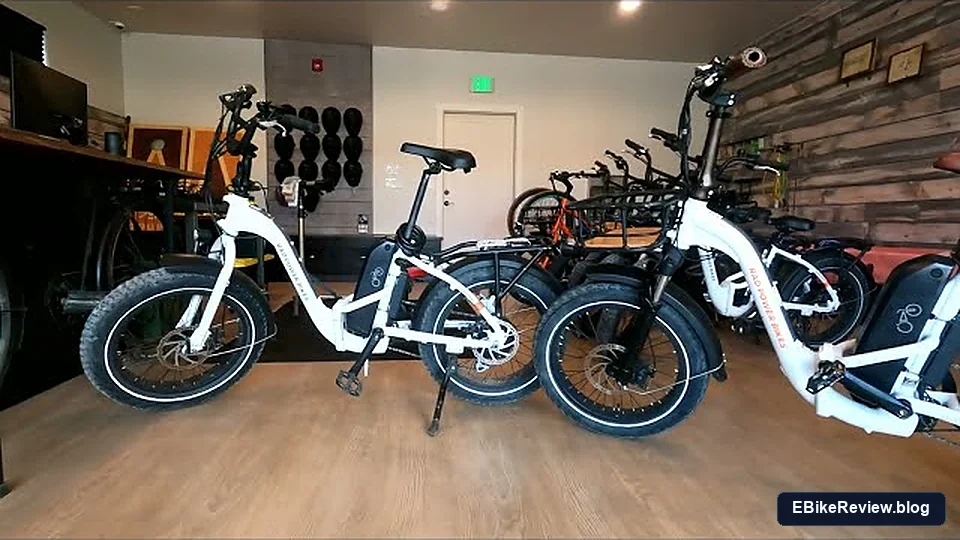
Geometry dictates rider positioning and stability at speed, which we analyze thoroughly in our lectric xp lite 2.0 review. Wheelbase measurements reveal stark differences, impacting high-speed tracking across both folding compact frames.
- Frame material: 6061 aluminum alloy deployed across both chassis designs.
- Gusset reinforcement: Rad utilizes extra welding plates for high-load durability.
- Wheelbase delta: Shorter stance on Lite improves tight cornering agility.
Load-Bearing Limits and Tubing Thickness
Tubing diameter directly influences torsional rigidity when climbing steep inclines out of the saddle. Thicker cross-sections resist lateral flex, reducing energy loss during aggressive pedal strokes on uneven pavement.
Maximum weight capacities reflect these structural variations during dynamic drop tests and fatigue evaluations. Exceeding manufacturer limits accelerates structural fatigue near folding hinges and main tube weld points.
- Wall thickness: Varies significantly between light commuter and cargo frames.
- Hinge stress: High load factors require periodic pivot bolt torquing.
Powertrain Engineering and Torque Delivery
Hub motor architecture dictates energy conversion efficiency, as highlighted throughout our lectric xp 3.0 review. Geared brushless motors provide mechanical advantage, helping riders conquer steep inclines without overheating stator windings.
Controller current limits dictate acceleration profiles and thermal throttling thresholds under sustained heavy loads. Engineers balance phase current delivery to protect internal nylon gears from premature stripping during rapid throttle applications.
- Motor winding: Optimized for low-end torque versus sustained cruising speed.
- Controller limits: Regulates peak current to prevent thermal overload events.
- Geared reduction: Enhances climbing efficiency on steep urban gradients.
Cadence Sensors Versus Torque Sensing
Pedal assistance responsiveness depends heavily on sensor type integrated into the bottom bracket. Cadence sensors measure crank rotation speed, introducing a minor delay before motor engagement activates.
Advanced torque sensors measure rider input force instantly, delivering a more natural riding experience. Neither model features a true torque sensor, relying instead on traditional cadence setups.
- Magnet rings: Detect pedal movement to trigger motor assistance.
- Engagement lag: Typical of cadence-based bottom bracket designs.
Battery Chemistry and Energy Management
Lithium-ion battery packs require sophisticated battery management systems, a robust setup evaluated in our lectric xpedition review. Cell grouping configurations dictate overall amp-hour capacity and voltage sag under heavy loads.
Charging infrastructure and thermal cutoffs protect cells during high-draw operations in extreme weather environments. Proper storage practices significantly extend total cycle life before capacity degrades below threshold limits.
- Cell configuration: Parallel groupings maximize total amp-hour storage.
- BMS protection: Prevents overcharging, deep discharge, and short circuits.
- Thermal safety: Monitors internal temperatures during rapid charging cycles.
Range Estimates and Real-World Efficiency
Manufacturer range estimates often assume optimal flat terrain, minimal wind resistance, and low assist levels. Real-world consumption fluctuates wildly based on rider mass, throttle usage, and elevation profiles.
Operating in high-assist modes drains pack capacity quickly, reducing total travel distance per charge cycle. Efficient energy management requires balancing throttle inputs with active human pedaling effort.
- Watt-hour rating: Determines total available energy reserves.
- Terrain impact: Hills increase amp draw and reduce overall range.
Braking Systems and Safety Standards
Stopping heavy electric bicycles demands robust rotor diameters and reliable mechanical or hydraulic actuation. Caliper stiffness directly affects pad contact uniformity and overall braking modulation during emergency stops.
Rotor thermal dissipation prevents brake fade during extended descents on steep mountain roads. Upgrading brake pads can significantly improve initial bite and wet-weather friction coefficients.
- Rotor sizing: Larger diameters improve thermal capacity and leverage.
- Caliper design: Rigid housings prevent flex during high-pressure braking.
- Pad compound: Semi-metallic options offer superior durability and bite.
Stopping Distances and Wet Weather Performance
Wet conditions drastically increase stopping distances due to reduced tire traction and slick rotor surfaces. Mechanical disc brakes require frequent cable adjustments to compensate for pad wear over time.
Hydraulic systems self-adjust continuously, maintaining consistent lever feel throughout the lifespan of the brake pads. Prioritizing routine brake maintenance ensures reliable stopping power in all weather conditions.
- Friction coefficient: Drops significantly when water contaminates pads.
- Cable stretch: Requires periodic tensioning on mechanical setups.
Ergonomics and Contact Point Adjustability
Rider comfort depends on saddle shape, handlebar height, and grip geometry during long transit sessions. Adjustable stem heights accommodate varying rider statures, reducing lower back strain during commutes.
Grip ergonomics prevent ulnar nerve compression by distributing hand pressure effectively, a design philosophy detailed inside our lectric one review. Selecting appropriate contact points transforms compact folding electric bicycles.
- Stem adjustment: Telescoping columns fit a wide range of heights.
- Saddle padding: High-density foam absorbs vibrations from rough roads.
- Grip contour: Reduces hand fatigue on extended urban journeys.
Tire Volume and Vibration Damping
High-volume fat tires act as secondary suspension components, absorbing high-frequency road chatter effectively. Lower tire pressures increase contact patch area, enhancing grip on loose gravel and sand.
Wide rubber profiles also add rotational mass, which slightly impacts acceleration responsiveness and agility. Maintaining correct tire pressure prevents pinch flats and optimizes rolling resistance efficiency.
- Air volume: Cushions impacts from potholes and cracks.
- Pressure tuning: Balances rolling efficiency against comfort.
Folding Mechanisms and Transport Footprint
Frame hinges and telescoping steering columns enable compact storage inside tight apartment spaces or vehicle trunks. Latching mechanisms must feature secondary safety locks to prevent accidental folding during transit.
Weight distribution when folded affects lifting ergonomics and ease of carrying up flights of stairs. Selecting a lighter platform significantly reduces physical strain during multi-modal daily commutes.
- Hinge security: Dual-locking clamps prevent mid-ride structural failure.
- Folded dimensions: Determines compatibility with small car trunks.
- Lifting balance: Center of gravity impacts stair-carrying comfort.
Hinge Maintenance and Pivot Longevity
Folding pivots experience high shear forces and require periodic lubrication to prevent squeaking. Inspecting hinge pins regularly ensures zero play develops within the primary frame joint assembly.
Adjusting tension bolts maintains a snug fit, eliminating unwanted flex during aggressive out-of-the-saddle pedaling. Proper upkeep prevents premature wear on critical structural folding components.
- Pivot lubrication: Reduces friction and eliminates annoying squeaks.
- Tension check: Prevents dangerous play in the main frame.
Maintenance Protocols and Long-Term Serviceability
Routine maintenance includes drivetrain cleaning, bolt torquing, and tire pressure verification every month. Standardized bicycle components make sourcing replacement parts straightforward for local bike shops.
Proprietary electronic components can complicate troubleshooting when controllers or displays experience faults. Investing time in preventative upkeep drastically extends the operational lifespan of your machine.
- Bolt torquing: Prevents loosening from continuous motor vibrations.
- Drivetrain care: Lubricating chains reduces premature sprocket wear.
- Part availability: Universal sizing simplifies local repair jobs.
Common Wear Items and Replacement Intervals
Brake pads, tires, and chains represent the most frequently replaced items on electric bicycles. High motor torque accelerates rear tire wear compared to non-motorized pedal bicycles.
Monitoring chain stretch using a go-no-go gauge protects expensive cassette teeth from premature destruction. Proactive replacement schedules save money and prevent unexpected roadside mechanical failures.
- Chain wear: High torque requires frequent elongation checks.
- Tire replacement: Rear treads wear out faster due to hub power.
Frequently Asked Questions
What is the primary difference between these two electric bikes?
The primary mechanical difference lies in total frame reinforcement, nominal motor wattage ratings, and overall tire volume across both distinct platforms. Selecting between them requires carefully balancing everyday lifting convenience against heavy-duty cargo hauling capabilities on steep urban inclines.
Total frame mass dictates your ultimate carrying ease and storage footprint.
Can I easily lift and store both models inside a small apartment?
The lighter platform offers significantly better maneuverability and lifting ease when navigating narrow stairwells or small elevators. Heavier utility designs require considerably more physical effort during storage transitions due to their bulky frames.
Weight differentials heavily impact your daily handling comfort.
How do their motor power outputs perform on steep hills?
Higher wattage motors provide superior torque delivery and maintain climbing momentum much better on steep gradients without overheating. Lower wattage options require more active rider pedaling assistance to conquer demanding terrain successfully. Motor torque directly dictates your hill-climbing speed.
Are the tires interchangeable for off-road riding?
Both models feature wide tires that handle hard-packed dirt and gravel paths with adequate stability and traction. However, true off-road singletrack riding requires specialized suspension and frame geometry beyond these utility designs.
Tire volume primarily enhances urban comfort over rough pavement.
What routine maintenance do folding electric bikes require?
Regular upkeep involves checking frame hinge tension, lubricating drive chains, and verifying proper bolt torques across all components. Keeping tires properly inflated prevents pinch flats and maximizes your battery range. Hinge inspection remains critical for ensuring long-term structural safety.