Hub Drive vs. Mid Drive Ebike: Which Fits Your Setup Better?
Navigating electric bicycle architecture requires balancing direct wheel propulsion against drivetrain integration. Understanding these mechanical divergences optimizes your long-term daily riding satisfaction.


Choose a hub drive for budget-friendly commuting and throttle-heavy urban riding. Opt for a mid drive ebike when tackling steep mountain grades and demanding cargo applications.
Compare all top models in our Best Electric Bike: Top Commuter Picks for 2026.
Side-by-Side Breakdown
| Criteria | Hub Drive | Mid Drive Ebike | Edge |
|---|---|---|---|
| Peak Performance & Output | Direct torque applied straight to axle | Mechanical advantage via bicycle gears | Mid Drive |
| Duty Cycle & Consistency | Prone to thermal clipping under sustained loads | Superior heat dissipation through frame | Mid Drive |
| Operating Noise & Vibration | Quieter direct-current brushless operation | Geared internal reduction creates whirring | Hub Drive |
| Portability & Footprint | Adds noticeable unsprung weight to wheels | Balanced central mass distribution | Mid Drive |
| Maintenance & Service Life | Independent of bicycle chain and cassette | Accelerates drivetrain and chain wear | Hub Drive |
| Power Requirements | Rely heavily on high wattage thresholds | Maximizes efficiency utilizing human cadence | Mid Drive |
| Best Ideal Use-Case | Flat urban commuting and casual riding | Off-road trail climbing and heavy cargo | Mid Drive |
Mechanical Architecture and Core Propulsion Dynamics
Hub drive systems house an electric motor directly inside either the front or rear wheel hub. This layout delivers torque straight to the ground without relying on the bicycle chain.
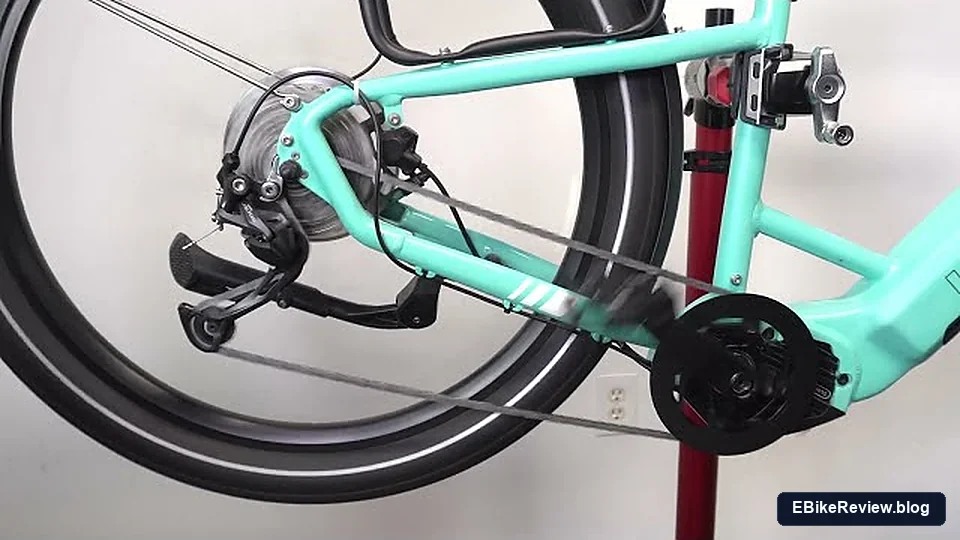
Conversely, mid drive units mount directly to the bottom bracket shell. Exploring options in our best mid drive ebike under 2000 guide reveals how these motors maximize torque multiplication through mechanical gears.
Hub motors mount directly into the front or rear wheel, applying rotational force independent of the chain. This isolates propulsion from the drivetrain, reducing immediate stress on gear teeth and shifting components during acceleration.
Mid-drive units integrate into the bottom bracket shell, routing power directly through the bicycle chain. This utilizes your existing gear ratios, allowing the motor to spin at optimal RPM ranges regardless of your actual ground speed.
- Hub motors operate independently of the bicycle drivetrain.
- Mid drive motors spin the chainrings directly for better leverage.
- Weight distribution differs drastically between these two mounting points.
Understanding Unsprung Weight and Wheel Physics
Placing a heavy motor inside the wheel hub increases unsprung mass significantly. This extra weight affects suspension compliance and makes changing a flat tire more complicated.
Centralizing mass around the bottom bracket keeps wheel assemblies light and agile. Your suspension can react much faster to high-frequency road bumps and trail obstacles.
- Hub motors increase rotational inertia at the axle.
- Mid drives preserve natural bicycle wheel balance.
Torque Multiplication and Hill Climbing Efficiency
Hill climbing performance defines a major engineering divergence between these motor designs. Mid drives can shift into lower gears, allowing the motor to maintain optimal RPMs on steep inclines.
Hub motors lack this mechanical gear advantage when climbing long hills. If a hub motor bogs down below its efficient RPM threshold, it draws massive current and generates severe heat.
Rear hub motors apply direct rotational force to the wheel, lacking mechanical advantage over steep inclines. Sustained climbing causes high stator heat due to lower operational RPMs, which forces thermal throttling under heavy loads.
Mid-drives leverage your multi-speed cassette to multiply torque mechanically. Dropping into an easier gear lets the motor maintain high internal speeds, yielding superior thermal efficiency and preventing overheating on extended mountain climbs.
- Mid drives utilize bicycle gearing to conquer steep grades easily.
- Hub motors rely entirely on raw electrical wattage on inclines.
- Thermal management becomes critical during prolonged climbing sessions.
Cadence Sensors Versus Torque Sensors
Cadence sensors commonly paired with hub drives measure pedal rotation rather than pedaling force. This creates an on-off power delivery feel that takes time to master.
Sophisticated torque sensors found on quality mid drives measure your exact pedaling pressure. The motor responds instantly, matching your human output with seamless proportional assistance.
- Cadence systems react to crank rotation speed.
- Torque sensors measure rider input force accurately.
Drivetrain Wear and Long-Term Maintenance Realities
Maintenance demands vary widely depending on which electric propulsion system you choose. Hub motors isolate propulsion entirely from your chain, cassette, and chainrings, preserving drivetrain components.
Mid drives channel immense motor torque directly through your bicycle chain. This continuous high-load stress accelerates chain stretch, cassette tooth wear, and overall replacement frequency.
Hub drive setups experience minimal chain, cassette, and chainring wear because motor torque bypasses them entirely. Rear tire replacement becomes more complex, requiring careful disconnection of motor phase wires before dropping the axle.
Mid-drive systems subject chains and sprockets to combined human and motor forces. Checking models in our best mid drive ebike under 3000 roundup highlights why you need heavy-duty chains for extreme tensile loads.
- Hub drives reduce wear on chains and shifting components.
- Mid drives demand frequent chain replacements under heavy loads.
- Flat tire repairs are simpler with quick-release mid drive setups.
Servicing Complex Bottom Brackets and Hubs
When a hub drive motor eventually fails, the entire wheel assembly must be serviced or replaced. Technicians cannot easily repair internal planetary gears without specialized workshop tools.
Mid drive units feature modular designs but require specialized proprietary frame mounts. Qualified bike mechanics must handle internal gearbox diagnostics when electronic faults occur.
- Hub motor failures often involve rebuilding or replacing wheels.
- Mid drive repairs require specialized manufacturer diagnostic software.
Battery Range and Energy Consumption Efficiency
Battery range depends heavily on how efficiently the motor utilizes electrical energy. Mid drives excel here by allowing the motor to spin within its peak efficiency RPM range.
Hub drives can drain batteries faster when accelerating from stops or climbing hills without gear assistance. They demand higher amperage draws to compensate for lacking mechanical leverage.
Direct-drive hub motors lack internal gear reduction, consuming more amp-hours during stop-and-go urban riding. Geared hub variants improve efficiency slightly, but maintaining momentum on flats remains crucial for preserving total battery capacity.
Mid-drives excel in energy conservation by letting the motor operate at peak efficiency curves. Selecting correct gears keeps power draw minimal, yielding significantly higher watt-hour efficiency across variable terrain and steep elevation changes.
- Mid drives maximize watt-hour efficiency across varied terrain.
- Hub motors consume more battery power during stop-and-go riding.
- Regenerative braking is occasionally possible with direct-drive hubs.
Throttle Integration and Riding Styles
Hub drive configurations frequently support full twist or thumb throttles for effortless riding. This allows complete motor operation without requiring any active pedal input.
Most mid drive systems omit throttles entirely to protect internal gears. Reviewing our mid drive conversion guide explains why riders must pedal continuously to activate motor assistance.
- Hub drives offer convenient throttle-only operation modes.
- Mid drives prioritize active pedaling and natural cycling feel.
Acoustic Profiles, Vibration, and Noise Emissions
Noise generation differs noticeably based on internal motor construction. Geared hub motors and mid drives rely on internal nylon or steel reduction gears that emit a distinct whirring sound.
Direct-drive hub motors operate completely silently because they contain no internal gears. They produce only a faint electromagnetic hum during heavy acceleration phases.
Geared hub motors utilize internal planetary nylon gears, producing a distinct whiring sound under acceleration. Direct-drive hubs operate nearly silently, generating zero mechanical meshing noise while transferring electromagnetic forces straight to the rim.
Mid-drives employ internal reduction gearboxes and steel or brass gears, emitting a noticeable high-pitched whine under heavy loads. This acoustic signature varies by manufacturer, influenced heavily by controller switching frequencies and casing tolerances.
- Direct-drive hub motors offer nearly silent operation.
- Geared mid drives produce a noticeable whirring under load.
- Vibration transmission varies by frame mounting stiffness.
Thermal Dissipation and Overheating Risks
Managing internal motor heat is vital for preventing permanent stator damage. Hub motors trap heat inside the sealed wheel shell, making cooling difficult during long climbs.
Mid drives utilize the bicycle frame as an external heat sink. This helps dissipate thermal energy more effectively during prolonged high-output riding sessions.
- Hub motors struggle to vent heat during extended climbs.
- Mid drives benefit from aluminum frame thermal conductivity.
Matching Your Workload to the Right Motor Architecture
Selecting the correct electric bicycle setup requires evaluating your local terrain and daily cargo requirements. Flat urban environments favor simple and affordable hub drive setups.
Mountain biking, steep commuting routes, and heavy cargo hauling demand the robust torque multiplication of a mid drive system. Assess your primary riding goals before purchasing.
Choose a hub drive for flat urban commuting, delivery work, and low-maintenance reliability. They handle throttle-only operation effortlessly, making them ideal for riders seeking minimal mechanical upkeep in straightforward weather conditions.
Select a mid-drive if you tackle steep hills or heavy cargo hauling. Browsing our best mid drive electric bike for climbing selection shows how proper weight distribution yields unmatched handling dynamics.
- Flat commuters benefit from cost-effective hub motors.
- Hilly cargo routes require high-torque mid drive systems.
- Budget constraints often point buyers toward hub configurations.
Cost Versus Performance Trade-Offs
Manufacturing complex mid drive motors involves tight engineering tolerances and expensive torque sensors. These factors push the overall retail price of mid drive bicycles significantly higher.
Hub drive systems leverage mature, mass-produced manufacturing techniques. This keeps production costs low, providing accessible electric mobility for everyday budget-conscious riders.
- Hub drives offer superior value for budget-conscious buyers.
- Mid drives command higher prices due to complex engineering.
Frequently Asked Questions
Which drive system lasts longer under heavy daily use?
Both systems offer exceptional longevity if maintained properly, though mid drives experience higher chain wear. Hub motors feature fewer moving parts touching the drivetrain, extending overall service life.
Can I install a throttle on a mid drive ebike?
Most manufacturers omit throttles on mid drives to protect internal gears from shock loads. Hub drives support throttles much more reliably for effortless commuting.
How does weight distribution affect handling?
Mid drives center weight low in the frame for superior agility. Hub motors add heavy unsprung mass to the wheels, altering suspension response.
Are mid drive ebikes better for steep hills?
Yes, mid drives use bicycle gears to multiply torque effectively. This allows the motor to maintain optimal RPMs where hub drives might struggle.
Which option is easier to repair during a flat tire?
Hub drives complicate flat repairs due to electrical wires and axle nuts. Mid drives use standard quick-release axles for straightforward tire maintenance.