Front Hub vs. Rear Hub Motor Ebike: Which Fits Your Setup Better?
Selecting the optimal hub motor placement requires balancing traction dynamics, frame stress, and drivetrain maintenance. This technical guide evaluates both architectures against rigorous engineering metrics.

Choose Rear Hub for superior climbing torque and natural motorcycle-like acceleration, or opt for Front Hub if you need a balanced all-wheel-drive feel on loose surfaces without drivetrain interference.
Compare all top models in our Best Electric Bike: Top Commuter Picks for 2026.
Side-by-Side Breakdown
| Criteria | Front Hub | Rear Hub Motor Ebike | Edge |
|---|---|---|---|
| Peak Performance & Output | Limited by fork dropouts | High torque transfer | Rear Hub |
| Duty Cycle & Consistency | Moderate thermal dissipation | Advanced heat management | Rear Hub |
| Operating Noise & Vibration | Direct steering hum | Isolated drivetrain hum | Rear Hub |
| Portability & Footprint | Simple front wheel removal | Complex cable disconnection | Front Hub |
| Maintenance & Service Life | Easy tire changes | Requires derailleur alignment | Front Hub |
| Power Requirements | Lower amp limits (500W) | Higher amp thresholds (750W+) | Rear Hub |
| Best Ideal Use-Case | Slick urban commuting & snow | Hilly terrain & cargo hauling | Rear Hub |
Core Architectural & Mechanical Design
Front hub motors house the electromagnetic stator and rotor directly within the front wheel hub shell. This design isolates propulsion entirely from your traditional bicycle drivetrain, separating pedal power from motor torque.
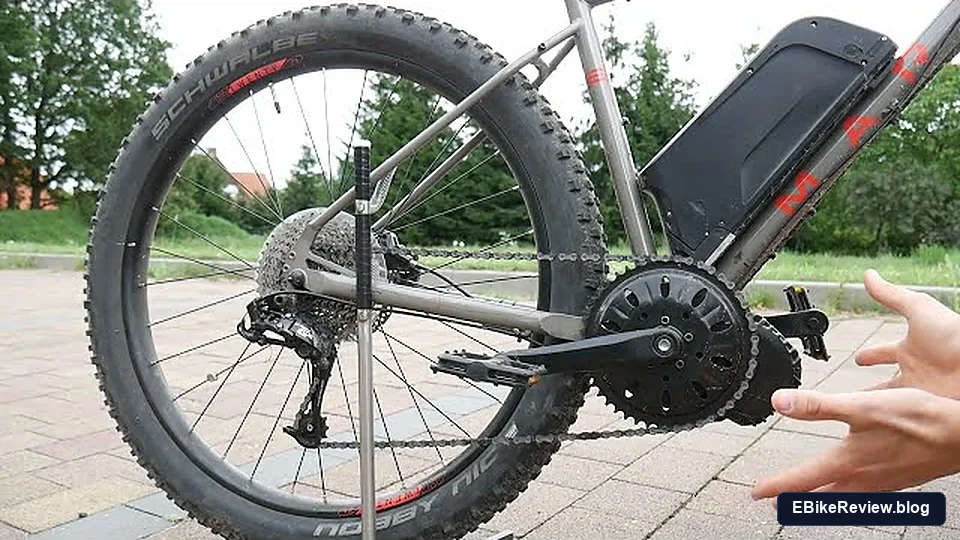
Conversely, rear hub motors integrate into the rear wheel assembly alongside the cassette or freewheel. This configuration directly applies rotational force where traditional cyclists expect it, leveraging the rear triangle for stability.
Front hub motors utilize internal planetary gears inside the casting, making proper ebike torque arm installation on front fork essential for managing high rotational stress safely within standard 100mm dropouts.
Conversely, rear hub architectures accommodate wider 135mm to 170mm axle standards, allowing heavier-duty stator windings and reinforced side covers to handle increased rotational stress from multi-speed cassette bodies.
- Front hub motors completely bypass the chain and chainrings.
- Rear hub units must clear multi-speed cassettes and disc rotors.
- Both systems rely on planetary gear reductions for torque multiplication.
Stator Placement and Housing Integrity
The front fork must endure rotational forces pulling away from the dropouts. Engineers must utilize heavy-duty torque arms to prevent catastrophic axle spin-outs under high electrical loads.
Rear dropouts are inherently stiffer, welded directly into the rear triangle. They easily absorb higher torque outputs without requiring auxiliary structural reinforcement brackets.
- Front forks risk dropout failure if torque exceeds 500 watts.
- Rear dropouts handle heavy regenerative braking forces smoothly.
Traction Mechanics & Weight Distribution
Weight distribution fundamentally alters how power translates to forward momentum. Front hub motors place extra mass over the steering axis, changing front-end handling characteristics significantly.
Rear hub setups place heavy motor components near the rear axle, aligning with your center of gravity. Knowing how to replace hall sensors in ebike brushless motor units maintains reliable traction during steep climbs.
Front motors pull the bicycle forward via the steering wheel, which can induce slip phenomena on loose gravel or steep inclines when rider weight shifts backward under heavy acceleration.
Rear motors replicate traditional bicycle dynamics by pushing through the driven wheel, naturally enhancing contact patch grip under power because body weight centers over the rear triangle.
- Front motors provide dual-wheel drive when pedaling simultaneously.
- Rear motors can slip on loose surfaces if weight shifts forward.
- Weight bias dictates cornering behavior across varying slippery surfaces.
Adhesion Dynamics in Inclement Weather
Front hub motors shine on snow and ice by pulling the bicycle forward independently. However, unweighted front wheels can slide out easily if you apply excessive throttle while turning.
Rear hub configurations push the chassis forward, mimicking traditional motorcycles. This rear push minimizes steering washouts during aggressive cornering maneuvers on wet tarmac.
- Front drive excels in straight-line deep snow traction.
- Rear drive provides predictable power delivery in standard rain.
Drivetrain Integration & Mechanical Wear
Front hub motors leave your rear cassette, chain, and derailleur completely untouched by motor stress. Your chain experiences only human leg power, dramatically extending its service lifespan.
Rear hub motors subject the chain and gears to combined human and electrical torque. This dual-load environment accelerates chain elongation and wears down cassette teeth much faster.
Front hub setups isolate propulsion completely from your bicycle chain, eliminating pedaling strain and significantly reducing premature wear across expensive derailleur components and consumable multi-speed chains.
Rear hubs combine motor torque directly with human pedaling forces, placing severe mechanical loads on standard bicycle chains and accelerating elongation across high-tensile steel links.
- Front hub systems reduce overall bicycle drivetrain maintenance intervals.
- Rear hub systems require high-tensile e-bike specific chains.
- Mid-ride chain snaps leave rear hub riders completely stranded.
Component Lifespan Analysis
Because front motors do not share mechanical loads with the chain, snapping a chain leaves you with functional front-wheel throttle power. Maintenance stays cleanly compartmentalized.
Rear motor setups mean any mechanical drivetrain failure disables your primary mode of mechanical propulsion. Regular inspections of your cassette and chainrings remain mandatory.
- Independent power loops offer built-in redundancy.
- Combined power paths magnify component wear rates.
Thermal Management & Continuous Output
Hub motors trap heat internally because ambient airflow is restricted by the outer shell. Front hub motors face airflow limitations, restricting continuous high-wattage hill climbing without overheating.
Rear hub motors benefit slightly from better frame clearance, yet still suffer from heat soak. Implementing temperature sensor integration prevents permanent stator insulation damage during grueling alpine ascents.
Sealed hub motors struggle with heat dissipation because trapped air inside aluminum casings offers poor thermal conductivity, lowering continuous power ratings during prolonged climbs compared to mid-drives.
Front motors often run cooler due to unobstructed airflow across the fork, whereas rear motors suffer from heat retention near the freewheel body and disc brake rotor.
- Stator burnout occurs when continuous loads exceed thermal thresholds.
- Vented side plates improve passive cooling in open designs.
- Internal thermistors throttle current before dangerous melting occurs.
Climbing Duty Cycles
Tackling long, steep inclines taxes hub motors severely because they lack internal gear reductions found in mid-drives. Front motors struggle particularly due to lower power limits.
Selecting the proper best ebike motor for hills guarantees optimal power delivery on steep inclines. Rear units handle heavy currents safely, ensuring your commuter drivetrain survives demanding routes without overheating failures.
- Front motors are best restricted to gentle rolling hills.
- Rear motors conquer steeper gradients with proper controller tuning.
Steering Dynamics & Front-End Weight
Adding several pounds of copper and magnets directly to your front wheel fundamentally alters steering inertia. Front hub e-bikes exhibit noticeable heavier steering feel and sluggish maneuverability.
Rear hub configurations maintain natural, unweighted steering geometry. The front fork remains agile, allowing for precise handling and quick evasive maneuvers in dense urban traffic.
Adding heavy copper windings and steel magnets directly into the steering axis increases rotational inertia, making the front wheel feel heavier and altering high-speed handling responsiveness.
Rear motor placements preserve natural fork geometry and unweighted steering feedback, ensuring standard bicycle handling characteristics remain completely unaffected during tight, technical low-speed cornering maneuvers.
- Heavy front hubs increase rotational steering resistance.
- Rear hubs keep front-end responsiveness nimble and crisp.
- Suspension forks must absorb the extra unsprung motor weight.
Unsprung Weight Penalties
Unsprung mass compromises suspension compliance over rough terrain. Front suspension forks struggle to rebound smoothly when burdened by a heavy hub motor assembly.
Rear suspension designs isolate rear motors more effectively, though rear wheel track-holding still experiences minor inertia penalties during high-speed washboard impacts.
- Unsprung front weight reduces small-bump compliance.
- Rigid forks pair poorly with heavy front hub motors.
Maintenance Procedures & Serviceability
Repairing a flat tire on a front hub e-bike is remarkably straightforward. You simply unplug the waterproof motor cable, loosen the axle nuts, and drop the wheel out.
Rear hub tire changes require navigating derailleur cages, gear cables, and tight chain tension. Managing the integrated motor wiring harness adds complexity during roadside repairs.
Servicing a flat tire on a front hub motor requires disconnecting specialized motor cables and carrying wrenches to loosen axle nuts, complicating roadside repairs compared to quick-release wheels.
Rear hub maintenance introduces extra mechanical complexity because technicians must carefully route wiring past the torque arm and manage delicate derailleur alignment during wheel reinstallation procedures.
- Front wheel removal takes less than five minutes.
- Rear wheel service requires careful alignment of torque washers.
- Quick-disconnect waterproof plugs simplify seasonal wheel swaps.
Wiring Harness Vulnerability
Exposed motor cables near the rear dropouts are prone to snagging on debris or curbs. Securing these wires with robust zip ties prevents costly electrical connector shearing.
Front motor cables route neatly up the fork leg, staying protected from chain grease and drivetrain grime while maintaining a clean, weather-sealed aesthetic profile.
- Rear dropout wires face constant chain oil exposure.
- Front fork routing shields connectors from road hazards.
Real-World Workload Applications
Matching your motor placement to your daily workload guarantees long-term satisfaction. Front hub systems excel in flat, urban environments where simple maintenance and light cargo prevail.
Rear hub motors dominate utility, delivery, and cargo applications requiring maximum climbing torque. They provide the brute power needed for heavy loads and undulating topography.
Front hub drives excel on flat cargo bikes or sandy beach cruisers, providing a functional all-wheel-drive sensation when combined with human pedaling on the rear wheel.
Rear hub systems dominate utility commuting and steep urban environments, delivering reliable traction and higher payload capacities needed for heavy cargo hauling and daily riding.
- Select front hub for flat commutes and easy tire fixes.
- Choose rear hub for cargo hauling and hilly terrain.
- Evaluate local legal wattage caps before purchasing either setup.
Commuter vs Utility Suitability
Flat-land commuters appreciate front hub setups for their simplicity and low upfront cost. They provide reliable point-A to point-B transportation without straining mechanical components.
Utility riders moving heavy cargo bags need the robust power delivery found on the best commuter ebike models. These configurations handle heavy payloads without wheel slip or unwanted steering drama.
- Flat commuters benefit from front-wheel redundancy.
- Cargo haulers demand rear-wheel power transfer.
Frequently Asked Questions
Can a front hub motor e-bike handle steep hills safely?
Front hub motors struggle on steep climbs because gravity shifts weight away from the front wheel. For consistent hill climbing, choose a rear hub motor to prevent wheel slip.
Are front hub motors harder to maintain than rear hub motors?
Front hub motors are actually easier to maintain during flat tire repairs since you avoid the chain and derailleur. Simple quick-disconnect wiring makes front wheel removal fast.
Does a rear hub motor wear out my bicycle chain faster?
Yes, rear hub motors apply combined human and electrical torque directly through the drivetrain. This dual-load environment significantly accelerates chain stretch and cassette wear over time.
Which motor placement offers better traction in snow or rain?
Rear hub motors push the bike forward like a motorcycle, providing predictable traction on wet roads. Front hubs pull independently, which aids snow traction but risks steering washouts.
Do front hub motors negatively affect steering handling?
Yes, the added unsprung weight of a front hub increases steering inertia and makes the front end feel heavier. Agile handling geometry is compromised compared to rear setups.