Class Ii vs. Class Iii Ebike: Which Fits Your Setup Better?
Choosing between throttle-equipped mobility and high-speed pedal assist requires weighing specific infrastructure access laws and motor tuning profiles. Understanding these functional differences ensures your daily commute meets exact state-level regulatory compliance standards.


For casual multi-use paths and effortless throttle-only cruising, Class Ii remains the most versatile option. However, dedicated commuters prioritizing high-speed road efficiency should select the Class Iii Ebike for optimal transit times.
Compare all top models in our Best Electric Bike: Top Commuter Picks for 2026.
Side-by-Side Breakdown
| Criteria | Class Ii | Class Iii Ebike | Edge |
|---|---|---|---|
| Peak Performance & Output | Capped at 20 mph max speed via throttle or assist | Reaches 28 mph via pedal assist with 20 mph throttle | Class Iii Ebike |
| Duty Cycle & Consistency | Optimized for stop-and-go urban riding and low fatigue | Engineered for sustained high-cadence cruising over long distances | Class Iii Ebike |
| Operating Noise & Vibration | Quiet hub motors generate minimal mechanical drivetrain chatter | Mid-drive systems transmit higher torque loads through chain | Class Ii |
| Portability & Footprint | Generally lighter frames with standard utility hardware setups | Heavier reinforced frames with integrated heavy-duty lighting systems | Class Ii |
| Maintenance & Service Life | Standard bicycle components experience lower high-speed friction wear | Demands frequent chain, cassette, and hydraulic brake pad replacements | Class Ii |
| Power Requirements | Standard 500W nominal motors balanced for efficiency | High-draw 750W peak motors demanding larger battery capacity | Class Ii |
| Best Ideal Use-Case | Mixed recreational paths and urban errand running | Long-distance asphalt commuting and roadway transit | Class Iii Ebike |
Architectural Foundations and Speed Regulation Limits
Federal regulatory frameworks strictly categorize electric bicycles based on maximum motor assistance thresholds and throttle capabilities. A Class Ii machine incorporates a functional thumb or twist throttle alongside pedal assist, capping velocity at twenty miles per hour.
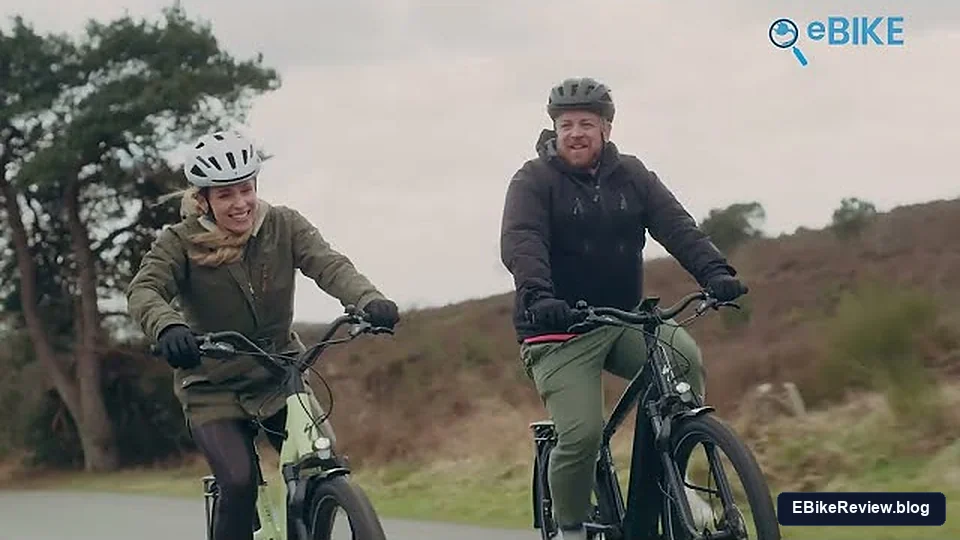
Conversely, the Class Iii Ebike configuration removes independent throttle use above twenty miles per hour while permitting pedal-assisted propulsion up to twenty-eight miles per hour. This speed differential fundamentally alters frame geometry, braking requirements, and electronic controller programming.
Class II architectures cap throttle-actuated propulsion at 20 mph, while Class III systems permit pedal-assist speeds up to 28 mph. This distinct regulatory boundary directly influences motor controller programming and internal gear reduction ratios.
Engineers integrate cadence sensors alongside high-resolution torque sensors to manage the abrupt power delivery required for higher velocity brackets. Federal safety standards mandate continuous circuit monitoring to prevent catastrophic thermal runaway during sustained high-output operations.
- Class II relies heavily on independent throttle activation without pedaling.
- Class III demands continuous pedal input to achieve higher velocity limits.
- Both categories share a strict five-hundred to seven-five-watt nominal power ceiling.
Regulatory Compliance and Local Path Restrictions
Navigating municipal pathways requires strict adherence to local trail regulations regarding motorized bicycle classifications. Many recreational greenways explicitly ban higher-speed configurations while welcoming traditional throttle-driven options.
Understanding these legal boundaries prevents unexpected fines and ensures safe integration with conventional non-motorized path users during peak operational hours.
- Always verify municipal trail access before purchasing high-speed commuter platforms.
- Pedestrian-heavy zones frequently restrict operations exceeding twenty miles per hour.
Performance Profiles and Real-World Output Metrics
Evaluating real-world performance requires analyzing torque delivery curves, acceleration rates, and sustained velocity under heavy load conditions. Class Ii platforms excel at immediate launch from a complete dead stop via throttle actuation.
Meanwhile, the Class Iii Ebike architecture prioritizes sustained high-speed cruising efficiency across paved arterial roadways. Riders experience superior momentum preservation when battling persistent head winds during daily transit routines.
Operating a Class III platform at maximum velocity demands continuous outputs exceeding 750 watts of peak electrical energy. Conversely, Class II layouts operate at gentler duty cycles, preserving battery chemistry longevity under heavy commuter loads.
Voltage sag becomes significantly more pronounced on Class III variants due to sustained high current draws from the battery management system. Riders must balance acceleration curves against thermal thresholds to prevent premature stator winding degradation over time.
- Throttle launch reduces physical strain during frequent urban intersection stops.
- High-speed pedal assist maintains momentum efficiently over rolling terrain profiles.
- Motor controllers balance thermal loads differently based on speed constraints.
Torque Delivery and Acceleration Dynamics
Throttle-based mobility delivers instant electrical power directly to the rear wheel hub instantly. This design eliminates initial pedal lag during chaotic city traffic situations.
Pedal-assist systems rely on torque sensors measuring rider input to modulate power smoothly.
- Cadence sensors provide an on-off feel compared to responsive torque units.
- Instant throttle response aids heavily loaded cargo utility applications.
Build Quality, Component Wear, and Structural Durability
Higher operational velocities place significant mechanical stress on frame junctions, wheel spokes, and suspension linkages. A Class Iii Ebike typically features reinforced aluminum tubing to withstand continuous high-speed vibrations.
Standard Class Ii models experience reduced structural fatigue due to lower average transit speeds, translating to extended lifespans for consumable drivetrain parts like chains and sprockets.
Higher operating speeds necessitate reinforced head tubes and robust aluminum alloy frames designed to absorb repetitive high-frequency road impacts. Class III bicycles endure greater kinetic stress, requiring oversized axle standards and through-bolt linkages.
Component wear accelerates rapidly on drivetrain elements subjected to the combined torque of human pedaling and high-output hub motors. Routine maintenance protocols must incorporate frequent chain elongation measurements and meticulous cassette tooth profile inspections.
- Reinforced headtubes manage increased front-end braking forces effectively.
- Lower operating velocities preserve tire tread depth over extended mileage.
- Quality hardware fasteners resist loosening from persistent high-frequency road chatter.
Braking System Demands and Rotor Thickness
Stopping a heavier chassis moving at elevated velocities requires robust hydraulic disc brake assemblies. Upgraded rotor diameters prevent dangerous brake fade during emergency descents.
Mechanical cable pull brakes are generally insufficient for high-speed commuter configurations.
- Hydraulic calipers ensure consistent clamping pressure under heavy loads.
- Semi-metallic pads offer superior thermal stability during aggressive stops.
Mechanical Efficiency, Power Draw, and Electrical Footprint
Energy consumption scales exponentially as aerodynamic drag increases at speeds approaching thirty miles per hour. A Class Iii Ebike depletes battery reserves significantly faster than its slower counterpart.
Riders must manage power assistance levels carefully on long journeys to avoid exhausting the electrical pack before reaching their ultimate destination.
Aerodynamic drag increases exponentially when transitioning from twenty to twenty-eight miles per hour, severely impacting overall watt-hour per mile consumption rates. Class III commuters routinely drain battery reserves thirty percent faster than their lower-tier counterparts.
Mid-drive configurations optimize mechanical efficiency by leveraging the bicycle gear cluster, whereas powerful hub motors sacrifice thermal dissipation for raw acceleration. Selecting the proper topology dictates both your daily charging routine and long-term electrical reliability.
- Higher velocity profiles demand larger capacity battery cells for equal range.
- Hub motors trade thermal efficiency for straightforward mechanical simplicity.
- Mid-drive units leverage gear ratios to optimize electrical power draw.
Battery Chemistry and Cell Degradation Factors
Lithium-ion battery packs endure high discharge rates during sustained high-speed operations. Proper thermal management prevents premature capacity loss over years of daily commuting cycles.
Routine charging habits directly dictate total operational service life expectancy.
- Avoid deep discharges to maximize overall battery cycle longevity.
- Store packs at moderate temperatures during winter non-use periods.
Operating Noise Signatures and Mechanical Vibration
Acoustic profiles vary noticeably between direct-drive hub motors and geared mid-drive configurations. Class Ii setups utilizing geared hubs produce a faint whirring sound under heavy acceleration loads.
Conversely, high-output mid-drive units found on many fast commuters generate distinct mechanical gear chatter while climbing steep urban inclines.
Direct-drive hub motors operate with near-silent acoustics, whereas geared planetary systems emit a distinct high-pitched whine under heavy electrical loads. Class III platforms transfer significantly more chassis vibration through the handlebars and seatpost structures.
Upgraded suspension seatposts and voluminous pneumatic tires are practically mandatory on high-speed commuters to mitigate rider fatigue caused by rough pavement. Proper bolt torque verification prevents resonant rattling from loosening critical structural fasteners during transit.
- Hub motors operate with exceptional acoustic stealth during coasting.
- Mid-drive gearboxes transmit subtle vibrations directly through the crank arms.
- Fender rattling increases significantly at higher roadway transit speeds.
Vibration Damping and Chassis Comfort
Road imperfections transmit severe shockwaves through rigid aluminum frames at high speeds. Incorporating suspension seatposts or wider tires mitigates rider fatigue considerably.
Carbon fiber forks absorb high-frequency road chatter better than rigid metal alternatives.
- Volume-adjustable tires cushion sharp pavement impacts effectively.
- Ergonomic grips prevent hand numbness during long transit sessions.
Infrastructure Access and Legal Operating Environments
State and municipal vehicle codes dictate precisely where different electric bicycle classes may legally travel. Class Ii bikes enjoy widespread acceptance on standard multi-use recreational paths and neighborhood greenways.
Fast commuters face stricter limitations, frequently being banned from narrow pedestrian walkways and designated non-motorized single-track trails.
Multi-use pathways and municipal single-track trails frequently restrict Class III e-bikes due to their elevated speed capabilities and potential trail degradation risks. Local ordinances dictate whether you can legally utilize bike lanes alongside traditional cyclists.
Understanding local land management rules ensures compliance and prevents unexpected fines from municipal transport authorities. Class II machines generally enjoy broader access across shared infrastructure because their operational velocities closely mirror standard bicycles.
- Review local Department of Transportation ordinances before hitting bike lanes.
- Class III machines are universally welcomed on standard asphalt street lanes.
- Sidewalk riding remains illegal for high-speed configurations in most jurisdictions.
State-by-State Legislative Variance
Regulatory definitions vary widely across state lines regarding licensing and age restrictions. Riders must verify local statutes to ensure full compliance during cross-state travel.
Ignorance of local traffic laws provides no legal defense against citations.
- Minimum age requirements often apply specifically to higher-speed platforms.
- Helmet mandates are stricter for twenty-eight mile per hour commuters.
Selecting the Ideal Option for Your Daily Workload
Choosing the correct platform depends entirely on your primary commuting environment and physical fitness goals. Select a Class Ii model if your route involves heavy pedestrian traffic and frequent stops.
Choose the faster alternative when covering extensive stretches of open asphalt where maintaining high average speed reduces total commute duration.
Urban commuters tackling long stretches of open asphalt benefit immensely from the sustained velocity and time-saving efficiency of Class III platforms. Conversely, riders navigating congested downtown corridors often prefer the agile throttle control of Class II models.
Evaluate your typical route topology, local trail access laws, and physical maintenance capabilities before purchasing a specialized electric bicycle. Matching your daily workload to the correct engineering specification guarantees long-term satisfaction and reliable daily transportation.
- Assess your typical daily route distance and terrain topography carefully.
- Prioritize throttle availability if physical recovery days require zero pedaling.
- Factor local weather conditions into your overall battery range calculations.
Cost of Ownership and Long-Term Value
Initial purchase costs reflect the sophisticated controllers and beefier components required for high-speed transit. Long-term maintenance expenses also scale with operational velocity.
Balancing upfront investment against daily time savings ensures optimal purchasing satisfaction.
- Factor replacement tire and brake pad costs into your budget.
- Quality electrical systems minimize unexpected roadside repair bills.
Frequently Asked Questions
Can a Class Ii e-bike be upgraded to reach higher speeds?
Modifying internal motor controllers to bypass factory velocity limits violates federal classification standards and voids warranties. Always purchase a dedicated fast commuter if twenty-eight mile per hour capabilities are required for your daily route.
Are throttles allowed on all multi-use recreational bike paths?
Many local municipalities ban independent throttle use on narrow pedestrian greenways to prevent safety hazards. Check local trail regulations carefully before operating throttle-equipped machinery in crowded public parks.
Why do fast commuter models wear through chains much faster?
Sustained high torque output under heavy pedal cadence places immense tensile stress on drivetrain links. Routine chain cleaning and lubrication are mandatory to prevent premature cassette degradation over time.
Do I need a special driver license to operate a fast commuter?
Standard operating laws classify these machines as bicycles rather than motor vehicles across most regions. No driver license is required, though minimum age limits often apply for high-speed models.
How does battery range differ between these two distinct classes?
Wind resistance increases exponentially at higher velocities, depleting energy reserves significantly faster. Expect noticeably shorter overall range when cruising continuously at maximum twenty-eight mile per hour speeds.