Bbshd 48V vs. 52V: Which Fits Your Setup Better?
Choosing between these two mid-drive setups involves balancing thermal limits against raw voltage output. Understanding your terrain requirements helps clarify which configuration delivers optimal efficiency and reliability.


The 52V system wins for aggressive hill climbing and sustained higher speeds, whereas the 48V setup provides superior component longevity and broader battery compatibility.
Compare all top models in our Best Electric Bike: Top Commuter Picks for 2026.
Side-by-Side Breakdown
| Criteria | Bbshd 48V | 52V | Edge |
|---|---|---|---|
| Peak Performance & Output | Moderate current ceiling, steady torque | Higher voltage headroom, increased peak watts | 52V |
| Duty Cycle & Consistency | Cooler running under nominal loads | Higher thermal stress during heavy climbs | Bbshd 48V |
| Operating Noise & Vibration | Smooth commutation, standard PWM hum | Slightly sharper PWM profile at top end | Tie |
| Portability & Footprint | Standard battery dimensions, lighter weight | Slightly bulkier 14s pack configuration | Bbshd 48V |
| Maintenance & Service Life | Lower stress on controller MOSFETs | Higher electrical wear on stock controllers | Bbshd 48V |
| Power Requirements | Standard 13s charger and BMS matching | Requires dedicated 14s charger setup | Bbshd 48V |
| Best Ideal Use-Case | Daily commuting and long-range touring | Steep mountain trails and high-speed road use | 52V |
Voltage Architecture and Internal Controller Limits
The Bafang BBSHD controller manages electrical flow by monitoring current thresholds to protect internal MOSFETs. Operating at higher voltages changes how this thermal envelope behaves under heavy acceleration.
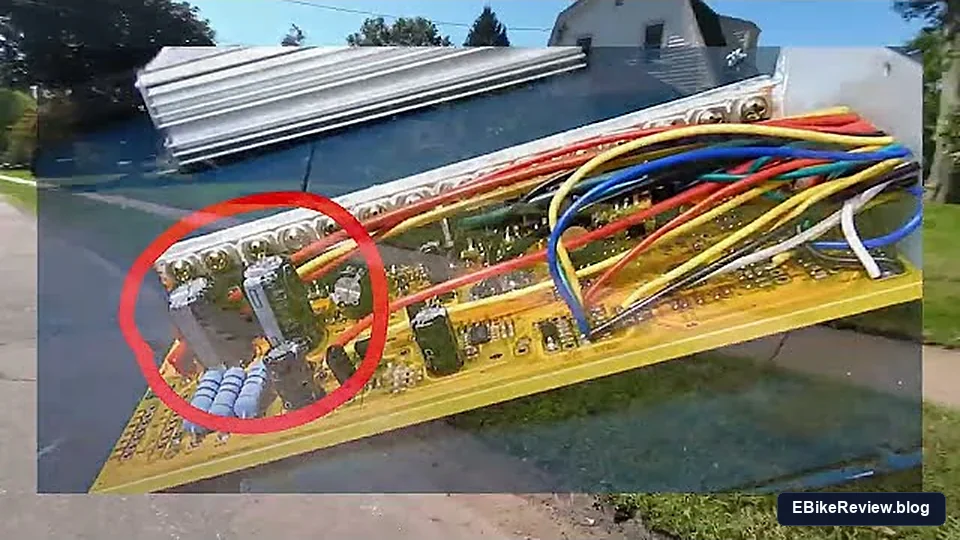
A standard system runs on a 13-series lithium cell configuration, yielding nominal thresholds near forty-eight volts. Pushing this to a 14-series layout raises the nominal operating point significantly higher.
- Controller MOSFET voltage ratings determine maximum safe limits.
- Capacitor ripple increases with elevated direct current levels.
- Firmware customization can re-map low voltage cutoff thresholds.
Controller Stress Analysis
Stock MOSFETs on these mid-drive units handle voltage spikes quite well, but sustained overvolting generates exponential heat. Careful monitoring prevents premature semiconductor breakdown during intense riding sessions.
Upgrading thermal paste inside the aluminum housing helps mitigate these risks, ensuring reliable performance across varied ambient temperatures and demanding load profiles.
- Semiconductor junctions require adequate heat sinking.
- Thermal paste degradation accelerates under continuous high loads.
Thermal Dynamics and Heat Dissipation under Load
Managing internal stator heat is critical, especially for budget models evaluated in our best e bikes under 1 000 roundup. The winding insulation faces severe stress when continuous high amperage is applied constantly.
Higher voltage configurations reduce required current for identical wattage output, theoretically lowering resistive losses in the copper windings. However, increased voltage also raises core operating temperatures.
- Stator temperature sensors provide vital real-time thermal telemetry data.
- Cooling fins on the motor casing dissipate resting heat slowly.
- Continuous high-torque hill climbs test thermal saturation limits rapidly.
Mitigation Strategies for Overheating
Riders tackling steep inclines should utilize appropriate gear ratios to keep motor RPMs high. Lower motor speeds invite excessive current draw and rapid thermal accumulation inside the housing.
Installing external temperature telemetry kits allows operators to monitor stator health before reaching critical thermal failure thresholds during grueling backcountry excursions.
- Proper gearing prevents dangerous low-RPM stalling.
- External telemetry provides early warning indicators.
Battery Chemistry and Real-World Range Trade-Offs
Selecting a proper energy storage medium dictates both total capacity and voltage sag characteristics under heavy loads. Modern lithium-ion cells offer high energy density for extended backcountry touring.
A 14-series pack maintains higher voltage under load compared to its 13-series counterpart, preventing premature low-voltage cutoff triggers during aggressive throttle applications.
- Cell internal resistance dictates overall voltage sag under load.
- BMS current limits must match the controller maximum draw.
- Charger compatibility requires strict adherence to series cell counts.
Capacity Calculation Methods
Watt-hours provide the truest measure of available energy, calculated by multiplying total amp-hours by nominal pack voltage. This metric helps riders accurately estimate practical commuting range.
Heavier voltage setups demand careful balancing to ensure individual cell groups degrade uniformly over hundreds of charge-discharge cycles without inducing thermal runaway risks.
- Watt-hours dictate true operational range boundaries.
- Cell balancing prevents long-term capacity fade.
Torque Delivery and Acceleration Profiles
Mid-drive systems leverage the bicycle drivetrain to multiply rotational force through existing gear ratios. This mechanical advantage allows riders to conquer steep grades with astonishing ease.
Raising electrical potential increases rotational velocity, similar to high-performance models featured in our best electric bike guide. This translates directly into higher top speeds and crisper throttle response.
- Cadence sensors dictate pedal-assist engagement latency and smoothness.
- Mechanical gear selection alters effective torque at the rear wheel.
- Throttle responsiveness scales linearly with available system voltage headroom.
Drivetrain Component Wear
Increased torque output accelerates chain, cassette, and chainring wear significantly if proper shifting habits are neglected. Operators must ease pedal pressure during gear transitions to protect teeth.
Upgrading to heavy-duty e-bike specific chains and steel chainrings helps absorb the immense shock loads generated by high-output mid-drive motor configurations.
- Shifting under heavy load strips gear teeth rapidly.
- Steel chainrings outlast soft aluminum alternatives.
Component Wear and Long-Term Reliability Factors
Long-term durability depends heavily on how cleanly power is delivered through the nylon primary reduction gear. Excessive instantaneous torque can strip teeth if throttle control lacks finesse.
Lower electrical stress preserves controller capacitors and MOSFET junctions, extending the operational lifespan of the entire mid-drive assembly over years of demanding utility riding.
- Nylon primary gears require periodic high-temperature grease replenishment.
- Clutch assemblies endure high shock loads during rapid deceleration.
- Weatherproofing seals prevent moisture intrusion in wet riding climates.
Preventive Maintenance Protocols
Inspecting internal nylon gears every season ensures early detection of pitting or thermal degradation before catastrophic failure occurs miles away from civilization.
Keeping external mounting bolts torqued to factory specifications prevents frame interface flexing that can damage the aluminum motor casing over rough terrain.
- Seasonal gear inspections prevent sudden trail failures.
- Proper frame torque stops housing fatigue cracks.
Installation Complexity and Peripheral Compatibility
Retrofitting a heavy-duty mid-drive motor, similar to models analyzed in our best budget electric bike review, requires compatible bottom bracket shells and standard threaded sixty-eight to seventy-three millimeter configurations found on frames.
Wiring harnesses, displays, and brake shut-off sensors must be routed cleanly along the frame tubes to avoid snagging on brush or interfering with steering rotation.
- Bottom bracket width determines whether custom spacers are necessary.
- Chainline offset impacts shifting performance across rear cassettes.
- Display units communicate vital diagnostic error codes for troubleshooting.
Frame Clearance Challenges
Full-suspension frames often present tight clearance issues around the rear swingarm pivot when installing bulky mid-drive gearboxes. Careful pre-installation measurement prevents costly frame modifications.
Utilizing specialized offset chainrings corrects alignment issues, ensuring the chain runs straight and true through all rear cassette gears without dropping.
- Swingarm pivot interference requires careful frame inspection.
- Offset chainrings optimize rear cassette alignment.
Terrain Suitability and Everyday Riding Dynamics
Choosing the correct configuration depends entirely on your local topography and intended applications, much like the terrain tests in our best electric mountain bike guide. Mountain trail explorers benefit greatly from enhanced voltage headroom.
Urban commuters navigating flat pavement find standard configurations more than adequate for maintaining legal speeds while maximizing overall battery lifespan and component durability.
- Steep mountain grades demand maximum thermal and electrical headroom.
- Flat urban commutes prioritize battery longevity and smooth acceleration.
- Loose gravel surfaces require precise throttle modulation for traction.
Real-World Efficiency Metrics
Tracking watt-hours per mile reveals how efficiently your specific setup converts electrical energy into forward motion across varying wind and grade conditions.
Balancing rider input with motor assistance optimizes total trip distance, ensuring you never run out of battery power far from your home charging station.
- Watt-hours per mile track true energy expenditure.
- Pedal assistance extends total usable trip range.
Frequently Asked Questions
Can a standard stock controller handle higher voltage setups safely?
Stock controllers can frequently handle elevated voltage thresholds, but thermal management becomes strictly critical during sustained heavy climbs under heavy operational loads.
Upgrading internal thermal paste and actively monitoring stator temperatures helps prevent premature semiconductor failure and protects sensitive electrical components from excessive heat accumulation during rigorous backcountry rides.
What is the primary advantage of choosing a higher voltage configuration?
The primary engineering benefit involves increased rotational velocity and better power delivery when tackling steep mountain grades without bogging down.
This specific configuration reduces the required electrical current draw for equivalent wattage output, lowering resistive copper losses across the internal motor windings during heavy use on demanding backcountry trails.
How does increased voltage impact the lifespan of internal nylon gears?
Higher instantaneous torque can significantly accelerate mechanical wear on the nylon primary gear if sudden throttle inputs lack proper rider finesse.
Operators must practice smooth engagement habits and ease pedal pressure during gear shifts to prevent premature tooth stripping under extremely heavy loads over rough terrain.
Are specialized chargers required when switching to a 14-series battery pack?
Yes, charging a 14-series battery pack requires a dedicated charger calibrated specifically for higher voltage thresholds matching the precise cell count.
Using an incorrect charging device can lead to severe battery degradation, dangerous cell imbalance, or highly hazardous thermal runaway conditions during the standard overnight replenishment cycle.
Which setup is better suited for daily urban commuting and flat terrain?
A standard configuration offers superior component longevity and broader battery compatibility for everyday urban riding across flat asphalt surfaces and bike lanes.
This setup reduces unnecessary electrical stress on stock controllers while maintaining reliable commuting speeds and maximizing overall system reliability for daily transportation and utility needs.