750W vs. 1000W Ebike: Which Fits Your Setup Better?
Evaluating the engineering divide between standard continuous power and heavy-duty output. We analyze efficiency, thermal management, and regulatory compliance to guide your selection.

Choose the 750W platform for legal street commuting and efficient battery range. Select the 1000W motor for steep inclines, heavy cargo hauling, and off-road trail capability.
Compare all top models in our Best Electric Bike: Top Commuter Picks for 2026.
Side-by-Side Breakdown
| Criteria | 750W | 1000W Ebike | Edge |
|---|---|---|---|
| Peak Performance & Output | 750W nominal output | 1000W+ peak output | 1000W Ebike |
| Duty Cycle & Consistency | Moderate thermal load | High thermal threshold | 1000W Ebike |
| Operating Noise & Vibration | Quieter planetary gears | Louder direct-drive hum | 750W |
| Portability & Footprint | Lighter overall build | Heavier frame assembly | 750W |
| Maintenance & Service Life | Lower chain and sprocket wear | Accelerated drivetrain wear | 750W |
| Power Requirements | Standard 48V systems | High-draw 52V systems | 1000W Ebike |
| Best Ideal Use-Case | Urban commuting & bike paths | Off-road trail & heavy cargo | 1000W Ebike |
Core Motor Architecture and Power Delivery
Modern electric bikes rely on brushless hub or mid-drive motors to convert electrical current into mechanical propulsion. The 750W motor balances daily commuting needs with standardized electrical thresholds.
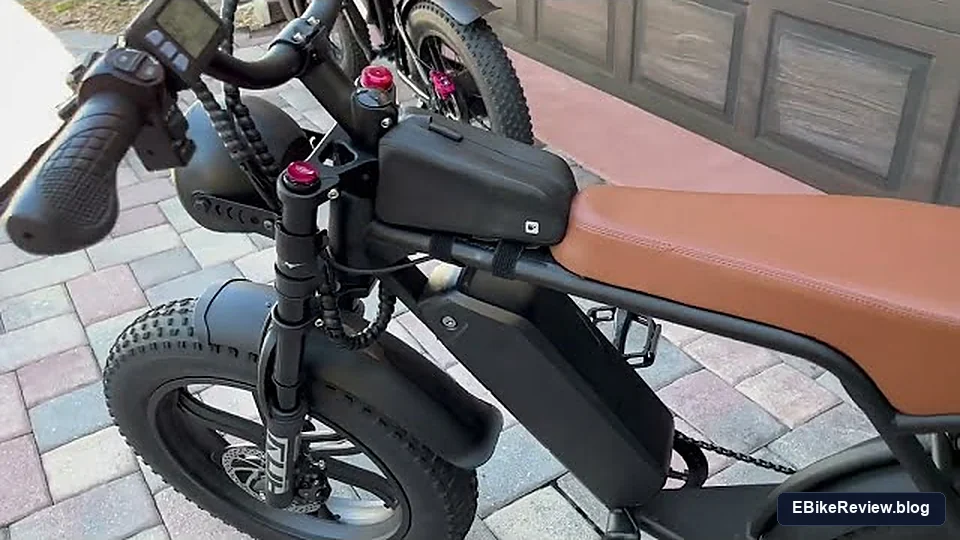
Stepping up to a 1000W ebike introduces higher stator winding counts and heavier copper gauge wire. For daily transit beyond standard limits, check out our best commuter ebike selections to compare high-power urban builds.
Voltage compatibility also dictates overall performance across both motor classes. While standard setups utilize 48-volt architectures, heavy-duty options often pair with 52-volt batteries to optimize power delivery.
750W motors typically rely on internal nylon planetary gears to multiply torque, whereas many 1000W hubs utilize direct-drive setups with copper stator windings weighing over nine pounds for sustained thermal dissipation.
Controller amperage limits define actual acceleration curves. While a legal 750W system caps out near 25 amps at 48 volts, unrestricted 1000W controllers frequently push 40 amps through thicker phase wires.
Hall sensor placement inside these brushless DC motors dictates smooth low-speed throttle modulation. Advanced dual-torque sensors improve pedal-assist responsiveness by sampling rider input frequency up to one thousand times per second.
- Standardized stator sizing in lower classes
- Enhanced copper windings for higher thermal limits
- Voltage pairing dictates overall efficiency
Voltage and Amperage Scaling
Understanding electrical draw requires analyzing controller limits and peak phase currents. A standard controller restricts continuous output to protect internal electronics during prolonged climbs.
High-wattage systems bypass conservative restrictions to deliver raw torque immediately upon throttle engagement. Riders must monitor controller temperature readings to avoid premature thermal degradation.
- Controller limits protect electronics
- High-wattage systems deliver instant torque
Thermal Efficiency and Continuous Load Limits
Managing heat buildup remains the primary engineering hurdle for high-output electric bicycle propulsion systems. Excessive operating temperatures can rapidly degrade magnet strength and burn out stator insulation.
A 750W drivetrain operates comfortably within standard ambient temperature ranges during typical urban commutes. It rarely requires specialized cooling fins or liquid thermal pastes for standard street use.
Conversely, pushing a 1000W ebike up long mountain grades generates intense internal heat. Riders tackling heavy backcountry loads often explore our best hunting ebike reviews for thermal management insights.
Continuous wattage ratings depend heavily on ambient temperature and stator mass. Operating a 750W motor beyond its thermal threshold triggers controller throttling, whereas 1000W units handle sustained climbs better due to greater surface area.
Ferrofluid injection has become a popular aftermarket modification for hub motors. Adding thermal cooling liquid drops internal operating temperatures by up to thirty degrees Celsius under heavy loads.
Stator lamination thickness directly affects eddy current losses. Thinner silicon steel laminations reduce magnetic drag and prevent catastrophic insulation breakdown when pushing maximum current through high-wattage windings.
- Heat buildup impacts magnet strength
- Standard commutes rarely overheat lower wattages
- Aluminum casings dissipate heavy thermal loads
Battery Drain, Amp-Hours, and Range Realities
Electrical consumption scales directly with throttle input and motor output demands. Pairing a high-capacity pack with a 1000W motor still results in accelerated battery depletion during aggressive riding.
Commuters relying on a 750W setup typically enjoy superior range efficiency per watt-hour. Lower current draws prevent severe voltage sag, preserving overall lithium-ion cell longevity across charging cycles.
Upgrading to heavier power demands necessitates carrying larger battery packs, which adds substantial dead weight. Balancing battery weight against desired travel distance remains an essential design compromise.
Voltage sag under heavy throttle directly impacts usable capacity. A 52V pack maintains higher operating voltage than a 48V configuration, reducing internal resistance heat and preserving cell chemistry integrity during rapid discharges.
Watt-hour calculations reveal true travel distances. Drawing twenty amps continuously from a twenty amp-hour battery will completely deplete the energy reserve in roughly sixty minutes of aggressive riding.
Battery Management Systems must handle high discharge spikes without tripping. High-drain 1000W setups require BMS units rated for at least fifty continuous amps to prevent premature voltage cutoffs.
- High output accelerates battery depletion
- Lower current draws preserve cell longevity
- Battery weight directly impacts total range
Legal Classifications, Licensing, and Road Access
Regulatory frameworks strictly govern electric bicycle power thresholds across different municipal jurisdictions. Operating a 750W motor generally aligns with standard Class 2 or Class 3 definitions.
Utilizing a 1000W ebike often pushes the vehicle outside traditional bicycle legal classifications. Riders seeking street-legal alternatives should browse our lightest commuter ebike options to stay fully compliant with local municipal codes.
Riders must verify local trail access laws before deploying high-wattage equipment on multi-use pathways. Law enforcement agencies frequently enforce strict wattage caps on public recreational greenways.
Federal regulations strictly limit Class 3 electric bicycles to 750 watts of continuous nominal power. Anything exceeding this threshold instantly reclassifies the vehicle as an unregistered moped or motorized motorcycle.
Multi-use trail networks and bike paths enforce strict speed and power caps. Operating a 1000W machine on pedestrian infrastructure risks heavy fines and forfeiture due to exceeding limits.
Liability insurance becomes a critical legal grey area for high-power builds. Standard homeowner policies often exclude accidents involving motorized vehicles lacking official Department of Motor Vehicles registration.
- Municipal regulations govern power thresholds
- Higher wattages often require moped registration
- Trail access laws restrict high-output machines
Drivetrain Stress, Chainwear, and Component Lifespan
Mechanical stress multiplies exponentially when high torque meets standard bicycle chains and cassettes. A 750W system exerts manageable forces on standard bicycle components during everyday shifting.
Operating a 1000W ebike accelerates chain elongation and cassette tooth wear significantly. Owners must invest in reinforced steel components and heavy-duty chains to prevent catastrophic mechanical failures.
Routine maintenance intervals decrease sharply when dealing with high-output electric vehicle powertrains. Regular inspection of derailleur alignment and spoke tension prevents premature component fatigue.
High torque applications drastically accelerate chain and cassette degradation. Mid-drive 1000W systems exert immense force through standard bicycle chains, often necessitating heavy-duty single-speed or e-bike specific components.
Shift sensors cut motor power momentarily during gear changes to protect teeth from shearing. Without this feature, high-power mid-drives will destroy derailleurs within a few hundred miles.
Freehub body material choice matters significantly for high-torque hubs. Aluminum freehubs frequently experience cassette spline gouging under heavy acceleration, making steel or titanium freehub bodies mandatory upgrades.
- High torque accelerates chain wear
- Reinforced steel components prevent mechanical failure
- Routine maintenance intervals require frequent checks
Hill Climbing Torque and Gradeability Metrics
Conquering steep inclines tests the absolute limits of electric motor torque production. A 750W motor handles moderate urban hills easily but may struggle on sustained steep grades.
Deploying a 1000W ebike transforms steep mountain trails and logging roads into accessible terrain. Off-road enthusiasts frequently consult our best ebike mountain bike guide when selecting high-torque hill climbers.
Torque sensors and cadence sensors interact differently with high-power controllers under heavy loads. Smooth power modulation prevents wheel slip on loose dirt and gravel surfaces during climbs.
Gradeability calculations depend on total system weight, rider mass, and motor torque output. A properly geared 750W motor conquers twelve percent grades, while 1000W setups tackle steep mountain fire roads.
Pulse-width modulation controllers manage torque delivery during low-speed hill climbs. Preventing motor stall requires delivering sufficient current frequency to maintain magnetic fields without overheating stator coils.
Wheel diameter directly influences mechanical advantage on steep inclines. Smaller twenty-inch wheels multiply effective torque at the contact patch compared to traditional twenty-nine inch mountain bike rims.
- Steep inclines test motor torque limits
- Massive output maintains climbing speed
- Smooth modulation prevents loose surface slip
Weight Distribution, Frame Geometry, and Handling
Heavier motors and larger battery packs fundamentally alter a bicycle's center of gravity. A 750W build maintains agile handling characteristics similar to traditional non-motorized bicycles.
Navigating tight corners on a 1000W ebike requires compensating for increased unsprung mass. Reinforced frame tubes and heavy-duty suspension forks absorb the added kinetic energy during impacts.
Proper weight distribution ensures stable high-speed tracking on uneven pavement or dirt tracks. Engineers must reinforce head tubes to handle the immense forces generated by powerful motors.
Heavy hub motors drastically alter the center of gravity towards the rear axle. This unsprung weight reduces suspension responsiveness and requires stiffer rear shock damping to prevent harsh bottom-outs.
Headtube angles must be engineered to handle higher speeds safely. Frames built for 1000W setups incorporate reinforced gussets to withstand torsional stress during aggressive cornering maneuvers.
Tire casing durability is essential when carrying extra electrical hardware. Reinforced sidewalls prevent pinch flats and rim damage when heavy e-bikes navigate rough terrain at elevated velocities.
- Heavier components alter gravity center
- Increased mass requires reinforced frame tubes
- Stable high-speed tracking demands proper balance
Frequently Asked Questions
Is a 1000W ebike legal on normal bike paths?
Most municipal bike paths strictly restrict motorized vehicles to 750 watts maximum to ensure complete pedestrian safety across crowded shared recreational corridors.
Operating a higher-output machine on these public pathways violates local municipal ordinances, requiring you to utilize designated off-road vehicle parks or standard public roadways instead.
Which option offers better battery range for long commutes?
Commuters targeting maximum distance should choose the 750W platform because it delivers superior electrical efficiency during daily travel over extended urban routes.
Lower continuous current draws prevent severe voltage sag, preserving precious watt-hours while larger alternative motors actively deplete energy reserves at an accelerated operational rate.
Do high-wattage motors require special maintenance?
High-wattage systems experience severely accelerated drivetrain wear due to immense torque spikes generated during aggressive throttle acceleration phases on steep inclines.
Owners must perform frequent chain replacements, inspect heavy-duty controller wiring harnesses, and monitor hydraulic brake rotor thickness to prevent unexpected mechanical failures.
Can I upgrade a standard setup to higher wattage?
Upgrading existing components requires carefully matching the controller amperage limits, lithium battery discharge rates, and internal motor winding tolerances. Forcing high electrical current through standard wiring harnesses often melts protective insulation and destroys internal electronic speed controllers instantly.
How does weight affect handling on steep trails?
Extra mass from heavy high-output motors and oversized battery packs significantly alters the overall center of gravity on rough trails. Riders must actively compensate for this increased unsprung weight when navigating tight technical corners, loose gravel, and steep downhill obstacles.